
Bariatric Secrets: What Really Influences Weight Loss After Surgery?
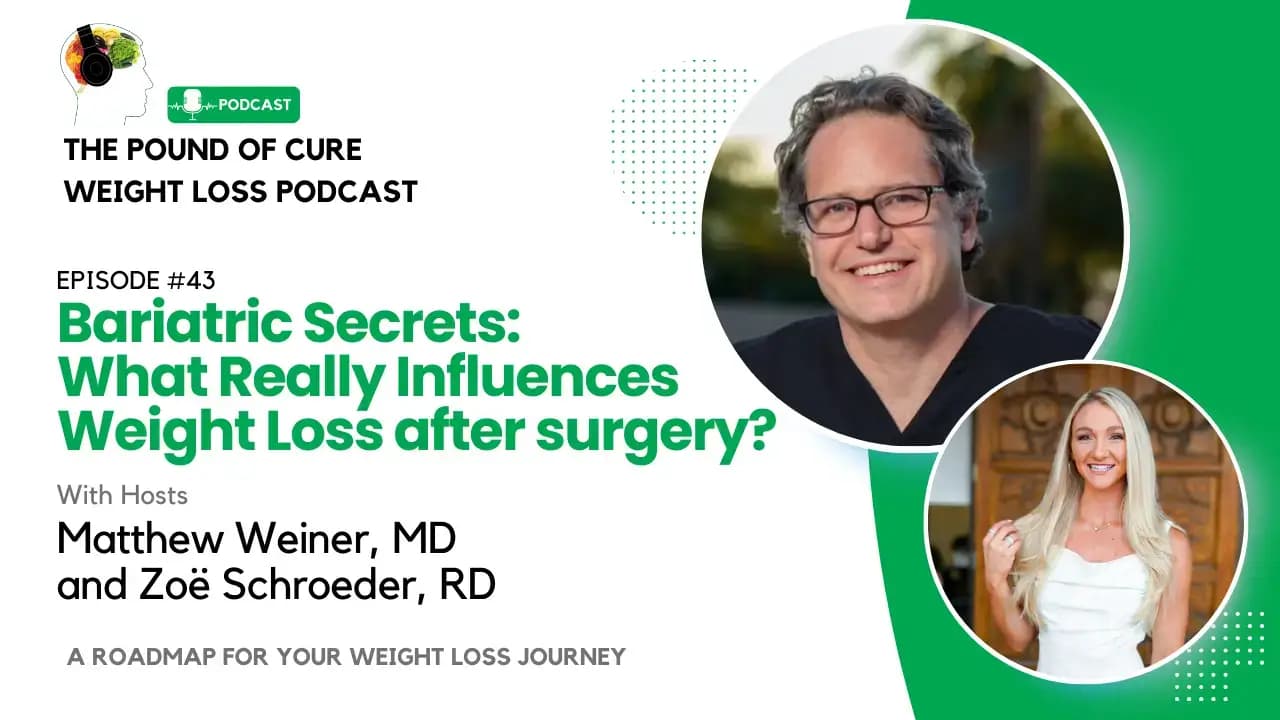
In episode 43 of the Pound of Cure Podcast, Dr. Weiner and Zoe Schroeder explore Weight Loss After Surgery, Bariatric Secrets, top diets, and managing malabsorption for success.
Bariatric Secrets: What Really Influences Weight Loss After Surgery?
In episode 43 of the Pound of Cure Weight Loss Podcast, hosts Dr. Matthew Weiner and Zoe Schroeder, RD, dig into the key bariatric surgery weight loss factors and share insights on what really drives success after surgery. They also tackle some hot topics like the best diet for weight loss and how to manage malabsorption after bariatric surgery. If you’re wondering why some people lose more weight than others or how your diet can make or break your results, this episode is packed with answers.
Bariatric Surgery Weight Loss Factors
Dr. Weiner kicks off by addressing a common misconception—many people think that weight loss after bariatric surgery is all about how hard you’re trying, but that’s only part of the equation. He emphasizes that there are multiple factors at play, including things you can’t control, like your age and gender. For instance, younger patients tend to lose more weight, and men generally lose more than women. Is that because men are better at following their post-op instructions? Of course not! It’s more complicated than that.
Diabetes also comes into play as a significant factor. People with diabetes often have higher insulin levels, which makes losing weight more challenging. However, Dr. Weiner explains that following the Metabolic Reset Diet can help manage or even reverse diabetes, making it easier for these patients to lose weight. He also points out that mobility issues and certain medications, like those used for mental health conditions, can slow down weight loss.
The Best Diet for Weight Loss
Zoe and Dr. Weiner spend a good chunk of time discussing the best diet for weight loss, and it all comes down to focusing on nutrient-dense foods. In their practice, they stress the importance of filling your plate with fruits, vegetables, beans, lean proteins, nuts, and seeds. According to Dr. Weiner, the fewer calories you get from processed foods, the better your results will be.
They talk about how weight loss isn’t about eating less; it’s about eating differently. Processed foods are loaded with “bad calories” that disrupt your metabolism, while nutrient-dense foods are low in calories but packed with the nutrients your body needs to function well. Dr. Weiner’s advice for measuring success is to track the ratio of “good” to “bad” calories in your diet, aiming to push as many of your daily calories as possible toward whole, unprocessed foods.
Malabsorption After Bariatric Surgery
A topic that often concerns patients is malabsorption after bariatric surgery, especially when it comes to nutrient deficiencies. Dr. Weiner explains that malabsorption can be an issue, particularly after procedures like a gastric bypass. This surgery alters the digestive system by bypassing part of the stomach and small intestine, which means some nutrients aren’t absorbed as efficiently.
Vitamins and minerals like iron, calcium, and vitamin B12 are often the most affected, but the good news is that patients can manage these deficiencies with the right supplements. Dr. Weiner and Zoe emphasize the importance of taking lifelong bariatric-specific vitamins and getting regular blood work to ensure you’re not falling behind on essential nutrients. They also note that with proper care, malabsorption after bariatric surgery doesn’t have to be a major issue.
Long-Term Success: It’s About More Than Surgery
While surgery plays a huge role in helping patients lose weight, Dr. Weiner and Zoe are quick to remind listeners that it’s not magic. Surgery lowers your metabolic setpoint, making it easier to lose weight, but long-term success depends on how well you embrace the lifestyle changes, particularly in your diet and exercise.
They also discuss combining bariatric surgery with GLP-1 medications, which can help reduce hunger and make it easier to stick to healthy eating habits. These medications work by lowering your body’s setpoint and reducing “food noise,” or the constant thoughts about eating that many people struggle with. Dr. Weiner mentions that while these medications can be incredibly effective, they need to be used consistently to maintain results. If you stop taking them, the weight can come back.
Conclusion
So, what’s the bottom line from this episode? There are a lot of bariatric surgery weight loss factors that affect how much weight you’ll lose: including your age, gender, genetics, medications, injuries and the specific procedure you choose. The best diet for weight loss is one that focuses on nutrient-dense foods like fruits, vegetables, nuts, seeds, beans, and lean proteins while cutting out processed junk. And while malabsorption after bariatric surgery can be a concern, it’s manageable with the right supplements and care.
If you’ve got questions about bariatric surgery, weight loss factors, or the best diet for weight loss, Dr. Weiner and Zoe encourage listeners to reach out. They love answering questions on the Pound of Cure Weight Loss Podcast and are always open to submissions through social media or their website.
Appointments
Book an Appointment
Schedule a surgical evaluation with Matthew Weiner, MD, to review your history, goals, and treatment options.
Surgical patients are accepted from across the United States. Surgery and in-person care are provided in Tucson, Arizona. Prefer to schedule by phone? Call (520) 298-3300.