GLP-1’s or Bust? Will all VSG patients need GLP-1 meds?
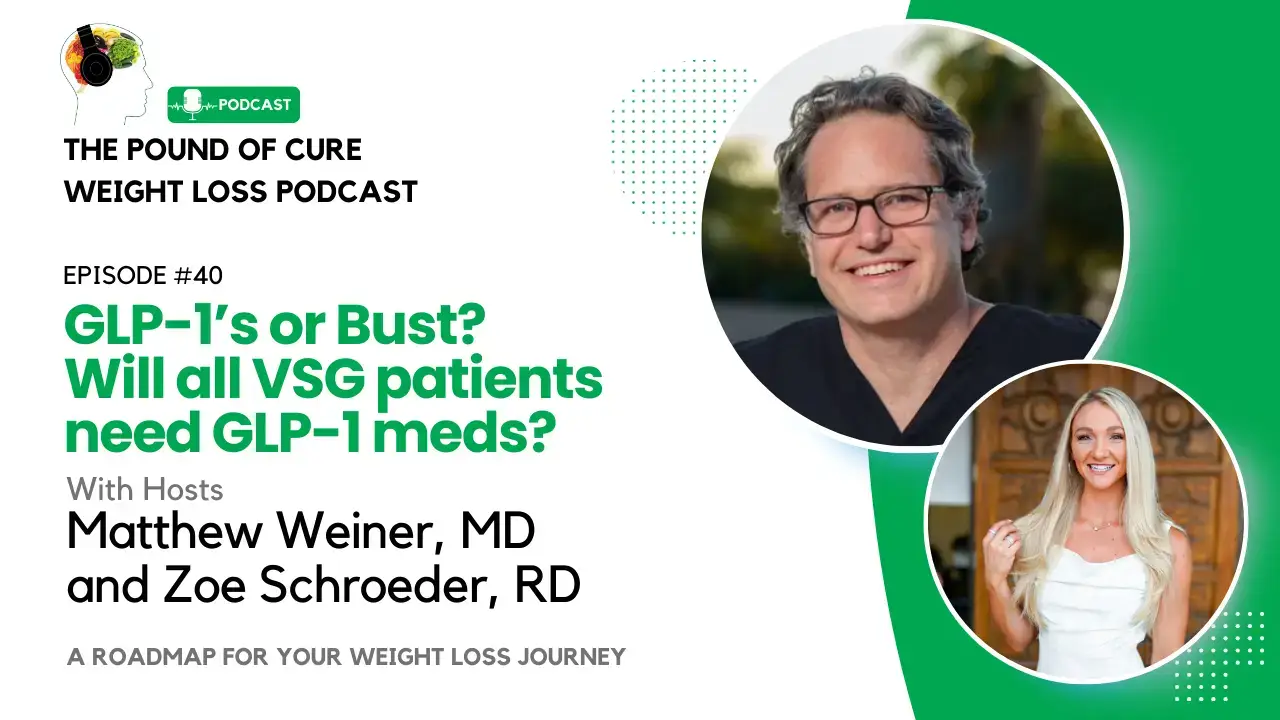
In this episode, we cover a wide range of topics related to diabetes, weight loss, and bariatric surgery. We kick things off by talking about the underlying cause of diabetes.
GLP-1’s or Bust? Will all VSG patients need GLP-1 meds?
Follow us on your favorite Podcast platform!
Podcast
Spotify
Amazon
Youtube
Watch Video
Insights from Episode 40 of the Pound of Cure Weight Loss Podcast
In the latest episode of the Pound of Cure Weight Loss Podcast, Dr. Weiner and Zoë addressed key questions about managing diabetes, dealing with hair loss after bariatric surgery, and the role of GLP-1 medications after Sleeve Gastrectomy.
The Best Diet for Diabetics
Dr. Weiner dispelled the common misconception that diabetes is caused solely by the overconsumption of carbohydrates. Many assume that high carbohydrate intake is the primary trigger for type 2 diabetes. However, Dr. Weiner emphasized that while excess carbs can exacerbate the condition, the root cause lies in insulin resistance rather than just sugar consumption.
Studies have shown that animal fat consumption plays a significant role in the development of insulin resistance, which is why it is crucial to adopt a high produce, low animal fat diet that promotes insulin sensitivity. One key takeaway from the episode was that incorporating phytonutrients from vegetables and fruits can significantly improve insulin sensitivity, making a plant-focused diet an excellent option for managing diabetes. For diabetics, focusing on nutrient-dense vegetables rather than processed carbs or excess animal protein is vital to managing blood glucose effectively.
Addressing Hair Loss After Bariatric Surgery
One of the most commonly discussed side effects after bariatric surgery is hair loss. Dr. Weiner and Zoë explained that hair loss typically occurs around three to five months post-surgery and can be most severe between months six and nine. This temporary issue is attributed to the rapid weight loss and nutritional deficiencies often experienced during the initial post-operative period.
To mitigate this, Zoë emphasized the importance of starting proper vitamin supplementation early in the process, ideally as soon as patients decide to undergo surgery. Taking bariatric-specific multivitamins and focusing on maintaining adequate protein intake are critical steps in preventing significant hair loss. Iron and biotin are especially important in this regard. Dr. Weiner and Zoë recommended taking 10,000 mcg of biotin daily to help minimize hair loss and prevent long-term deficiencies.
Additionally, Dr. Weiner suggested starting patients on minoxidil (commonly used to treat hair loss) even before surgery. Combined with proper supplements, this proactive approach can significantly reduce the severity of post-surgery hair thinning.
GLP-1 Medication After Sleeve Gastrectomy: Essential for Success?
A major topic in the podcast was the increasing reliance on GLP-1 medications such as Semaglutide (known as Ozempic or Wegovy) following a sleeve gastrectomy. Dr. Weiner explained that while Sleeve Gastrectomy can result in significant initial weight loss, as many as 50% of patients experience weight regain without the use of medication.
Dr. Weiner highlighted that the combination of Gastric Sleeve surgery with GLP-1 medications offers the best outcomes for patients, especially those with higher BMIs or a strong predisposition to regain weight. The hormonal shifts that result from both surgery and medication lead to a more sustainable weight loss, as the body’s set point is more durably lowered, and insulin levels are better regulated. Notably, insulin plays a critical role in fat storage, and managing its levels is key to preventing weight regain.
Another critical insight shared during the episode was that GLP-1 medications must be taken long-term to maintain their effects. If patients stop taking the medication, their set point may rise again, resulting in weight regain. This underscores the importance of patients understanding that Gastric Sleeve surgery alone is often not sufficient for long-term success, particularly for those patients with higher BMIs.
The Future of Bariatric Treatment: Combining Therapies
Dr. Weiner concluded the episode by emphasizing the importance of a multimodal approach to weight loss. Surgery, medication, and nutritional counseling should be viewed as complementary, not competing, treatment options. By combining these therapies, patients can achieve better, longer-lasting results. Whether managing diabetes with a plant-based diet, preventing hair loss through adequate nutrition and supplementation, or ensuring lasting weight loss with GLP-1 medication, the key is a comprehensive approach tailored to each individual.
In summary, whether you’re concerned about the best diet for diabetics, managing hair loss after bariatric surgery, or ensuring lasting success with GLP-1 medication after sleeve gastrectomy, this episode of the Pound of Cure Weight Loss Podcast provided valuable insights. By integrating these strategies into your weight loss journey, you can optimize your health outcomes and enjoy long-term success.
If you have questions or want to learn more, feel free to reach out to us on social media. We’re here to help guide you on your journey to better health.