How to Find Weight Loss Success when You Can’t Find Wegovy
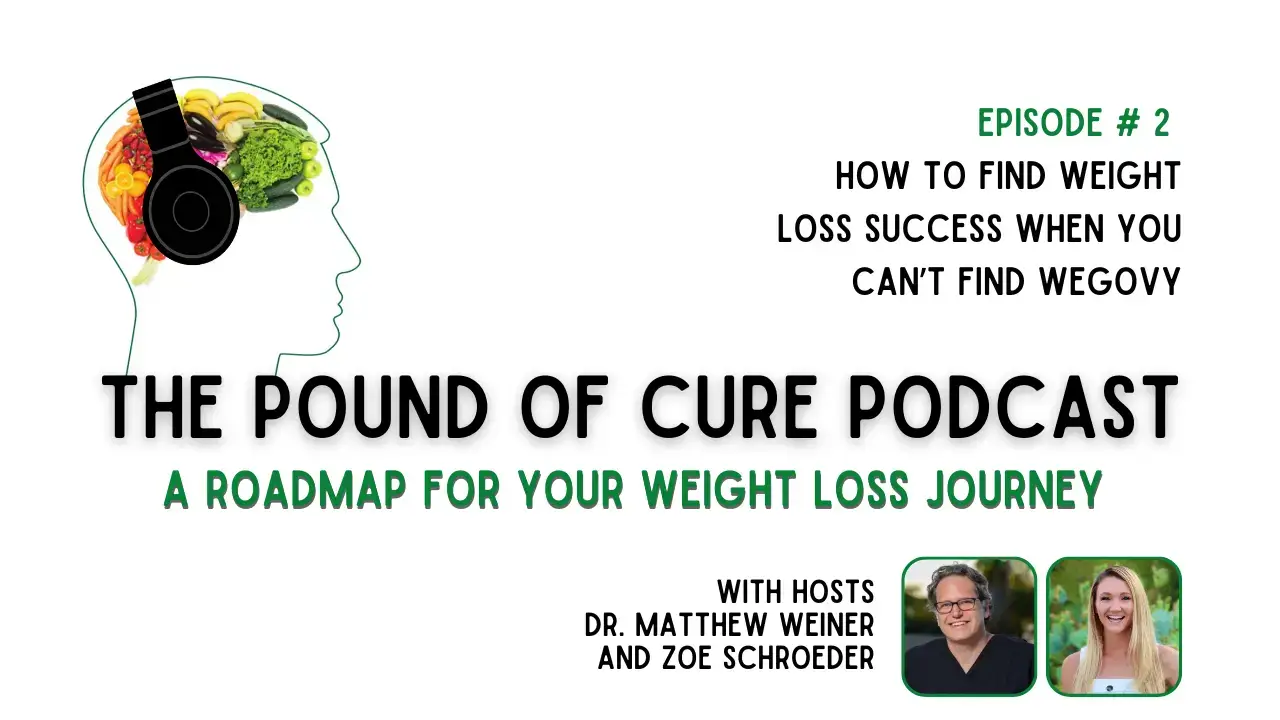
In this episode of The Pound of Cure Weight Loss podcast, Dr. Matthew Weiner and registered dietitian Zoe Schroeder dive deep into what it takes to achieve sustainable weightloss.
In this episode of The Pound of Cure Weight Loss podcast, Dr. Matthew Weiner and registered dietitian Zoe Schroeder dive deep into what it takes to achieve sustainable weight loss. They explain how combining GLP-1 medications, weight loss surgery, and effective nutritional strategies can transform a patient’s weight loss journey. Dr. Weiner, a renowned bariatric surgeon and non-surgical weight loss specialist, and Zoe, a passionate advocate for holistic nutrition, share insights from their practice in Tucson, Arizona.
Whether it’s through weight loss surgery like sleeve gastrectomy and gastric bypass, the use of GLP-1 medications such as Wegovy or Zepbound, or a nutrient-dense diet like the Metabolic Reset Diet, this dynamic duo stresses that no quick fixes will work in the long term. They emphasize the importance of sustainable weight loss strategies and ongoing support for long-lasting results. Their message is clear: by integrating multiple approaches and committing to lifestyle changes, success is achievable for anyone.
Patient Success Story: Weight Loss Without Wegovy
One of the most inspiring parts of this episode is Joey’s story—a patient who achieved tremendous success in losing weight without surgery or GLP-1 medications. When Joey first came to the practice, he weighed about 350 pounds and had hoped to start on Wegovy, one of the leading GLP-1 medications. However, due to the widespread shortage of this medication, Dr. Weiner suggested an alternative approach: focusing on the Metabolic Reset Diet.
Joey’s initial diet wasn’t exactly stellar. His eating habits had left him frustrated with his weight and searching for a solution. Dr. Weiner candidly told him that even if he did start on GLP-1 medications or consider surgery, it wouldn’t work unless he overhauled his nutrition. Joey took this advice to heart, starting with the Metabolic Reset Diet, which emphasizes whole, unprocessed foods like fruits, vegetables, nuts, seeds, beans, and lean proteins. This sustainable weight loss strategy gave Joey the tools he needed to start shedding pounds steadily. Within a few weeks, Joey saw real progress—he was dropping weight without medications or surgery.
Fast forward less than a year, and Joey hit his goal weight, proving that lifestyle changes can be just as powerful as medical interventions. Joey’s story is a testament to the idea that lowering your body’s set point, a key concept in Dr. Weiner’s practice, is possible through dietary changes alone. For anyone listening who is feeling defeated by medication shortages or surgery hesitations, Joey’s experience provides a hopeful outlook. You can lower your weight set point and maintain the results with the right mindset and commitment to long-term changes.
The Role of GLP-1 Medications in Sustainable Weight Loss
Dr. Weiner and Zoe next explore the role that GLP-1 medications play in promoting sustainable weight loss strategies. These medications—like Wegovy, Ozempic, Zepbound and Mounjaro—have created a paradigm shift in obesity treatment. By reducing appetite and helping people lower their set points, they make weight loss less of a constant battle against cravings and hunger.
However, the conversation takes an interesting turn when Dr. Weiner discusses Belgium’s recent ban on using Ozempic solely for weight loss. In Belgium, Ozempic is now restricted to treating type 2 diabetes, reflecting the biases that still persist against recognizing obesity as a legitimate disease. Zoe and Dr. Weiner point out how this bias can make patients feel isolated and discouraged, even though their weight struggles are largely outside of their control. This reinforces why patients need to be kind to themselves and realize that treating obesity isn’t just about willpower—it’s a medical condition requiring medical treatment.
Despite the challenges surrounding medication shortages and rising costs, there are still viable alternatives. Dr. Weiner and Zoe discuss the rise of compounded GLP-1 medications, including compounded Semaglutide and Tirzepatide. These medications may offer a more affordable option for patients unable to access brand-name products, but Dr. Weiner advises listeners to be cautious. Since compounded medications don’t go through the rigorous FDA approval process, quality can vary. Patients should ensure that any compounded medication they use comes from a reputable source.
Ultimately, they agree that while GLP-1 medications are highly effective tools for weight loss, they’re not a “magic pill” (or injection). To maximize their benefits, these medications should be combined with proper nutrition and ongoing support, rather than being relied on as standalone solutions.
Slow Weight Loss After Surgery: The Importance of Patience and Consistency
Next, Dr. Weiner and Zoe tackle the often-frustrating reality of slow weight loss and stalls after weight loss surgery. Many patients expect rapid results after procedures like sleeve gastrectomy or gastric bypass, but as Dr. Weiner explains, sustainable weight loss strategies require patience.
It’s normal for weight loss to slow down or even plateau for a while as your body adjusts to its new state. Dr. Weiner reassures listeners that this is just part of the process and emphasizes the importance of consistency, especially when it comes to nutrition. Often, the key to breaking through a plateau isn’t drastic changes or extreme measures—it’s simply sticking with the basics and trusting the process.
Zoe adds that focusing on high-quality, whole foods can help manage some of the challenges post-surgery patients face, like nutrient deficiencies or changes in appetite. Clean eating and making nutritious choices will not only support weight loss but also promote better overall health in the long run.
Managing GLP-1 Side Effects with a Nutrient-Dense Diet
For those on GLP-1 medications, managing side effects like nausea and headaches can be another hurdle. Zoe takes a deep dive into how nutrition plays a crucial role in mitigating these side effects. She recommends prioritizing clean, whole foods while steering clear of greasy, fatty foods that can worsen nausea due to the slower digestion caused by GLP-1 medications.
Zoe emphasizes the importance of consuming plant-based proteins, fiber-rich vegetables, and fruits to not only minimize discomfort but also support long-term weight loss. She and Dr. Weiner stress that a mostly plant-based, minimally processed diet is key to making GLP-1 medications work more effectively. By filling up on nutritious foods, patients can sustain their weight loss while feeling healthier and more energized.
Optimizing Your Diet for Long-Term Success
The episode wraps up with a discussion on how to optimize your diet to achieve sustainable weight loss. Zoe explains that while weight loss surgery and GLP-1 medications are powerful tools, they work best when paired with the right nutritional approach. She encourages patients to focus on plant-based proteins, such as beans and lentils, as well as whole foods over processed ones.
Dr. Weiner reiterates the long-term value of a nutrient-dense, plant-heavy diet for maintaining weight loss and preventing regain. Whether or not you undergo weight loss surgery or take GLP-1 medications, the foundation of your success lies in what you eat and how consistently you stick to those healthy choices.
Conclusion: A Comprehensive Approach to Weight Loss
Through their engaging discussion, Dr. Weiner and Zoe offer listeners a comprehensive guide to achieving lasting weight loss by combining GLP-1 medications, weight loss surgery, nutrition, and sustainable weight loss strategies. Their holistic approach is grounded in practical, science-backed advice, empowering individuals to navigate their unique weight loss journeys with confidence and long-term success in mind.