
Fatty Liver Disease Treatment in Tucson: How MASH, GLP-1 Medications, and AHCCCS Coverage Connect
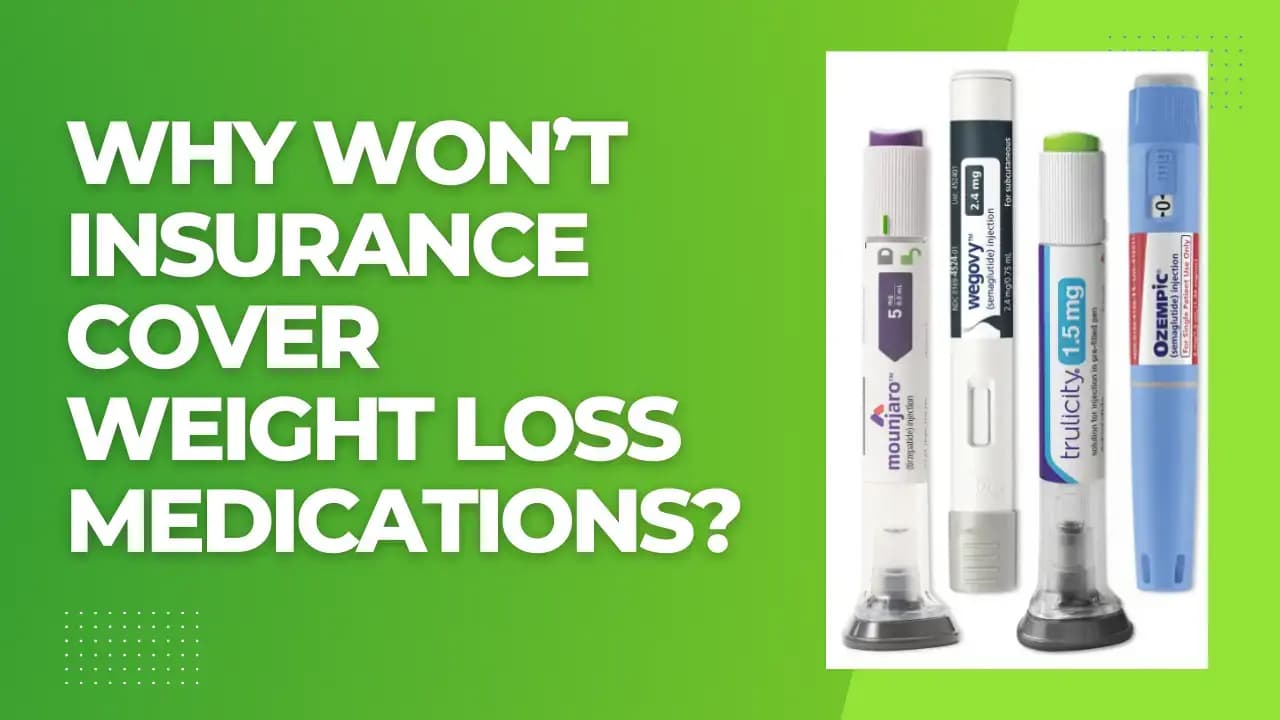
Dr. Weiner explains fatty liver disease and MASH treatment options in Tucson, how GLP-1 medications like Wegovy can reverse liver damage, and what AHCCCS currently covers for Arizona residents seeking weight loss medication.
Fatty liver disease treatment in Tucson is evolving rapidly, and if you have been diagnosed with MASH (metabolic dysfunction-associated steatohepatitis, formerly called NASH), there are now more effective options than ever before. GLP-1 medications like Wegovy and the newer combination drug Zepbound are showing remarkable results in reversing liver inflammation and fibrosis. For Arizona residents on AHCCCS, coverage for these medications is limited but changing, and there are specific pathways worth understanding. As a bariatric surgeon who has treated thousands of patients with obesity-related liver disease over the past two decades, I want to give you an honest breakdown of what works, what is covered, and what your realistic options are right now.
What Is MASH and Why Should You Care About It?
MASH is the new name for what we used to call NASH (non-alcoholic steatohepatitis). The medical community updated the terminology in 2023 to better reflect the metabolic origins of the disease. But the condition itself has not changed. MASH is a progressive form of fatty liver disease where fat accumulation in the liver triggers inflammation and scarring (fibrosis). Left untreated, it can progress to cirrhosis, liver failure, and even liver cancer.
Here is the part that concerns me as a surgeon who sees this regularly: most people with MASH have no symptoms until the disease is advanced. The liver does not have pain receptors in the way your skin or muscles do. Patients come to me for weight loss surgery and we discover significant liver disease during their preoperative workup or during surgery itself. I have operated on livers that were so enlarged and inflamed that they made the surgical procedure significantly more difficult.
Approximately 25% of American adults have some form of fatty liver disease, and about 20% of those have progressed to MASH. If you carry excess weight, particularly around your midsection, and you have metabolic syndrome, insulin resistance, or type 2 diabetes, your risk is substantially elevated.
How Is Fatty Liver Disease Diagnosed in Tucson?
Diagnosing fatty liver disease starts with blood work and imaging. Your primary care doctor may notice elevated liver enzymes (ALT and AST) on routine labs. From there, an ultrasound can confirm fat in the liver. But here is the catch: ultrasound cannot reliably distinguish simple fatty liver (steatosis) from MASH, and it cannot accurately stage fibrosis.
More advanced tools include:
- FibroScan (transient elastography): This non-invasive test measures liver stiffness, which correlates with fibrosis. Several gastroenterology practices in Tucson now offer FibroScan.
- MRI-PDFF (proton density fat fraction): A specialized MRI that precisely quantifies liver fat. Available at major imaging centers in Tucson.
- Liver biopsy: Still considered the gold standard for diagnosing MASH and staging fibrosis, though it is invasive and carries small risks.
- Blood-based fibrosis scores: FIB-4 and NAFLD Fibrosis Score use routine lab values to estimate fibrosis risk. These are screening tools, not definitive tests.
If you are in Tucson and concerned about fatty liver disease, ask your doctor about a FIB-4 score first. It is calculated from your age, AST, ALT, and platelet count. A score above 1.3 warrants further evaluation. A score above 2.67 suggests advanced fibrosis and needs urgent attention.
Does Losing Weight Actually Reverse Fatty Liver Disease?
Yes, and the data on this is strong. Weight loss is the single most effective treatment for MASH, and the degree of weight loss directly correlates with the degree of liver improvement.
A landmark study published in Gastroenterology (Vilar-Gomez et al., 2015) followed 293 patients with biopsy-proven NASH and found:
- 5% weight loss: 41% achieved resolution of NASH
- 7-10% weight loss: Significant reduction in fibrosis
- 10% or more weight loss: 90% achieved NASH resolution, and 45% had fibrosis regression
These numbers are remarkable. No drug currently approved can match the liver benefits of sustained 10%+ weight loss. This is why I tell my patients that treating your liver disease and treating your obesity are often the same thing.
The challenge, of course, is achieving and maintaining that degree of weight loss. Diet and exercise alone produce sustained 10%+ weight loss in fewer than 5% of people with obesity. This is not a willpower problem. It is a biological reality driven by hormonal adaptations that fight against weight loss. This is exactly where GLP-1 medications and bariatric surgery become critical tools.
How GLP-1 Medications Treat MASH
GLP-1 receptor agonists like semaglutide (Wegovy, Ozempic) and the dual GIP/GLP-1 agonist tirzepatide (Zepbound, Mounjaro) are producing some of the most exciting results we have ever seen for liver disease treatment.
Semaglutide and Liver Disease
A phase 2 trial published in the New England Journal of Medicine (Newsome et al., 2021) studied semaglutide at a dose of 0.4mg daily (slightly higher than the standard 2.4mg weekly Wegovy dose) in patients with biopsy-confirmed NASH. After 72 weeks:
- 59% of patients on semaglutide achieved NASH resolution compared to 17% on placebo
- Fibrosis improvement occurred but did not reach statistical significance in this trial
- Average weight loss was approximately 13%
Larger phase 3 trials are underway, and early data suggests that the fibrosis benefits become more apparent with longer treatment duration and greater weight loss.
Tirzepatide and Liver Disease
Tirzepatide (sold as Mounjaro for diabetes and Zepbound for weight loss) works on both GLP-1 and GIP receptors, producing even greater weight loss than semaglutide in head-to-head comparisons. The SURMOUNT trials showed average weight loss of 20-26% with tirzepatide at the highest dose.
The SYNERGY-NASH trial (2024) demonstrated that tirzepatide achieved NASH resolution in up to 74% of patients at the highest dose, with significant fibrosis improvement in up to 51% of patients. These are striking numbers.
Resmetirom: The First FDA-Approved Drug Specifically for MASH
In March 2024, the FDA approved resmetirom (Rezdiffra) as the first drug specifically indicated for MASH with moderate to advanced fibrosis (stages F2-F3). Resmetirom works differently from GLP-1 medications. It is a thyroid hormone receptor beta agonist that targets liver fat metabolism directly.
In the MAESTRO-NASH trial, resmetirom achieved NASH resolution in about 30% of patients and fibrosis improvement in about 26% at the higher dose. These numbers are meaningful but notably lower than what GLP-1 medications achieve, likely because resmetirom does not produce significant weight loss.
For many patients, the most effective approach may be combining a GLP-1 medication (for weight loss and metabolic improvement) with resmetirom (for direct liver fat targeting). However, this combination has not been formally studied yet, and the cost of both medications together is substantial.
MASH Treatment Options Available in Arizona
MASH treatment in Arizona has expanded considerably. Here is a practical overview of what is available:
Lifestyle intervention programs: Several Tucson-based programs offer medically supervised weight loss with dietitian support. These are appropriate for early-stage disease but rarely produce the 10%+ weight loss needed for MASH resolution in patients with significant obesity.
GLP-1 medications: Semaglutide and tirzepatide are prescribed by endocrinologists, gastroenterologists, obesity medicine specialists, and some primary care physicians throughout Tucson and Arizona. Availability has improved significantly since 2023, though shortages still occur periodically.
Resmetirom (Rezdiffra): Available by prescription for patients with biopsy-confirmed MASH and stage F2 or F3 fibrosis. Your gastroenterologist or hepatologist would typically prescribe this. The cost is approximately $47,000 per year without insurance.
Bariatric surgery: For patients with BMI over 35 (or over 30 with metabolic complications), bariatric surgery remains the most effective long-term treatment for both obesity and MASH. In my practice, I have performed over 4,000 surgeries, and the improvement in liver disease we see after surgery is consistently dramatic. Studies show that bariatric surgery resolves NASH in 85% of patients and improves fibrosis in 30-50% of patients within the first few years.
Clinical trials: The University of Arizona and affiliated research centers periodically run clinical trials for new MASH therapies. Check clinicaltrials.gov for current opportunities in the Tucson area.
Does AHCCCS Cover Wegovy for Weight Loss or Liver Disease?
This is one of the most common questions I hear from Arizona patients, and the answer is frustrating. As of early 2025, AHCCCS (Arizona’s Medicaid program) does not broadly cover Wegovy (semaglutide 2.4mg) for weight management. AHCCCS has historically classified anti-obesity medications as excluded drugs, similar to the approach taken by many state Medicaid programs nationwide.
However, there are important nuances:
Ozempic coverage for diabetes: If you have a diagnosis of type 2 diabetes, AHCCCS plans may cover Ozempic (semaglutide 1mg or 2mg), which is the diabetes-specific formulation. While Ozempic is not FDA-approved for weight loss specifically, it does produce significant weight loss and has the same active ingredient as Wegovy. Many patients with MASH also have type 2 diabetes, making this a viable pathway.
Managed care plan variations: AHCCCS operates through several managed care organizations (MCOs) including AHCCCS Complete Care (ACC) plans like Banner University, Mercy Care, and Arizona Complete Health. Coverage policies can vary between these plans, and some may have pathways for prior authorization of GLP-1 medications when medically necessary for diabetes management.
The evolving policy environment: There is growing political and medical pressure to expand Medicaid coverage of anti-obesity medications, particularly as the evidence connecting obesity treatment to reduced healthcare costs becomes harder to ignore. The Treat and Reduce Obesity Act has been reintroduced in Congress multiple times. Some states have begun expanding Medicaid coverage for these drugs, and Arizona may follow.
Manufacturer assistance programs: Novo Nordisk (maker of Wegovy and Ozempic) offers patient assistance programs for qualifying individuals. Eli Lilly offers similar programs for Zepbound and Mounjaro.
What you can do right now: If you are on AHCCCS and have fatty liver disease, ask your doctor to document all of your metabolic conditions thoroughly. Having formal diagnoses of type 2 diabetes, sleep apnea, hypertension, and MASH on your chart strengthens any prior authorization request. If GLP-1 medications are denied, your doctor can file an appeal with supporting medical literature.
When Should You Consider Bariatric Surgery for Fatty Liver Disease?
I want to be direct about this because I think patients deserve honesty. If you have MASH with fibrosis and your BMI is 35 or above, bariatric surgery is likely to produce better and more durable results than medication alone.
The data supports this clearly. A 2024 meta-analysis in The Lancet Gastroenterology & Hepatology confirmed that bariatric surgery resolves NASH in approximately 85% of patients and produces fibrosis regression in a significant proportion. The weight loss after surgery (typically 25-35% of total body weight with gastric sleeve or bypass) far exceeds what most patients achieve with medications.
Bariatric surgery is also more likely to be covered by AHCCCS than GLP-1 medications. Most AHCCCS managed care plans cover bariatric surgery for qualifying patients with a BMI over 40, or over 35 with obesity-related comorbidities. MASH counts as a qualifying comorbidity.
This does not mean surgery is the right choice for everyone. For patients with lower BMIs, early-stage liver disease, or medical conditions that increase surgical risk, GLP-1 medications or resmetirom may be more appropriate. The best approach is individualized, and that requires a thorough evaluation.
The Connection Between Insulin Resistance, Obesity, and Your Liver
I want to explain why these conditions cluster together, because understanding the mechanism helps you make better decisions about treatment.
When you have insulin resistance, your body produces excess insulin to compensate. High insulin levels drive fat storage, particularly in the liver. This liver fat accumulation triggers inflammation, which causes hepatocyte (liver cell) damage. Your body responds with scar tissue formation, which is fibrosis. Over years, this scarring can become cirrhosis.
At the same time, the inflammatory signals from your damaged liver worsen insulin resistance throughout your body, creating a vicious cycle. This is why treating insulin resistance (through weight loss, GLP-1 medications, or surgery) is so effective for liver disease. You are breaking the cycle at its root cause.
GLP-1 medications are particularly effective because they improve insulin sensitivity through multiple mechanisms: reducing appetite and food intake, slowing gastric emptying, improving pancreatic beta cell function, and reducing liver fat directly. Some evidence suggests GLP-1 medications have anti-inflammatory effects on the liver independent of weight loss, though this is still being studied.
What Should You Do Next?
If you are in Tucson and concerned about fatty liver disease, here is my practical advice:
- Get properly evaluated. Ask your doctor for a FIB-4 score and a liver ultrasound. If your FIB-4 is elevated, request a FibroScan or referral to a hepatologist.
- Address your metabolic health comprehensively. Fatty liver disease rarely exists in isolation. Make sure your diabetes, blood pressure, and cholesterol are all being actively managed.
- Ask about GLP-1 medications. If you have obesity and MASH, semaglutide or tirzepatide could treat both conditions simultaneously. Check your insurance coverage and explore manufacturer assistance programs.
- Consider a bariatric surgery consultation. If your BMI qualifies and your liver disease is progressing, a consultation does not commit you to anything. It gives you information. With over 4,000 surgeries and more than 20 years of experience, I have seen firsthand how dramatically surgery can reverse liver disease in the right patients.
- Do not wait for symptoms. By the time fatty liver disease causes symptoms, significant damage has already occurred. Early intervention produces the best outcomes.
Your liver has remarkable regenerative capacity, but that capacity diminishes as fibrosis progresses. The treatments available today are better than anything we have had before. The key is acting on them before the window of reversibility closes.
Frequently Asked Questions
Appointments
Book an Appointment
Schedule a medical weight loss appointment to discuss GLP-1 medications and other non-surgical treatment options.
New non-surgical patients must reside in Arizona. In-person and telehealth appointments are available. Prefer to schedule by phone? Call (520) 298-3300.