
Is My GLP-1 Weight Loss Normal?
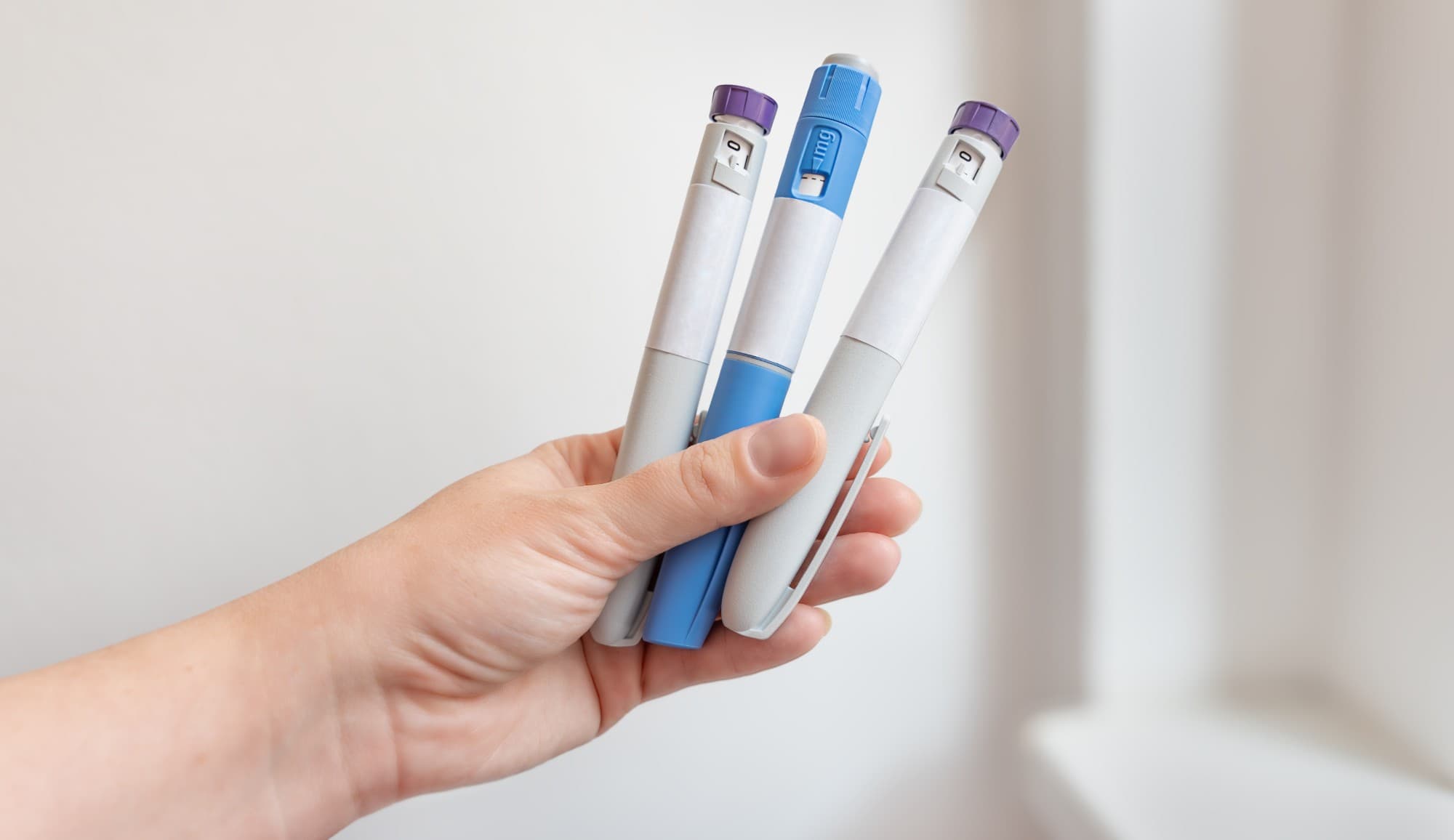
Poor, typical and super responders on Zepbound, Mounjaro, Wegovy, Ozempic and the GLP-1 pills: how Matthew Weiner, MD, grades a result by drug, dose and month, and what to do when the numbers fall short.
Take-home points
Most people land in the middle. Your drug, your dose, diabetes and how long you have been on it decide where you should be, and a poor result is a reason to change the plan, not a personal failure.
- Most people are typical. On a standard dose, about 70% of people land between poor and super. The dramatic results on your feed are the few at the top.
- Under 10% after a year on a full dose is a poor response, and over 30% is a super response.
- Give it time. At 3 months, expect about a third of a year's loss. At 6 months, about two thirds.
- The drug and the dose matter. About 17% of people on Zepbound 15 mg are poor responders, compared with about 30% on Wegovy 2.4 mg.
- The pills leave more people behind. About 40% of people on the Wegovy pill, and about 45% on Foundayo, lose less than 10%.
- Diabetes lowers results. With an A1c of 6.5% or higher, about 35% to 54% of people lose less than 10%.
- A poor response is biology, not failure. It is a signal to look at the dose, the drug or nutrition, or to consider surgery, with your provider.
Is my GLP-1 weight loss normal?
Most likely, yes: on a standard dose of a GLP-1, about 70% of people land in the middle, between a poor and a super response. Matthew Weiner, MD, grades a GLP-1 response by the percent of total body weight lost on a given drug and dose. After a year on a medium or high dose, losing under 10% is a poor response and losing over 30% is a super response, and before a year the bar is scaled to how long someone has been on the medication.
That framing matters because most people judge their progress against the wrong yardstick. The dramatic results that fill social media feeds come from the few people at the top of the curve, and a friend on a different drug or dose is not a fair comparison either. The fastest way to see where you land is our free GLP-1 check, which grades your result for your medication, dose and time on treatment.
Is your GLP-1 weight loss on track?
Free 1-minute check. See how your weight loss compares with clinical trial results for your medicine, dose and time on it.
How much weight should I lose on Zepbound or Wegovy?
How much weight a person should lose on Zepbound, Wegovy or any other GLP-1 depends on the drug, the dose tier and the time on treatment, so the practice grades a result against cutoffs rather than a single target number. Start by working out the percent of total body weight lost: divide the pounds lost by the starting weight. Someone who started at 240 pounds and has lost 24 pounds has lost 10%.
Next, find the dose tier. A low dose is semaglutide injection (Wegovy or Ozempic) up to 1 mg, or tirzepatide (Zepbound or Mounjaro) up to 5 mg. On a low dose, losing under 5% after about a year is a poor response and over 25% is a super response. On a medium or high dose, the bar rises: under 10% is poor and over 30% is super. The two pills, the Wegovy pill and Foundayo (orforglipron), use one rule at any strength: under 10% is poor and over 25% is super. Everything between the poor and super cutoffs is a typical response.
These cutoffs are practice definitions built on 64 to 72 week trial results. Results can be graded from 1 month, but before a year the cutoffs are scaled down to the share of a year's loss the average person has reached, and every grade stays provisional until about a year on treatment.
What is a GLP-1 non-responder, and what is a super responder?
Dr. Weiner describes GLP-1 response as a bell curve. On standard-dose drugs, about 15% of people are super responders who lose far more than average, about 15% barely respond, and roughly 70% sit in the middle. A non-responder in everyday language is someone at the bottom of that curve, and the practice calls this a poor response. A super responder is someone above the super cutoff for their dose tier.
The middle is where effort shows up most. As Dr. Weiner has said on the Pound of Cure podcast, the people in the middle are neither super responders nor non-responders, and that is where nutrition, exercise and headwork matter. A typical result can feel disappointing next to the extremes on social media, even when it is exactly what the medication usually does.
The exact split varies by drug and dose. The tirzepatide 5 mg trial is the closest match to the 15/70/15 picture, with about 15% of people losing under 5% and about 15% losing over 25%. Semaglutide 2.4 mg leans toward the poor end, with about 30% of people losing under 10% and only about 7% reaching 30%, while tirzepatide at 10 or 15 mg puts about 20% of people at 30% or more.
What percent of people don't lose weight on Ozempic, Zepbound or the GLP-1 pills?
The table below brings the practice cutoffs and the trial results for adults without diabetes into one place. The shares count everyone who started each 64 to 72 week trial, so they describe groups of people and cannot predict what any one person will lose. Where a trial did not report a share at the practice cutoff, the table says not published.
| Medication and dose | Dose tier | Poor response below | Super response above | Share poor in trials | Share super in trials |
|---|---|---|---|---|---|
| Zepbound or Mounjaro (tirzepatide) 2.5 or 5 mg | Low | 5% | 25% | About 15% (5 mg) | About 15% (5 mg) |
| Zepbound or Mounjaro 7.5 or 10 mg | Medium | 10% | 30% | About 22% (10 mg) | About 20% (10 or 15 mg combined) |
| Zepbound or Mounjaro 12.5 or 15 mg | High | 10% | 30% | About 17% (15 mg) | About 20% (10 or 15 mg combined) |
| Wegovy or Ozempic (semaglutide) 0.25 to 1 mg | Low | 5% | 25% | Not published (no weekly low-dose trial) | Not published |
| Wegovy 1.7 or 2.4 mg, Ozempic 2 mg | Medium | 10% | 30% | About 28 to 34% (2.4 mg) | About 7% (1.7 or 2.4 mg) |
| Wegovy 7.2 mg | High | 10% | 30% | About 20% | Not published (about 31% lost 25% or more) |
| Wegovy pill 25 mg | Any strength | 10% | 25% | About 40% | Not published (below 27.9%) |
| Foundayo (orforglipron) 17.2 mg | Any strength | 10% | 25% | About 45% | Not published (below 18.4%) |
Two patterns stand out. At comparable full doses, tirzepatide produces fewer poor responders and more super responders than semaglutide 2.4 mg, and the 7.2 mg dose of Wegovy narrows the gap on the poor end. The pills leave more people below 10% than the injections, and neither pill trial reports how many people lose more than 25%.
What is the GLP-1 weight loss timeline, month by month?
GLP-1 weight loss builds over about a year, so a result at 2 or 3 months should never be judged against a one-year number. On a full dose, the average person reaches roughly 15% of their eventual loss by 1 month, a quarter by 2 months, a third by 3 months, two thirds by 6 months and about 85% by 9 months. The table scales the practice cutoffs to that average curve.
| Time on medication | Average share of a year's loss reached | Medium or high dose: poor below | Medium or high dose: super above | Low dose: poor below | Low dose: super above |
|---|---|---|---|---|---|
| 1 month | About 15% | 1.5% | 4.5% | 0.8% | 3.8% |
| 2 months | About 25% | 2.5% | 7.5% | 1.3% | 6.3% |
| 3 months | About one third | 3.3% | 10% | 1.7% | 8.3% |
| 6 months | About two thirds | 6.7% | 20% | 3.3% | 16.7% |
| 9 months | About 85% | 8.5% | 25.5% | 4.3% | 21.3% |
| 12 months | About 100% | 10% | 30% | 5% | 25% |
On a medium or high dose, about 1.5% to 4.5% of starting weight at 1 month falls in the typical range, which is only 3 to 9 pounds for someone who started at 200 pounds. Most of the first 3 months is spent stepping up the dose, so early numbers say more about the starting doses than the final one. Lower doses, the pills and people with diabetes reach their plateau sooner, so more of their loss shows up early, while the highest doses keep working until about week 60. These are averages read from trial figures, not predictions for any one person.
Why am I losing weight so slowly on Zepbound, and is it a GLP-1 plateau?
Slow weight loss on Zepbound or any GLP-1 is often a timing question before it is a response question. Someone 6 weeks in, still on a starting dose, is early on the curve, and a loss that looks small can be right on track. The fair comparison is the scaled cutoff for the time on treatment and the dose tier, and the grade that counts most comes after a full trial at the full dose.
A plateau is different. When weight stalls near the expected loss for the drug and dose, the medication has often done what it can, and the next gains usually come from nutrition, exercise and headwork rather than from the prescription. A stall well short of the expected range is a reason to review the dose and nutrition with a provider.
Does diabetes change what counts as normal GLP-1 weight loss?
Yes, diabetes lowers results on every GLP-1. Here diabetes means an A1c of 6.5% or higher, and the higher the A1c, the less weight people tend to lose. In trials of people with type 2 diabetes, about 35% on tirzepatide 15 mg, about 50% on semaglutide 2.4 mg and 54% on Foundayo 17.2 mg lost less than 10% of their weight, and only about 15% on tirzepatide 15 mg lost more than 25%.
The practice uses the same poor, typical and super cutoffs with or without diabetes, so a person with diabetes is more likely to land in the poor range. That is why the fairer comparison is with the diabetes trial numbers for the same drug and dose. Working on blood sugar control with the care team can help the medication work better, and any diet change alongside diabetes medicines should be planned with a provider.
What is the best GLP-1 for weight loss?
On the trial numbers, tirzepatide at 10 or 15 mg has produced the fewest poor responders and the most super responders among the weekly injections, semaglutide at 7.2 mg comes closer than the 2.4 mg dose, and the pills leave the most people below 10%. On average, that makes the higher-dose injections the strongest options in the class.
The best GLP-1 for a particular person is a different question. Dr. Weiner weighs how the weight responds, what the side effects are and how the medication fits daily life, including whether it can be sustained over time. A drug with a large average loss is the wrong drug for someone who cannot tolerate it, and someone who is responding well on a lower dose may not need to change anything.
GLP-1 not working? What a poor response means and what to do next
About 15% of people do not respond to GLP-1s, and how well a person responds to medication or surgery is largely driven by their DNA rather than their effort. A poor response is a biology question to work through with a care team, and it says nothing about willpower. Often the person losing the least is the one trying the hardest.
Before deciding a medication has failed, a few checks come first: whether the dose has reached its full level, whether there has been enough time at that dose, and how closely the nutrition plan is being followed. If those check out and the result is still poor, the conversation with a provider can turn to a higher dose, a different medication or other options.
At the practice, everyone starts with a GLP-1. Non-responders are moved toward a surgery discussion faster, and partial responders get a more flexible plan that may try different medications, push nutrition further and may or may not include surgery. Whether surgery is right depends on each person's health and history, and that decision belongs to the patient and the care team. You can learn more about how we use these medications in our GLP-1 medications overview.
Which weight loss surgery could fit you?
Answer a few questions to see which procedures are worth talking about with a surgeon.
Hear Dr. Weiner and Zoë talk it through
Dr. Weiner and registered dietitian Zoë Schroeder cover all of this on Episode 90 of The Pound of Cure Weight Loss Podcast, "Is My GLP-1 Working?": the bell curve of responders, the 10% line, the Wegovy pill versus the shot, why diabetes means a smaller number, and whether you have to stay on a GLP-1 for good. Search for The Pound of Cure Weight Loss Podcast wherever you listen.
Frequently asked questions
Is it normal to not lose weight on Wegovy in the first month?
Small changes in the first month are common, because the first weeks are spent on starting doses and the average person reaches only about 15% of a year's loss by 1 month. On a medium or high dose, that works out to roughly 1.5% to 4.5% of starting weight. A result that stays well below the scaled cutoff after a full trial at the full dose is worth reviewing with a provider.
What percent of people don't lose weight on Ozempic?
No weekly trial has kept people without diabetes on low-dose semaglutide for 6 months or more. At 2.4 mg, about 28 to 34% of people without diabetes lost less than 10% of their weight in trials, and with type 2 diabetes about 50% did.
Am I a non-responder or a slow responder?
Compare the percent of weight lost with the scaled cutoff for the time on treatment and the dose tier. At 3 months on a medium or high dose, the poor cutoff is about 3.3%, and at 6 months it is about 6.7%. Grades stay provisional until about a year.
How much weight should I lose on Zepbound 15 mg?
In trials of people without diabetes, about 17% of people on 15 mg lost less than 10% at 72 weeks and about 20% of people on 10 or 15 mg lost 30% or more. Most people landed in between, which the practice calls a typical response.
Does a poor response mean I need surgery?
Not automatically. A poor response is a signal to look at the dose, the medication and nutrition first, and at the practice non-responders move toward a surgery discussion sooner. Whether surgery fits depends on health and history, which a provider should review.