Medicare Now Covers Weight-Loss Medication for $50 a Month: Do You Qualify?
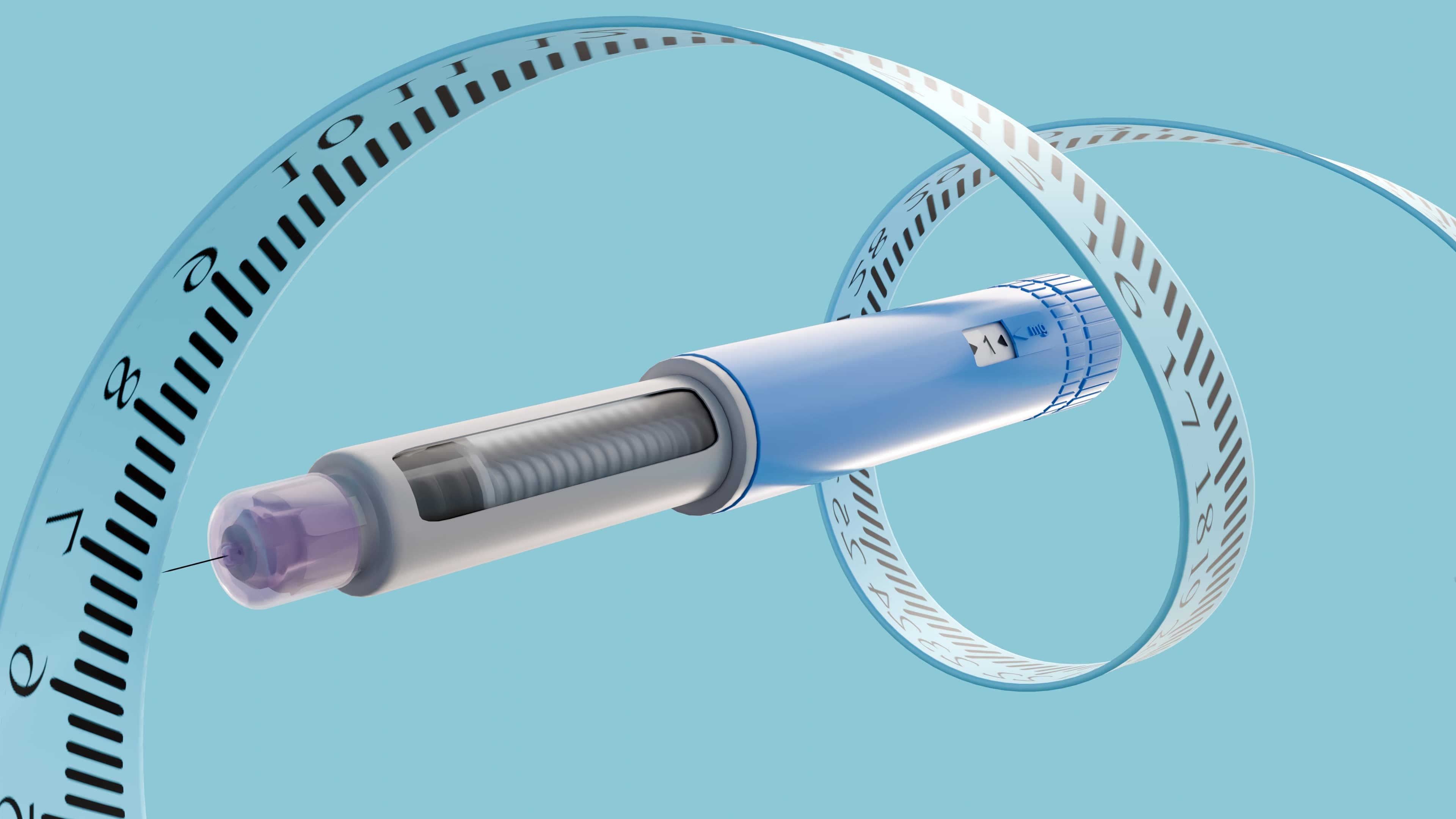
After more than 20 years of excluding weight-loss drugs, Medicare is finally covering them. Starting July 1, 2026, eligible Part D members can get Wegovy or Zepbound for a flat $50 a month through the new Medicare GLP-1 Bridge Program - here's exactly who qualifies and how our team manages the process.
Starting July 1, 2026, Medicare will cover FDA-approved weight-loss medications like Wegovy (semaglutide) and Zepbound (tirzepatide) for a flat $50 per month through a new initiative called the Medicare GLP-1 Bridge Program. For the first time in more than two decades, Medicare Part D enrollees with obesity can access these powerful GLP-1 medications without paying out of pocket for the full retail cost, which often exceeds $1,000 a month. There’s no Part D deductible to meet first, and coverage begins immediately on the program start date. However, the bridge program currently sunsets at the end of 2027, which means the window to take advantage of this coverage is finite.
As a bariatric surgeon who has performed more than 4,000 weight-loss procedures over 20-plus years, I’ve watched Medicare’s relationship with obesity treatment evolve at a glacial pace. For most of my career, the federal government classified obesity as a lifestyle issue rather than a disease, even after the American Medical Association officially recognized it as a chronic condition in 2013. That meant Medicare would pay for heart bypasses and joint replacements caused by obesity but wouldn’t cover the treatments that could prevent those surgeries in the first place. The GLP-1 Bridge Program represents the most meaningful policy shift I’ve seen in my entire career, and I want every eligible patient to understand exactly what it means for them.
Why Did Medicare Exclude Weight-Loss Drugs for So Long?
Medicare Part D has contained a statutory exclusion against covering medications prescribed solely for weight loss since the program launched in 2006. That exclusion traces back even further, to the original Medicare statute’s language about “cosmetic” treatments. Even when the FDA approved newer, safer anti-obesity medications like Wegovy in 2021 and Zepbound in 2023, Medicare beneficiaries were locked out.
The irony was always striking. Medicare would cover semaglutide when it was prescribed as Ozempic for type 2 diabetes, but it would not cover the same molecule, at a different dose, under the brand name Wegovy for obesity. Patients who happened to have both conditions could access the drug. Patients with severe obesity alone could not.
The Treat and Reduce Obesity Act had been introduced in Congress repeatedly since 2012, but it never gained enough traction to pass. What finally moved the needle was a combination of factors: overwhelming clinical evidence, bipartisan political pressure, and the sheer economic reality that treating obesity-related complications costs Medicare far more than treating obesity itself.
What Is the Medicare GLP-1 Bridge Program?
The Medicare GLP-1 Bridge Program is a temporary coverage pathway that allows Part D plans to cover FDA-approved anti-obesity medications at a fixed copay of $50 per month. It was created as part of broader Medicare prescription drug reforms and is designed to “bridge” the gap between the current statutory exclusion and a potential permanent legislative fix.
Here are the key details:
- Start date: July 1, 2026
- End date: December 31, 2027 (unless extended by Congress)
- Eligible medications: FDA-approved anti-obesity medications, including Wegovy (semaglutide 2.4 mg) and Zepbound (tirzepatide)
- Patient cost: Flat $50 per month copay
- Deductible: Waived - the Part D deductible does not apply to medications obtained through this program
- Prior authorization: Required by most Part D plans, but criteria are standardized under the program
The bridge structure is important to understand. This is not a permanent benefit change. Congress specifically designed it as a time-limited program, partly to gather real-world data on utilization and cost, and partly because the legislative votes for a permanent fix weren’t there yet. That means patients who start medication through this program in July 2026 could lose coverage in January 2028 if Congress doesn’t act to extend or replace it.
Who Qualifies for Medicare Coverage of Wegovy or Zepbound?
Eligibility for the GLP-1 Bridge Program is based on a combination of your Medicare enrollment status and your clinical profile. Here’s what you need:
Medicare Enrollment Requirements
- You must be enrolled in a Medicare Part D prescription drug plan (either a standalone Part D plan or a Medicare Advantage plan with Part D coverage)
- You must have been enrolled in Part D for at least 12 continuous months before your first prescription under the bridge program
- You must not be in the Part D coverage gap (“donut hole”) for other medications at the time of enrollment (though this requirement may vary by plan)
Clinical Eligibility Criteria
- BMI of 30 or greater (obesity), OR
- BMI of 27 or greater with at least one weight-related comorbidity, such as type 2 diabetes, hypertension, dyslipidemia, obstructive sleep apnea, or cardiovascular disease
- Documentation of at least one prior weight-management attempt (dietary counseling, behavioral program, or structured exercise program) within the past two years
- A prescribing provider who certifies that the medication is medically necessary and part of a comprehensive weight-management plan
If you’ve already been prescribed a GLP-1 medication through private insurance or out-of-pocket payment and you’re transitioning to Medicare, you may still qualify, but you’ll need to meet the 12-month Part D enrollment requirement and complete a new prior authorization.
Does Medicare Cover Wegovy for Weight Loss Specifically, or Only for Diabetes?
This is the question I hear most often from patients, and the answer has finally changed. Under the GLP-1 Bridge Program, Medicare will cover Wegovy specifically for weight loss - not just for diabetes management. That’s the breakthrough.
Previously, the only way a Medicare patient could access semaglutide was if they had a type 2 diabetes diagnosis, in which case their doctor could prescribe Ozempic (semaglutide at the 0.5 mg, 1 mg, or 2 mg dose approved for diabetes). Wegovy, which uses the same active molecule at a 2.4 mg dose and is FDA-approved specifically for chronic weight management, was excluded.
The bridge program explicitly lifts the anti-obesity medication exclusion for qualifying patients. This means your doctor can prescribe Wegovy or Zepbound with an obesity diagnosis as the primary indication, and Part D will cover it at the $50 copay.
This distinction matters clinically, too. The weight-management doses of these medications are optimized for fat loss and appetite regulation, not blood sugar control. Patients with obesity who don’t have diabetes deserve access to the dose and formulation designed for their condition.
How Much Weight Can You Lose on Medicare-Covered GLP-1 Medications?
The clinical evidence supporting these medications is among the strongest we’ve ever seen for any weight-loss intervention short of bariatric surgery.
In the landmark STEP 1 trial, published in the New England Journal of Medicine in 2021, patients taking semaglutide 2.4 mg (Wegovy) lost an average of 14.9% of their body weight over 68 weeks, compared to 2.4% in the placebo group. For a 250-pound patient, that translates to roughly 37 pounds.
Tirzepatide (Zepbound) showed even more impressive results in the SURMOUNT-1 trial, published in the New England Journal of Medicine in 2022. At the highest dose, patients lost an average of 22.5% of their body weight over 72 weeks. More than a third of participants lost 25% or more of their starting weight - results that approach what we see with some surgical procedures.
These aren’t just numbers on a scale. The SELECT cardiovascular outcomes trial demonstrated that semaglutide reduced the risk of major adverse cardiovascular events (heart attack, stroke, or cardiovascular death) by 20% in patients with obesity and established cardiovascular disease. That’s the kind of data that moved the policy needle at Medicare.
In my practice, I’ve seen patients on these medications achieve results that genuinely change the trajectory of their health. Some patients who were previously considering bariatric surgery find that medication alone is sufficient. Others use GLP-1 medications as a complement to surgery, either before the procedure to reduce surgical risk or afterward to maintain long-term results.
What Happens When the Bridge Program Ends in 2027?
This is the concern that keeps me up at night as a clinician, and it’s the question every Medicare patient considering this program should ask.
The GLP-1 Bridge Program is authorized through December 31, 2027. If Congress does not pass legislation to either extend the program or permanently remove the Part D anti-obesity medication exclusion, coverage will end. Patients who have been on Wegovy or Zepbound through the program would face three options:
- Pay out of pocket at retail prices (currently $1,000-$1,300 per month)
- Discontinue the medication, which research suggests leads to significant weight regain
- Transition to an alternative covered treatment, such as bariatric surgery or other covered medications
The STEP 1 extension study showed that patients who discontinued semaglutide regained approximately two-thirds of their lost weight within one year. That’s not a failure of willpower - it’s the biology of obesity. These medications work by modulating appetite-regulating hormones, and when you stop taking them, those hormones revert to their pre-treatment patterns.
This is one reason I counsel patients to think about GLP-1 medications as part of a broader strategy rather than a standalone solution. In our Pound of Cure program, we combine medication management with nutritional coaching, behavioral support, and - when appropriate - surgical options that provide durable, long-term results regardless of what happens with insurance coverage.
How Does Prior Authorization Work for Medicare GLP-1 Coverage?
Prior authorization is the administrative hurdle that stands between you and your prescription, and it’s the step where many patients get stuck. Under the bridge program, Part D plans are required to use standardized prior authorization criteria, but the process still involves documentation, submission, and sometimes appeals.
Here’s what’s typically required:
- Current BMI documentation (measured at an office visit within the past 90 days)
- Medical history documenting weight-related comorbidities, if your BMI is between 27 and 29.9
- Evidence of a prior weight-management attempt (records from a dietitian, behavioral health provider, or structured program)
- A letter of medical necessity from your prescribing provider explaining why the medication is appropriate for your clinical situation
- Confirmation of Part D enrollment for at least 12 continuous months
In our practice, our care coordination team handles the entire prior authorization process. We prepare the clinical documentation, submit the request to your Part D plan, and manage any follow-up or appeals. Over the past several years, we’ve built deep expertise in navigating insurance requirements for weight-loss treatments - both medications and surgery - and we know exactly what each plan needs to see.
The typical turnaround time for a standard prior authorization is 72 hours. Expedited requests can be processed in 24 hours when clinically urgent.
Can You Take GLP-1 Medications After Bariatric Surgery?
Yes, and in many cases, the combination is more effective than either approach alone.
Research published in JAMA Surgery in 2023 showed that patients who took GLP-1 medications after bariatric surgery experienced additional weight loss and were better able to maintain their results long-term. This makes biological sense - surgery and medication target overlapping but distinct pathways in the body’s weight-regulation system.
In my practice, I see three common scenarios where post-surgical GLP-1 medications are helpful:
- Weight recurrence after an initial successful surgical result (this happens in approximately 20-30% of patients over 5-10 years)
- Insufficient initial weight loss after surgery, particularly after procedures like the gastric band or sleeve gastrectomy
- Weight-loss plateau where a patient has lost significant weight but hasn’t reached a medically optimal level
If you’ve had bariatric surgery in the past and are now on Medicare, the GLP-1 Bridge Program could give you access to a powerful additional tool. The eligibility criteria don’t exclude patients with prior surgical history.
Is $50 a Month Really All You’ll Pay?
For the medication itself, yes. The $50 flat copay is the patient’s total out-of-pocket cost for each month’s supply of the covered GLP-1 medication under the bridge program. There’s no separate deductible to meet, no coinsurance percentage, and no coverage gap (“donut hole”) complications specific to this benefit.
However, there are related costs to be aware of:
- Office visits for medication management are covered under Medicare Part B (your standard medical insurance), subject to your usual Part B cost-sharing
- Lab work ordered as part of your monitoring may also be billed under Part B
- Nutritional counseling and behavioral health visits, if part of your comprehensive plan, have their own coverage rules
Our team can help you understand your complete cost picture before you start. We’ve found that for most Medicare patients, the total out-of-pocket cost for medication plus management visits is dramatically less than what they were paying before the bridge program - and a fraction of what they’d spend managing untreated obesity-related conditions.
How to Get Started Before July 1
If you’re a Medicare beneficiary interested in the GLP-1 Bridge Program, the smartest move is to begin the qualification process now so everything is in place when coverage begins on July 1, 2026.
Here’s what I recommend:
- Confirm your Part D enrollment and verify that you’ve been enrolled for at least 12 continuous months
- Schedule a clinical evaluation to document your current BMI, weight-related conditions, and medical history
- Gather records of prior weight-management efforts (dietitian visits, gym memberships with documented attendance, participation in structured programs like our Pound of Cure program)
- Discuss medication options with a provider who specializes in obesity medicine - not all GLP-1 medications are the same, and the right choice depends on your specific health profile
- Begin the prior authorization paperwork in advance so it can be submitted as soon as the program goes live
With 20 years of experience managing the full spectrum of weight-loss treatments - from medication to minimally invasive surgery to comprehensive lifestyle programs - my team and I are positioned to guide you through every step of this process. The Medicare GLP-1 Bridge Program is a genuine opportunity, but it requires informed action and careful coordination. If you think you might qualify, the time to start preparing is now, not July.
Frequently Asked Questions
Appointments
Book an Appointment
Schedule a medical weight loss appointment to discuss GLP-1 medications and other non-surgical treatment options.
New non-surgical patients must reside in Arizona. In-person and telehealth appointments are available. Prefer to schedule by phone? Call (520) 298-3300.