
Podcast Summary
Understanding Long-Term Success After Weight Loss Surgery
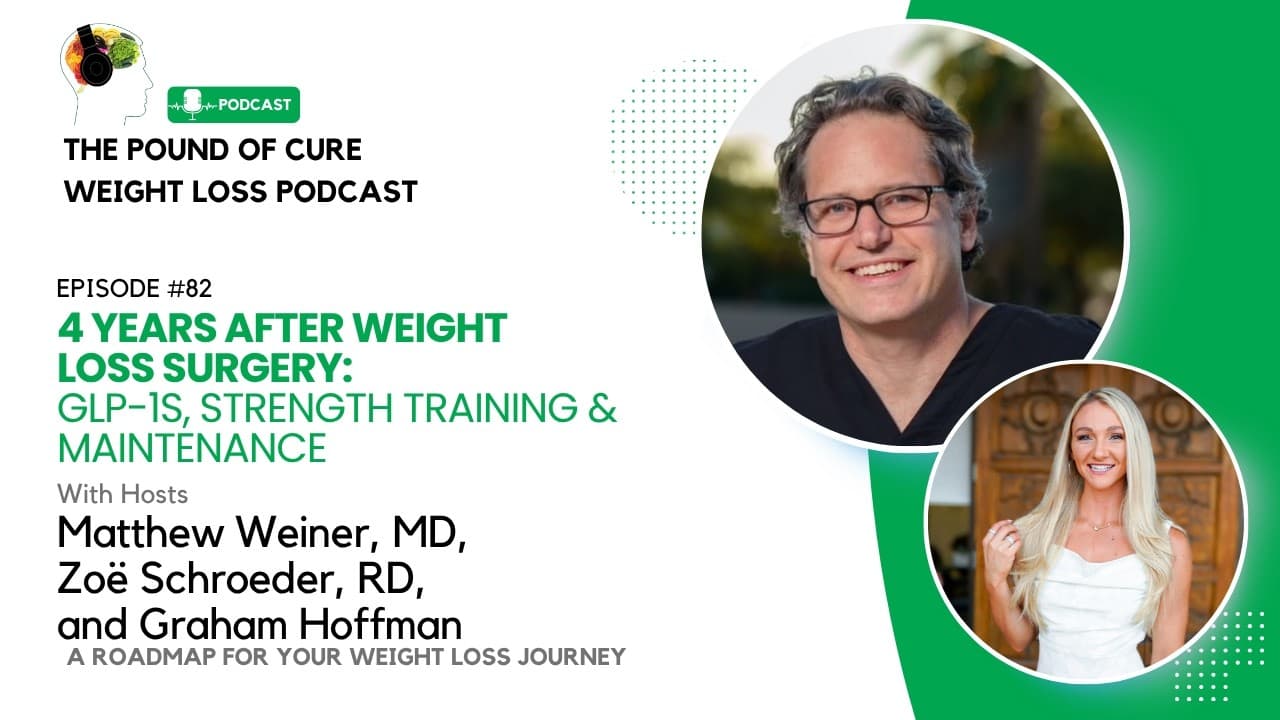
Four years after bariatric surgery represents a critical milestone in the weight loss journey. This episode of the Pound of Cure podcast features an in-depth conversation with Graham Hoffman, a patient and peer leader who shares his real-world experience navigating long-term weight maintenance after undergoing weight loss surgery.
Hosted by Zoe and Dr. Matthew Weiner, this discussion explores the practical realities of sustained weight management, including the integration of GLP-1 medications, strength training protocols, nutrition strategies, and the importance of ongoing support systems.
The Four-Year Post-Surgery Journey
Talk with our team
Have questions about this episode?
Send our Tucson weight loss team a note about bariatric surgery, GLP-1 medications, nutrition, or your next step with Pound of Cure.
More from this episode
Graham Hoffman provides valuable insights into what patients can expect years after their bariatric procedure. The four-year mark is particularly significant because it moves beyond the initial rapid weight loss phase and addresses the ongoing maintenance challenges that many patients face.
Long-term success after weight loss surgery requires a multifaceted approach. Graham's story illustrates that surgery is not a one-time solution but rather the beginning of a comprehensive lifestyle transformation that continues to evolve over time.
The Role of GLP-1 Medications in Post-Surgical Maintenance
One of the key topics discussed in this episode is the integration of GLP-1 medications into Graham's long-term maintenance strategy. GLP-1 receptor agonists have become an important tool in the weight management toolkit, even for patients who have already undergone bariatric surgery.
These medications can help patients who experience regain or who struggle with appetite control years after their procedure. The conversation addresses how GLP-1 medications work alongside surgical interventions to support sustained weight management and metabolic health.
For bariatric surgery patients, GLP-1 medications may offer additional support during challenging maintenance phases, helping to reinforce the physiological changes initiated by surgery.
Strength Training as a Foundation for Maintenance
Strength training emerges as a crucial component of Graham's long-term success strategy. Building and maintaining muscle mass is essential for post-bariatric patients for several important reasons.
First, muscle tissue is metabolically active, meaning it burns more calories at rest compared to fat tissue. This helps maintain a higher metabolic rate, which is critical for preventing weight regain after the initial post-surgical weight loss period.
Second, strength training helps preserve lean body mass during weight loss and maintenance phases. Many bariatric patients lose both fat and muscle during their weight loss journey, so intentional resistance training becomes essential for protecting muscle tissue.
Third, strength training improves functional capacity, bone density, and overall quality of life. These benefits extend far beyond the number on the scale and contribute to long-term health and independence.
Walking and Daily Movement Patterns
In addition to structured strength training, Graham discusses the importance of walking and consistent daily movement. Walking serves as an accessible, sustainable form of cardiovascular exercise that most post-surgical patients can incorporate into their routines.
Regular walking helps support cardiovascular health, aids in stress management, and contributes to overall energy expenditure without requiring specialized equipment or gym memberships. For many bariatric patients, establishing a consistent walking routine becomes a cornerstone habit that supports long-term success.
The combination of strength training and regular walking creates a balanced approach to physical activity that addresses both muscular strength and cardiovascular fitness.
Protein-Forward Nutrition Strategy
Nutrition remains a critical factor in long-term weight maintenance after bariatric surgery. Graham emphasizes a protein-forward approach to eating, which aligns with best practices for post-surgical patients.
Protein serves multiple important functions for bariatric patients. It promotes satiety, helping patients feel fuller for longer periods and reducing the likelihood of overeating. Protein also supports muscle maintenance and repair, which is especially important for patients engaged in strength training.
Additionally, protein has a higher thermic effect compared to carbohydrates and fats, meaning the body burns more calories digesting and processing protein. This can provide a modest metabolic advantage for patients focused on weight maintenance.
A protein-forward approach does not mean eliminating other macronutrients, but rather prioritizing protein at meals and snacks to ensure adequate intake. This strategy helps post-surgical patients meet their nutritional needs while supporting their body composition and metabolic goals.
The Importance of Long-Term Support Systems
One of the most valuable aspects of Graham's story is his role as a peer leader and his engagement with ongoing support systems. Long-term success after bariatric surgery is strongly associated with continued participation in follow-up care and support networks.
Peer support provides unique benefits that complement professional medical care. Connecting with others who have undergone similar experiences creates a sense of community, reduces feelings of isolation, and provides practical problem-solving opportunities.
Graham's involvement as a peer leader demonstrates how patients can transition from receiving support to providing support for others. This reciprocal relationship often strengthens commitment to healthy behaviors and reinforces the lessons learned throughout the weight loss journey.
Professional support from medical teams, including physicians, dietitians, and mental health professionals, remains equally important. Regular follow-up appointments allow for monitoring of nutritional status, adjustment of medication regimens, and early intervention if challenges arise.
Life Four Years Post-Surgery: Real-World Insights
The four-year milestone provides an opportunity to reflect on the sustained lifestyle changes that define long-term success. Graham's experience illustrates that maintenance is not about perfection but rather about consistency and adaptability.
Patients at this stage have typically established new habits and routines, but they also face ongoing challenges. Life circumstances change, motivation fluctuates, and plateaus occur. The key to navigating these challenges lies in having multiple strategies and support systems in place.
Graham's story demonstrates that successful long-term maintenance involves integrating multiple tools, including medication management with GLP-1 agents when appropriate, consistent exercise habits, mindful nutrition choices, and engagement with supportive communities.
Combining Medical Interventions for Optimal Outcomes
This episode highlights an important trend in obesity medicine: the combination of different treatment modalities for enhanced results. Graham's journey illustrates how bariatric surgery, GLP-1 medications, and lifestyle interventions can work synergistically.
Bariatric surgery creates physiological changes that make weight loss more achievable. GLP-1 medications can augment these changes by further regulating appetite and blood sugar. Exercise builds metabolic capacity and improves body composition. Nutrition provides the foundation for all metabolic processes.
When these interventions are coordinated and individualized, patients have the best opportunity for sustained success. The conversation between Dr. Weiner, Zoe, and Graham emphasizes that there is no single path to long-term weight management, and personalization is key.
Metabolic Health Beyond Weight
While weight maintenance is a primary focus, the discussion also touches on broader metabolic health outcomes. Successful bariatric surgery patients often experience improvements in conditions such as type 2 diabetes, hypertension, sleep apnea, and fatty liver disease.
Maintaining these health improvements requires ongoing attention to the same factors that support weight maintenance: nutrition, physical activity, medication adherence, and regular medical monitoring. Graham's four-year journey demonstrates that the benefits of bariatric surgery extend far beyond weight loss when patients remain engaged with their health.
Key Takeaways for Bariatric Patients
This episode offers several important lessons for patients at any stage of their bariatric surgery journey:
First, long-term success requires ongoing effort and engagement. The four-year mark is not a finish line but rather a checkpoint in a lifelong journey.
Second, multiple tools are available to support maintenance, including GLP-1 medications, strength training, cardiovascular exercise, and protein-focused nutrition. Patients should work with their medical teams to identify which combination works best for their individual needs.
Third, community support and peer connections provide invaluable resources for sustained motivation and practical problem-solving.
Fourth, setbacks and challenges are normal parts of the maintenance process. What matters most is having strategies to address these challenges and a support system to rely on when difficulties arise.
Looking Forward: Sustainability and Adaptation
Graham's story emphasizes that long-term success is about building sustainable habits that can adapt to changing life circumstances. The strategies that work in year one may need modification in year four, and patients who remain flexible and engaged with their care teams are best positioned for continued success.
The integration of newer treatment options like GLP-1 medications into post-surgical care represents an evolving approach to obesity medicine. As research continues and new tools become available, patients and providers can work together to optimize long-term outcomes.
For anyone considering bariatric surgery or currently navigating their post-surgical journey, Graham's four-year perspective offers both inspiration and practical guidance. His experience demonstrates that with the right combination of medical support, lifestyle habits, and community engagement, long-term weight maintenance after surgery is achievable.
Weight loss topics covered in this episode
This conversation is part of the Pound of Cure approach to evidence-based weight loss education, including bariatric surgery, GLP-1 medications, nutrition counseling, metabolic health, and long-term patient support.
For more context, explore our guides to GLP-1 medications, bariatric surgery in Tucson, and the Metabolic Reset Diet.