Podcast
Episode 50November 12, 202435 min

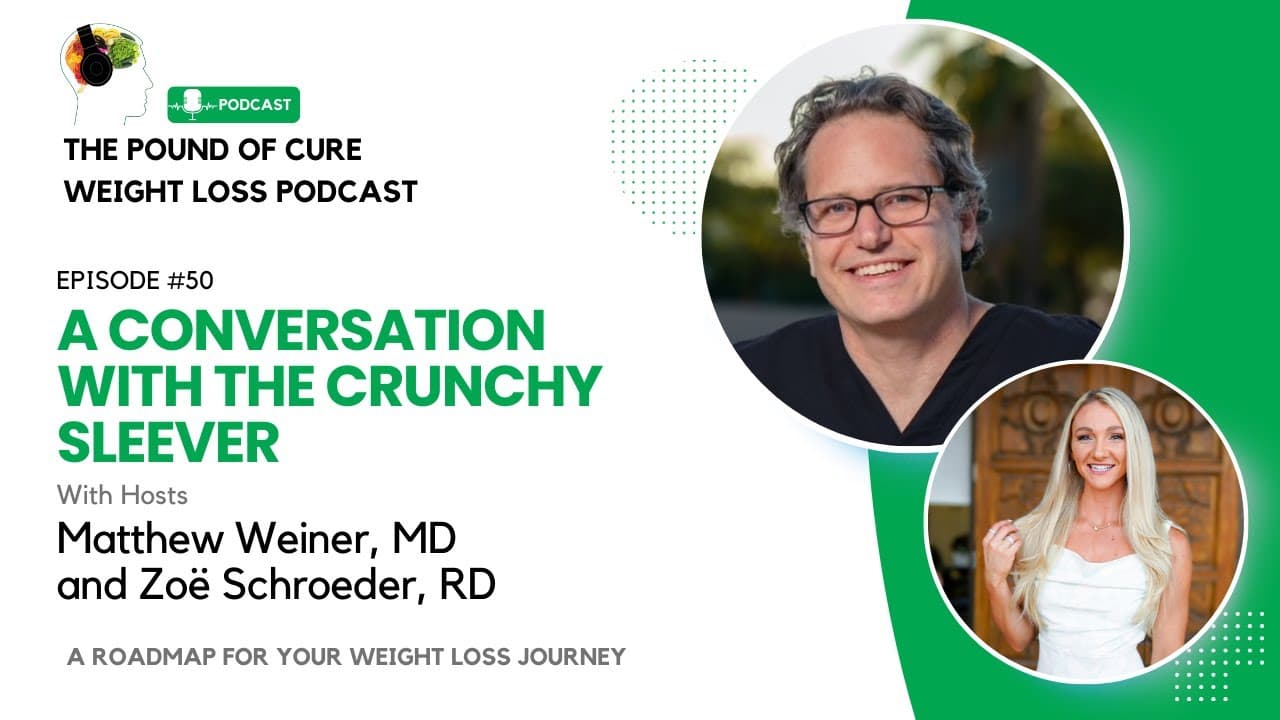
A Conversation with the Crunchy Sleever

A Conversation with the Crunchy Sleever podcast artwork

This episode of the Pound of Cure Weight Loss podcast follows Denise’s inspiring journey through bariatric surgery, bodybuilding, and discovering the transformative power of muscle and strength. Joined by Dr. Weiner and Zoe, Denise shares how she’s redefined her goals and found lasting wellness, showing that post-surgery life is about much more than just weight loss—it’s about building resilience and confidence. A Fresh Start with Bariatric Surgery Denise’s journey began in 2018, six years ag...

Podcast Summary

In this inspiring episode of the Pound of Cure Weight Loss podcast, host Dr. Matthew Weiner and co-host Zoe sit down with Denise, also known as the Crunchy Sleever, to discuss her remarkable transformation through bariatric surgery and beyond. Denise's story offers valuable insights for anyone considering weight loss surgery or working to maintain their results long term.

Denise began her bariatric surgery journey in 2018, six years before this conversation took place. Like many patients, she initially focused primarily on the number on the scale. However, her perspective shifted dramatically when she discovered the transformative power of building muscle and developing physical strength. This evolution in thinking represents an important lesson for bariatric patients: successful weight loss surgery is not just about losing pounds, but about building a healthier, more resilient body and mindset.

One of the most significant turning points in Denise's journey came when she moved beyond traditional weight loss goals and embraced bodybuilding. This shift allowed her to reframe her relationship with food, exercise, and her body. Rather than viewing her post-surgery life as a continuous battle against regaining weight, she began to see it as an opportunity to build something new. This mental shift is crucial for long-term success after bariatric surgery, as research consistently shows that patients who develop sustainable healthy habits and find joy in physical activity tend to maintain their weight loss more effectively.

Throughout the conversation, Denise emphasizes that her post-surgery experience has been about much more than achieving a certain number on the scale. She discusses how building muscle has improved her metabolic health, increased her confidence, and given her a sense of empowerment she never experienced during previous weight loss attempts. For many bariatric patients, this represents an important realization: the goal is not to become as small as possible, but to become as healthy and strong as possible.

Talk with our team

Have questions about this episode?

Send our Tucson weight loss team a note about bariatric surgery, GLP-1 medications, nutrition, or your next step with Pound of Cure.

More from this episode

Dr. Weiner and Zoe explore with Denise how strength training has complemented her bariatric surgery results. While the surgery provided the initial tool for weight loss, developing muscle has helped her maintain her results and improve her overall body composition. This is particularly important because maintaining muscle mass is a common challenge after bariatric surgery. Patients who prioritize protein intake and resistance training tend to preserve more lean muscle tissue during their weight loss phase and beyond.

The discussion also touches on how Denise has navigated the inevitable challenges that come with maintaining significant weight loss over several years. She shares practical strategies for staying motivated, dealing with plateaus, and adjusting her approach when what worked initially stops producing results. These real-world insights are invaluable for patients at any stage of their weight loss journey, whether they are preparing for surgery, in the active weight loss phase, or working to maintain their results long term.

Denise's story highlights an important theme that runs through many successful bariatric surgery experiences: the surgery is a tool, not a cure. The patients who achieve lasting success are those who use the surgery as a catalyst for broader lifestyle changes. For Denise, this meant discovering a passion for strength training and bodybuilding that continues to motivate her years after her initial procedure.

The episode also addresses the emotional and psychological aspects of dramatic weight loss. Denise talks candidly about how her self-perception has evolved and how building physical strength has translated into mental and emotional resilience. This connection between physical capabilities and psychological wellbeing is well documented in research on bariatric surgery outcomes. Patients who develop a positive relationship with exercise and view their bodies as capable and strong, rather than just smaller, often report higher quality of life and better long-term weight maintenance.

For listeners considering bariatric surgery, Denise's journey offers an encouraging perspective on what life can look like several years post-surgery. Rather than presenting an unrealistic picture of perfection, she shares an honest account of both triumphs and challenges. Her experience demonstrates that with commitment, support, and a willingness to evolve one's approach, patients can achieve outcomes that extend far beyond initial weight loss goals.

This episode serves as a reminder that successful bariatric surgery outcomes are about discovering what works for your individual body and lifestyle. While not every patient will become a bodybuilder like Denise, her story illustrates the importance of finding physical activities and wellness practices that bring joy and sustainability to your post-surgery life. Whether that means strength training, yoga, hiking, swimming, or any other form of movement, the key is developing habits that support both physical health and emotional wellbeing for the long term.

Weight loss topics covered in this episode

This conversation is part of the Pound of Cure approach to evidence-based weight loss education, including bariatric surgery, GLP-1 medications, nutrition counseling, metabolic health, and long-term patient support.

For more context, explore our guides to GLP-1 medications, bariatric surgery in Tucson, and the Metabolic Reset Diet.