Podcast
Episode 58January 2, 202528 min

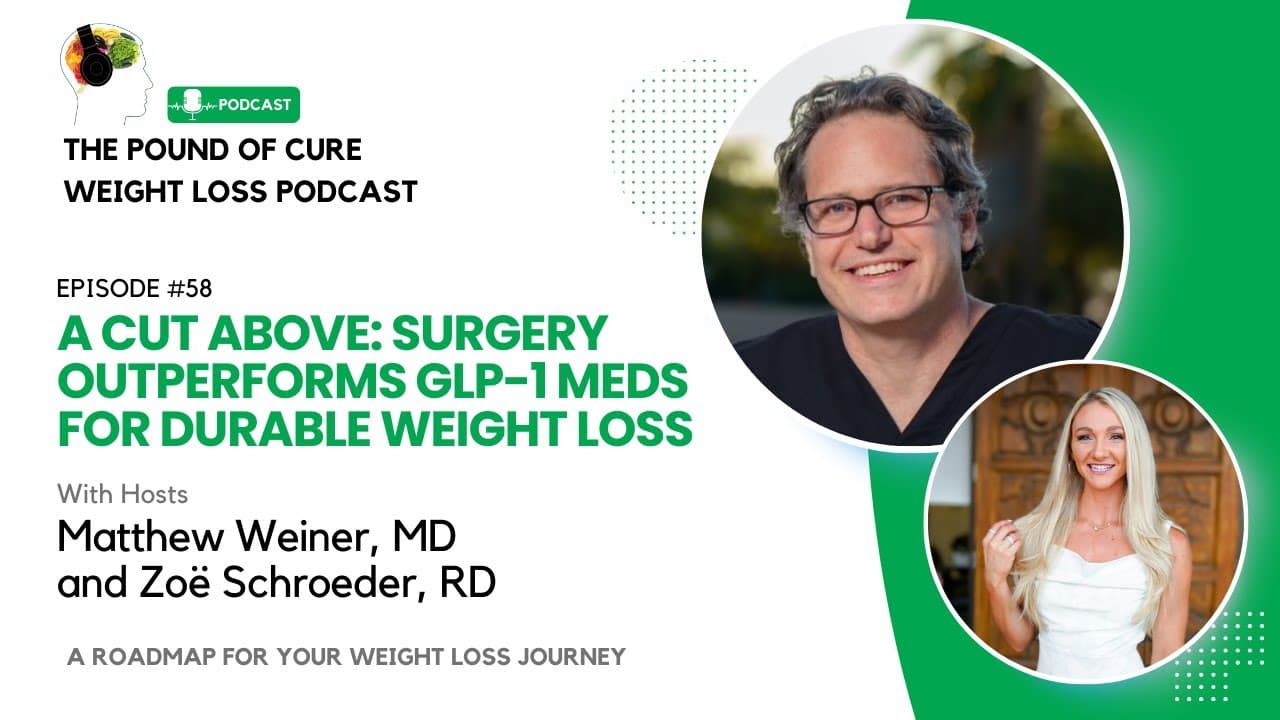
A Cut Above - Surgery Outperforms GLP-1 Meds for Durable Weight Loss

A Cut Above - Surgery Outperforms GLP-1 Meds for Durable Weight Loss podcast artwork

Welcome to episode 58 of the Pound of Cure Weight Loss Podcast, where Dr. Matthew Weiner and Zoe Schroeder dive into cutting-edge obesity treatments like GLP-1 medications (like Ozempic and Mounjaro) and their role alongside bariatric surgery and nutrition. This episode delivers insights into new research, nutrition strategies, and the future of affordable Semaglutide production. GLP-1 Medications vs. Bariatric Surgery: A Data-Driven Comparison A recent study presented at the American Society...

Podcast Summary

The landscape of weight loss treatment is evolving rapidly, and new research is shedding light on which approaches deliver the most durable results. Episode 58 of the Pound of Cure Weight Loss Podcast explores groundbreaking comparisons between bariatric surgery and GLP-1 medications like Ozempic and Mounjaro, helping patients understand their options for achieving lasting metabolic health improvements.

Recent data presented at the American Society for Metabolic and Bariatric Surgery reveals significant differences in long-term outcomes between surgical and medication-based approaches to obesity treatment. While GLP-1 receptor agonists have gained tremendous popularity and show impressive initial weight loss results, bariatric surgery continues to demonstrate superior durability when examining outcomes over extended time periods. This matters tremendously for patients who are investing time, money, and effort into their weight loss journey and want to understand which interventions are most likely to provide lasting benefits.

Dr. Matthew Weiner and Zoe Schroeder break down the specific findings from this comparative research, examining not just total weight loss percentages but also the sustainability of results over multiple years. The data shows that while medications like Semaglutide and Tirzepatide can produce meaningful weight reduction, patients who discontinue these medications frequently experience significant weight regain. In contrast, bariatric surgery patients tend to maintain a greater percentage of their weight loss over time, even years after their procedures.

This doesn't mean that GLP-1 medications don't have an important role in obesity treatment. These medications have revolutionized medical weight management and offer a valuable option for patients who may not be candidates for surgery or who prefer a non-surgical approach. The podcast discusses how these medications work by mimicking natural hormones that regulate appetite and blood sugar, leading to reduced hunger and improved metabolic function. For many patients, GLP-1 medications represent an accessible entry point into comprehensive weight management.

Talk with our team

Have questions about this episode?

Send our Tucson weight loss team a note about bariatric surgery, GLP-1 medications, nutrition, or your next step with Pound of Cure.

More from this episode

The episode also explores the intersection of surgical and medical approaches, recognizing that weight loss treatment is not always an either-or proposition. Some patients may benefit from combination approaches or may transition between different treatment modalities as their needs change. Understanding the strengths and limitations of each option allows patients and their healthcare providers to create personalized treatment plans that align with individual goals, medical conditions, and lifestyle factors.

Nutrition strategies remain foundational regardless of which weight loss intervention a patient pursues. The podcast emphasizes that neither surgery nor medication eliminates the need for thoughtful eating patterns and sustainable lifestyle modifications. Bariatric surgery changes the anatomy of the digestive system, creating both restriction and metabolic changes that support weight loss, but patients still need to make conscious food choices. Similarly, GLP-1 medications reduce appetite, but the quality of nutrition still matters tremendously for overall health outcomes.

An exciting development discussed in this episode involves the future of Semaglutide production and accessibility. As patents evolve and manufacturing expands, there is potential for more affordable versions of these medications to become available. This could dramatically change the cost-benefit analysis for patients who have been unable to access GLP-1 medications due to insurance limitations or out-of-pocket expenses. Increased affordability may allow more patients to benefit from medical weight management while researchers continue to study long-term outcomes.

The podcast provides valuable context for patients in Tucson and beyond who are navigating the increasingly complex world of obesity treatment. With so much information and misinformation circulating about weight loss medications and surgical options, having access to evidence-based discussions led by experienced bariatric professionals helps patients make informed decisions. Dr. Weiner's expertise in bariatric surgery combined with comprehensive discussions of all available treatment modalities ensures that listeners receive balanced, scientifically grounded information.

Metabolic health extends beyond the number on the scale, and this episode reinforces the importance of considering comprehensive health outcomes when evaluating weight loss treatments. Improvements in conditions like type 2 diabetes, high blood pressure, sleep apnea, and fatty liver disease are critical measures of success. The research discussed shows that bariatric surgery often produces more dramatic improvements in these obesity-related conditions compared to medication-based approaches, though GLP-1 medications also demonstrate meaningful metabolic benefits.

For patients considering their options, this episode of the Pound of Cure Weight Loss Podcast offers the kind of detailed, research-based information that supports truly informed decision-making. Whether someone is just beginning to explore weight loss treatments or is already engaged in their journey, understanding the comparative effectiveness of different approaches empowers better conversations with healthcare providers and more realistic expectations about outcomes. The key takeaway is that durable weight loss remains most reliably achieved through bariatric surgery, while GLP-1 medications offer an important and evolving tool in the comprehensive treatment of obesity.

Weight loss topics covered in this episode

This conversation is part of the Pound of Cure approach to evidence-based weight loss education, including bariatric surgery, GLP-1 medications, nutrition counseling, metabolic health, and long-term patient support.

For more context, explore our guides to GLP-1 medications, bariatric surgery in Tucson, and the Metabolic Reset Diet.