Podcast
Episode 52November 19, 202429 min

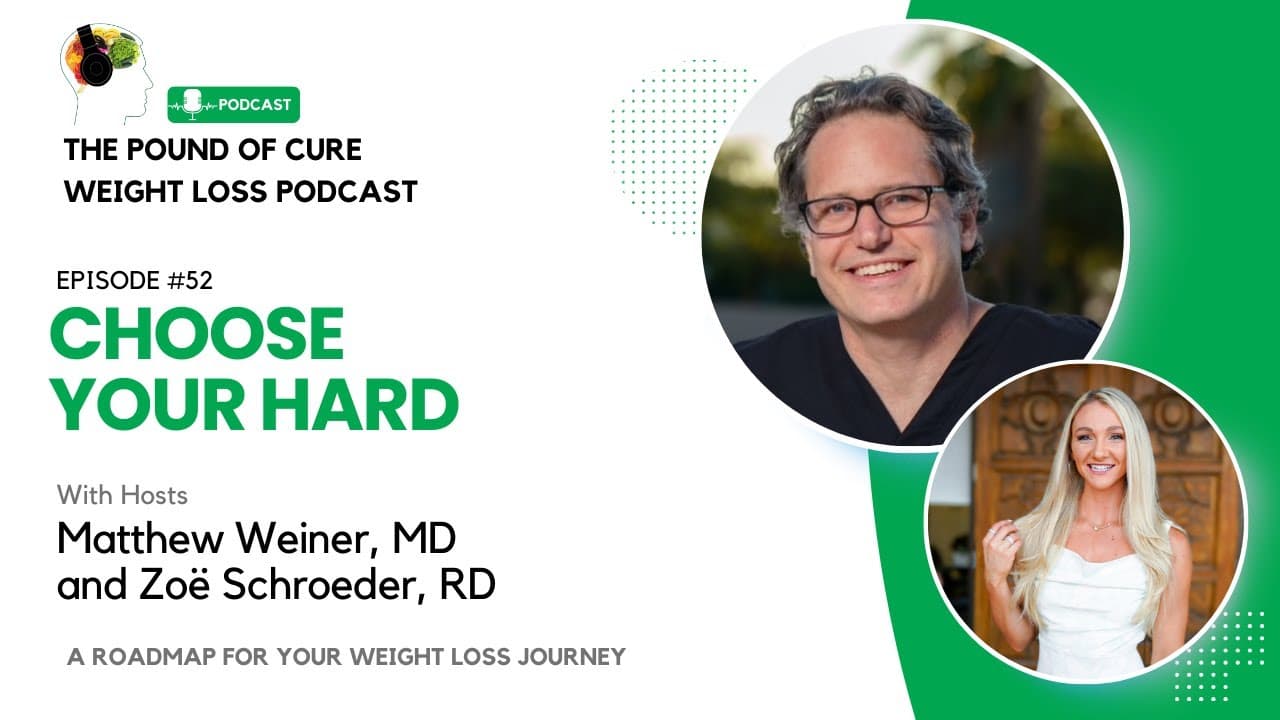
Choose Your Hard

Choose Your Hard podcast artwork

In Episode 52 of the Pound of Cure Weight Loss Podcast, we delve into Vanessa Ruiz’s (@myvanety) personal and transformative journey with sleeve gastrectomy, her experiences with body dysmorphia, and her decision to include compounded semaglutide in her weight management plan. Her story provides insight into the challenges many face with obesity treatment and the importance of the “Choose Your Hard” mindset. Vanessa’s Journey to Sleeve Gastrectomy Vanessa grew up struggling with weight, influ...

Podcast Summary

In this powerful episode of the Pound of Cure Weight Loss Podcast, Vanessa Ruiz shares her deeply personal journey through weight loss surgery and the ongoing challenges of maintaining a healthy weight. Her story exemplifies a crucial concept in weight management: choosing your hard. Living with obesity is hard, but so is the work required to achieve and maintain weight loss. The key is deciding which challenge you're willing to face.

Vanessa's struggles with weight began in childhood, shaped by family eating patterns and a complicated relationship with food. Like many people who eventually pursue bariatric surgery, she tried numerous diets and weight loss approaches throughout her life, experiencing the frustrating cycle of losing weight only to regain it. This pattern is incredibly common and reflects the biological reality that obesity is a chronic disease, not simply a matter of willpower or discipline.

When Vanessa decided to pursue sleeve gastrectomy, she was making an informed choice about her health. Bariatric surgery represents one of the most effective tools available for significant weight loss and improvement of obesity-related health conditions. The sleeve gastrectomy procedure involves removing a portion of the stomach, which reduces its size and changes the production of hunger hormones. This creates both mechanical restriction and hormonal changes that support weight loss.

However, Vanessa's story doesn't end with surgery. Her experience highlights an important reality that weight loss professionals want patients to understand: bariatric surgery is a tool, not a cure. While surgery can create dramatic initial results, maintaining that weight loss requires ongoing commitment, lifestyle changes, and sometimes additional interventions. This isn't a failure of the surgery or the patient. It reflects the complex, chronic nature of obesity as a disease.

Talk with our team

Have questions about this episode?

Send our Tucson weight loss team a note about bariatric surgery, GLP-1 medications, nutrition, or your next step with Pound of Cure.

More from this episode

One of the most challenging aspects of Vanessa's journey involved body dysmorphia, a condition where someone has a distorted perception of their body. Even after significant weight loss, many patients struggle to see themselves accurately or feel comfortable in their transformed bodies. This psychological component of weight loss is often underestimated but can significantly impact long-term success and quality of life. Addressing these mental health aspects is just as important as the physical changes.

As part of her ongoing weight management strategy, Vanessa made the decision to incorporate compounded semaglutide into her plan. Semaglutide belongs to a class of medications called GLP-1 receptor agonists, which work by mimicking a natural hormone that regulates appetite and blood sugar. These medications have revolutionized obesity treatment by providing an additional tool for people who need help managing hunger and cravings, even after bariatric surgery.

The use of GLP-1 medications after bariatric surgery is becoming more common and represents an important shift in how we think about obesity treatment. Some patients experience weight regain after surgery or find that their initial weight loss plateaus before reaching their health goals. Adding a GLP-1 medication can help restart weight loss or prevent regain. This combination approach recognizes that different tools work together to address the multiple factors that contribute to obesity.

Vanessa's choice to use compounded semaglutide reflects the practical realities many patients face. Compounded medications can offer more affordable access to treatments that might otherwise be cost-prohibitive. While brand-name GLP-1 medications can be extremely expensive, especially without insurance coverage, compounded versions provide an alternative for patients who need this medication but cannot afford the branded options.

The central theme of choosing your hard resonates throughout Vanessa's story. Living with obesity comes with significant challenges, including increased risk of diabetes, heart disease, joint problems, and reduced quality of life. But the journey to lose weight and maintain that loss also involves challenges. It requires changing lifelong habits, facing emotional and psychological hurdles, committing to regular exercise, making careful nutrition choices, and sometimes using medications or undergoing surgery. Neither path is easy, but one leads to improved health and wellbeing.

This concept applies broadly to weight management decisions. Choosing to have bariatric surgery means choosing the hard work of recovery, permanent dietary changes, and lifelong follow-up. Choosing to use GLP-1 medications means accepting possible side effects, the cost, and the commitment to ongoing treatment. Choosing to lose weight through lifestyle modification alone means choosing the hard work of consistent behavioral change without additional tools. Each approach has its difficulties, but also its rewards.

Vanessa's willingness to share her journey provides valuable insight for others facing similar struggles. Her story demonstrates that successful weight management often requires multiple tools, ongoing adjustment of strategies, and addressing both physical and psychological aspects of obesity. It also shows that setbacks and challenges don't represent failure but are normal parts of managing a chronic disease.

For anyone struggling with obesity, Vanessa's experience offers both realistic expectations and hope. Weight loss is challenging, and maintaining that loss requires continued effort. But with the right combination of tools, including surgery, medication, nutrition support, and mental health care, significant improvement is possible. The question isn't whether the journey will be hard, but rather which hard you choose to face.

Weight loss topics covered in this episode

This conversation is part of the Pound of Cure approach to evidence-based weight loss education, including bariatric surgery, GLP-1 medications, nutrition counseling, metabolic health, and long-term patient support.

For more context, explore our guides to GLP-1 medications, bariatric surgery in Tucson, and the Metabolic Reset Diet.