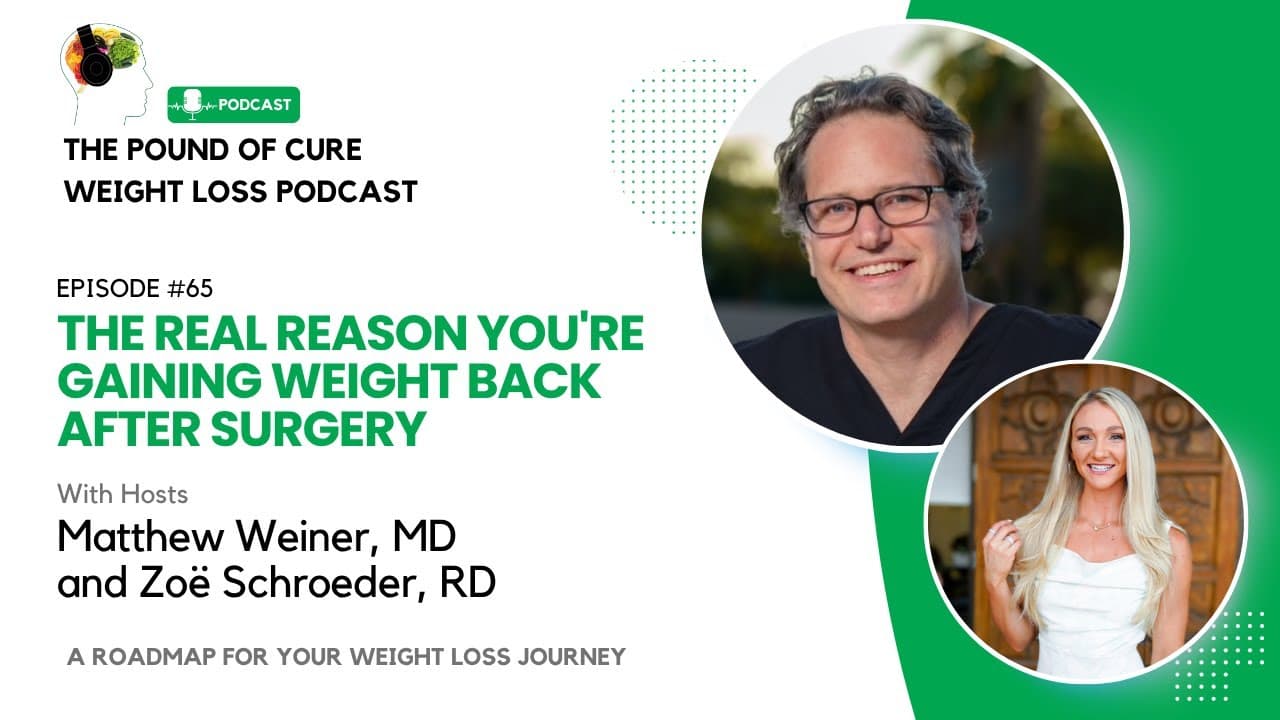
Podcast Summary
Weight regain after bariatric surgery is a frustrating reality that many patients face, often leaving them feeling defeated and wondering what went wrong. In this comprehensive episode of the Pound of Cure weight loss podcast, Dr. Matthew Weiner and Zoë tackle the complex issue of post-surgical weight regain head-on, offering patients practical insights and evidence-based explanations for why this happens and what can be done about it.
The discussion begins with an honest look at the expectations versus reality of bariatric surgery outcomes. While surgery can be an effective tool for initial weight loss, many patients experience weight regain months or years after their procedure. This isn't a failure of willpower or discipline. Instead, it reflects the body's powerful metabolic adaptations and the underlying biological mechanisms that drive weight regulation. Understanding these mechanisms is crucial for patients who find themselves regaining weight despite their best efforts to follow post-operative guidelines.
Dr. Weiner explains how the body's metabolic rate adjusts following significant weight loss, whether achieved through surgery or other methods. This metabolic adaptation means the body becomes more efficient at storing energy and may require fewer calories to maintain weight than before. For post-surgical patients, this can create a challenging situation where the caloric intake that initially led to continued weight loss eventually becomes insufficient to prevent regain. The hormonal changes that occur after surgery, while initially beneficial, may also shift over time, reducing some of the appetite-suppressing benefits that patients experienced immediately following their procedure.
The episode addresses several listener questions about practical nutrition strategies that can support long-term weight management. Fiber emerges as a critical component of a successful post-surgical diet, with the hosts explaining how adequate fiber intake supports digestive health, promotes satiety, and helps regulate blood sugar levels. Many bariatric patients struggle to consume enough fiber due to reduced stomach capacity and dietary restrictions, making it essential to prioritize fiber-rich foods within the limited amount of food they can eat.
Talk with our team
Have questions about this episode?
Send our Tucson weight loss team a note about bariatric surgery, GLP-1 medications, nutrition, or your next step with Pound of Cure.
More from this episode
Protein shakes are another topic of discussion, with the podcast examining both their benefits and potential drawbacks. While protein supplementation can be valuable for meeting protein requirements after surgery, especially in the early post-operative period, relying too heavily on liquid calories may not provide the same metabolic benefits as whole food sources of protein. The hosts emphasize the importance of gradually transitioning to solid protein sources when possible, while recognizing that some patients may need to continue supplementation to meet their nutritional needs.
A particularly important segment focuses on non-responders, those patients who don't achieve expected weight loss results despite following recommended protocols. This phenomenon affects not only bariatric surgery patients but also those using GLP-1 medications and other weight loss treatments. Dr. Weiner discusses the various factors that can contribute to treatment resistance, including genetic variations, hormonal imbalances, medication interactions, and underlying metabolic conditions that may not have been fully addressed before beginning treatment.
The conversation expands to address systemic issues within the healthcare system that impact weight loss treatment and long-term success. The influence of pharmaceutical companies on treatment guidelines and the financial barriers many patients face when seeking comprehensive metabolic care are examined critically. These structural problems can leave patients without access to the multidisciplinary support they need for sustained weight management, including nutritional counseling, mental health services, and ongoing medical monitoring.
Throughout the episode, both hosts emphasize that weight regain after surgery is not a personal failure but rather a predictable biological response that requires ongoing management and support. Just as patients with diabetes or hypertension require long-term treatment, individuals who have undergone bariatric surgery need continued care and intervention to maintain their results. This might include the addition of weight loss medications, adjustments to nutrition plans, increased physical activity, or addressing psychological factors that influence eating behaviors.
The discussion also touches on the importance of setting realistic expectations from the beginning of the weight loss journey. While bariatric surgery can produce dramatic initial results, maintaining those results requires lifelong commitment to dietary changes, regular physical activity, and ongoing medical follow-up. Patients who understand this from the outset are better prepared to navigate the challenges of long-term weight management and less likely to experience the discouragement that comes from unrealistic expectations.
For patients experiencing weight regain, the episode offers hope and practical direction. Rather than viewing regain as an endpoint, it can be seen as a signal that additional intervention or strategy adjustment is needed. Whether that means exploring medication options, working more closely with a dietitian, addressing sleep or stress issues, or investigating underlying hormonal problems, there are multiple pathways to get back on track. The key is recognizing that successful long-term weight management is rarely a straight line but rather requires ongoing adaptation and personalized care.
Weight loss topics covered in this episode
This conversation is part of the Pound of Cure approach to evidence-based weight loss education, including bariatric surgery, GLP-1 medications, nutrition counseling, metabolic health, and long-term patient support.
For more context, explore our guides to GLP-1 medications, bariatric surgery in Tucson, and the Metabolic Reset Diet.
