Podcast
Episode 61April 4, 20251h 0m

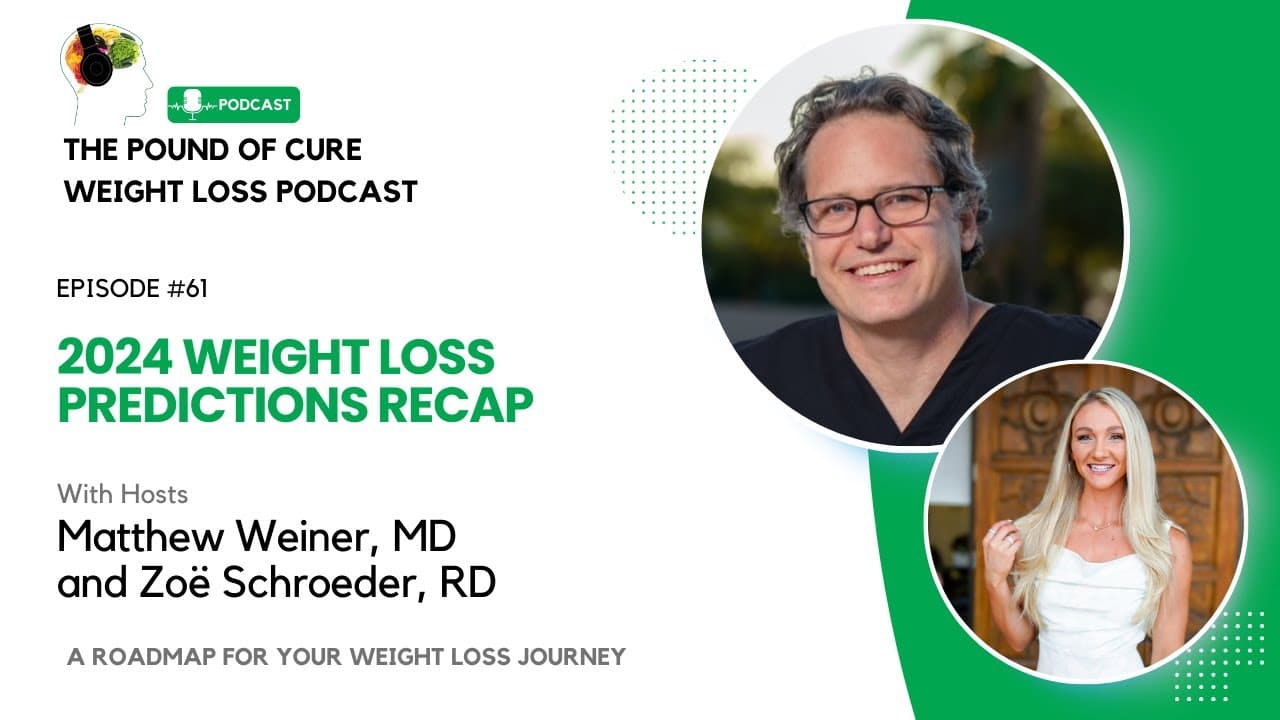
Episode 61: 2024 Weight Loss Predictions Recap

Episode 61: 2024 Weight Loss Predictions Recap podcast artwork

In this episode, Dr. Matthew Weiner and Zoë discuss their predictions for weight loss trends in 2024, including the rise of ZepBound over Ozempic, the ongoing debate between plant-based and keto diets, and the challenges of insurance coverage for GLP-1 medications. They also explore the increasing role of AI in weight loss management and the future of compounded medications in the healthcare landscape. In this conversation, Zoë and Dr. Matthew Weiner discuss the complexities of weight loss, t...

Podcast Summary

In this fascinating episode of the Pound of Cure Weight Loss Podcast, Dr. Matthew Weiner and Zoë take a look back at their weight loss predictions for 2024 to see how accurate their forecasts turned out to be. The discussion covers some of the most significant trends and developments in weight management over the past year, offering valuable insights for anyone on their own weight loss journey.

One of the major predictions discussed was the rise of Zepbound as a leading weight loss medication. Dr. Weiner and Zoë predicted that Zepbound would overtake Ozempic in popularity, and they examine whether this shift actually occurred throughout 2024. The conversation explores why certain GLP-1 medications have gained more traction than others, looking at factors like effectiveness, side effects, and patient preferences. These medications have revolutionized weight loss treatment by helping patients feel fuller longer and reducing cravings, making sustainable weight loss more achievable for many people.

The episode also addresses the ongoing debate between plant-based diets and ketogenic approaches to weight loss. Dr. Weiner and Zoë discuss how these two popular dietary strategies continued to compete for attention in 2024, with passionate advocates on both sides. The conversation highlights that there is no single perfect diet for everyone, and successful weight loss often depends on finding an eating pattern that fits your individual lifestyle, preferences, and metabolic health needs. Understanding the science behind different dietary approaches can help patients make more informed decisions about their nutrition.

Insurance coverage for GLP-1 medications remains one of the most challenging aspects of modern weight loss treatment. The hosts explore the complexities of getting these potentially life-changing medications covered by insurance companies. Many patients struggle with denials or high out-of-pocket costs, even when these medications could significantly improve their health outcomes. Dr. Weiner and Zoë discuss the evolving landscape of insurance policies and what patients might expect when seeking coverage for these treatments.

Talk with our team

Have questions about this episode?

Send our Tucson weight loss team a note about bariatric surgery, GLP-1 medications, nutrition, or your next step with Pound of Cure.

More from this episode

Artificial intelligence is making its way into weight loss management, and this episode examines how AI tools are being integrated into treatment plans. From personalized meal planning to predictive analytics that help identify which interventions might work best for individual patients, technology is changing how healthcare providers approach weight management. Dr. Weiner shares insights on how these tools can complement traditional approaches like bariatric surgery and medical weight loss programs, rather than replace the human element of care.

The discussion also covers compounded medications and their role in the healthcare landscape. As demand for GLP-1 medications has sometimes exceeded supply, compounded versions have emerged as alternatives. Dr. Weiner and Zoë explore the benefits and potential concerns surrounding these compounded options, helping patients understand what they should know when considering these treatments. The regulatory environment around compounded medications continues to evolve, and staying informed is crucial for patient safety.

Throughout the episode, the hosts emphasize that weight loss is far more complex than simply eating less and moving more. Multiple factors influence body weight, including hormones, metabolism, genetics, stress levels, sleep quality, and underlying medical conditions. Successful long-term weight management often requires a comprehensive approach that addresses these various elements rather than relying on any single intervention.

Dr. Weiner brings his expertise as a bariatric physician to the conversation, offering a medical perspective on how predictions align with real-world patient experiences. He discusses what he has observed in his practice throughout 2024 and how emerging trends have affected patient outcomes. The conversation remains grounded in practical advice that listeners can apply to their own weight loss efforts.

The episode serves as both a reflection on the past year and a guide for what patients might expect moving forward. By understanding which predictions came true and which did not, listeners gain valuable context for navigating their own weight loss journeys. Whether someone is considering GLP-1 medications, exploring dietary changes, thinking about bariatric surgery, or simply trying to understand the latest developments in weight management, this episode offers evidence-based information delivered in an accessible, patient-friendly format.

For anyone struggling with weight loss or trying to maintain their progress, this episode provides reassurance that the field continues to advance with new tools and understanding. The key takeaway is that effective weight loss treatment increasingly recognizes individual differences and offers multiple pathways to success, whether through medication, surgery, dietary changes, or combinations of approaches tailored to each person's unique situation.

Weight loss topics covered in this episode

This conversation is part of the Pound of Cure approach to evidence-based weight loss education, including bariatric surgery, GLP-1 medications, nutrition counseling, metabolic health, and long-term patient support.

For more context, explore our guides to GLP-1 medications, bariatric surgery in Tucson, and the Metabolic Reset Diet.