Podcast Summary
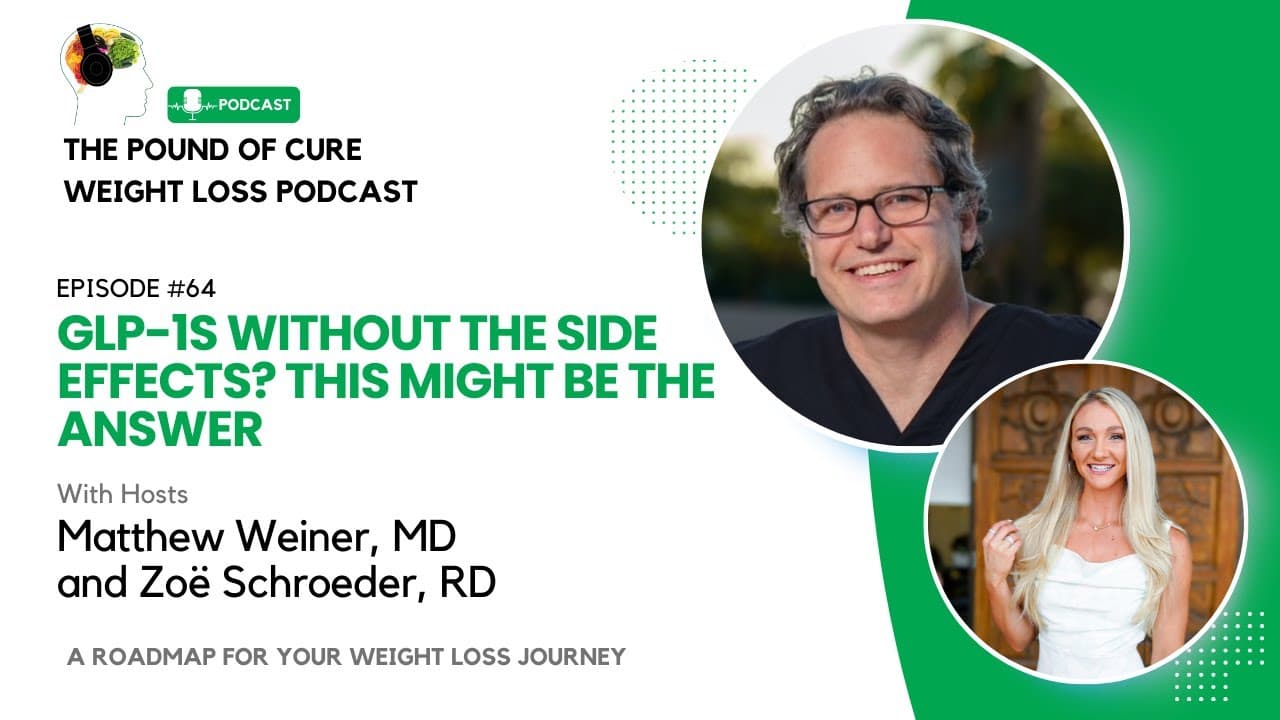
Weight loss medications have transformed how doctors approach obesity treatment, but many patients struggle with uncomfortable side effects that make these powerful tools difficult to tolerate. In this episode of the Pound of Cure Weight Loss Podcast, Dr. Matthew Weiner and Zoë explore an innovative approach that may help patients get the benefits of GLP-1 medications while minimizing the nausea, vomiting, and digestive issues that cause so many people to stop treatment early.
GLP-1 medications have become incredibly popular for weight loss, but recent changes in compounding laws have created confusion for patients and providers alike. The FDA's decisions about medication availability have affected access to these treatments, making it more important than ever to understand how to use available options effectively. Dr. Weiner explains the regulatory landscape and what it means for patients seeking weight loss support.
The concept of microdosing represents a potential game-changer in how we think about GLP-1 therapy. Rather than following standard dosing protocols that work for some patients but overwhelm others, microdosing involves using smaller amounts of medication tailored to individual tolerance and response. This personalized approach recognizes that every patient's body responds differently to these powerful metabolic medications.
Many patients discontinue GLP-1 medications not because they don't work, but because the side effects become unbearable. Nausea can be so severe that people cannot function at work or enjoy meals with family. Vomiting, constipation, and abdominal discomfort diminish quality of life to the point where the cure feels worse than the condition. Microdosing offers a path forward for these patients who want the metabolic benefits without the misery.
Talk with our team
Have questions about this episode?
Send our Tucson weight loss team a note about bariatric surgery, GLP-1 medications, nutrition, or your next step with Pound of Cure.
More from this episode
The science behind microdosing is rooted in understanding how these medications work in the body. GLP-1 medications slow stomach emptying, increase feelings of fullness, and affect brain centers that control appetite. These effects don't require maximum doses to be beneficial. For many patients, a lower dose can provide meaningful weight loss and metabolic improvements while the body adjusts more gradually to the medication's effects.
Personalized patient care stands at the heart of this approach. Cookie-cutter protocols that advance everyone through the same dose escalation schedule ignore the reality that bodies are different. Some patients are highly sensitive to medications and need gentler increases. Others may reach their goals at doses lower than the maximum approved amount. The key is finding what works for each individual rather than forcing everyone into the same treatment box.
Dr. Weiner emphasizes that microdosing is not about using less medication to save money or cutting corners. It's about strategic dosing that maximizes benefits while minimizing harm. This requires careful monitoring, regular follow-up, and adjustments based on how patients actually feel and respond. It's precision medicine applied to weight loss treatment.
The conversation also touches on the broader context of metabolic health. Weight loss medications are tools, not magic solutions. They work best when combined with attention to nutrition, movement, sleep, and stress management. Patients who view these medications as part of a comprehensive approach to health tend to achieve better long-term results than those who rely on medication alone.
For patients who have tried bariatric surgery or are considering it, understanding medication options is increasingly important. Some people use GLP-1 medications as a bridge to surgery, while others find that medication allows them to avoid surgery altogether. Still others benefit from medication after surgery to maintain their results. The relationship between surgical and medical weight loss continues to evolve.
The future of weight loss treatment likely involves more options, not fewer. As researchers better understand the complex biology of obesity, new medications and new ways of using existing medications will emerge. Innovative dosing strategies like microdosing represent the kind of creative thinking that will help more patients succeed in their weight loss journeys.
Patients interested in GLP-1 medications should have detailed conversations with their healthcare providers about dosing strategies. Questions to ask include whether microdosing might be appropriate, how side effects will be monitored and managed, and what the plan is if standard dosing causes intolerable symptoms. The goal is finding an approach that is sustainable over the long term.
This episode offers hope for patients who have struggled with weight loss medication side effects or who have been hesitant to try these treatments because of stories they've heard from friends and family. With thoughtful, individualized approaches to dosing, more people may be able to access the powerful benefits of GLP-1 medications without sacrificing their quality of life in the process.
Weight loss topics covered in this episode
This conversation is part of the Pound of Cure approach to evidence-based weight loss education, including bariatric surgery, GLP-1 medications, nutrition counseling, metabolic health, and long-term patient support.
For more context, explore our guides to GLP-1 medications, bariatric surgery in Tucson, and the Metabolic Reset Diet.
