Podcast Summary
Episode Overview
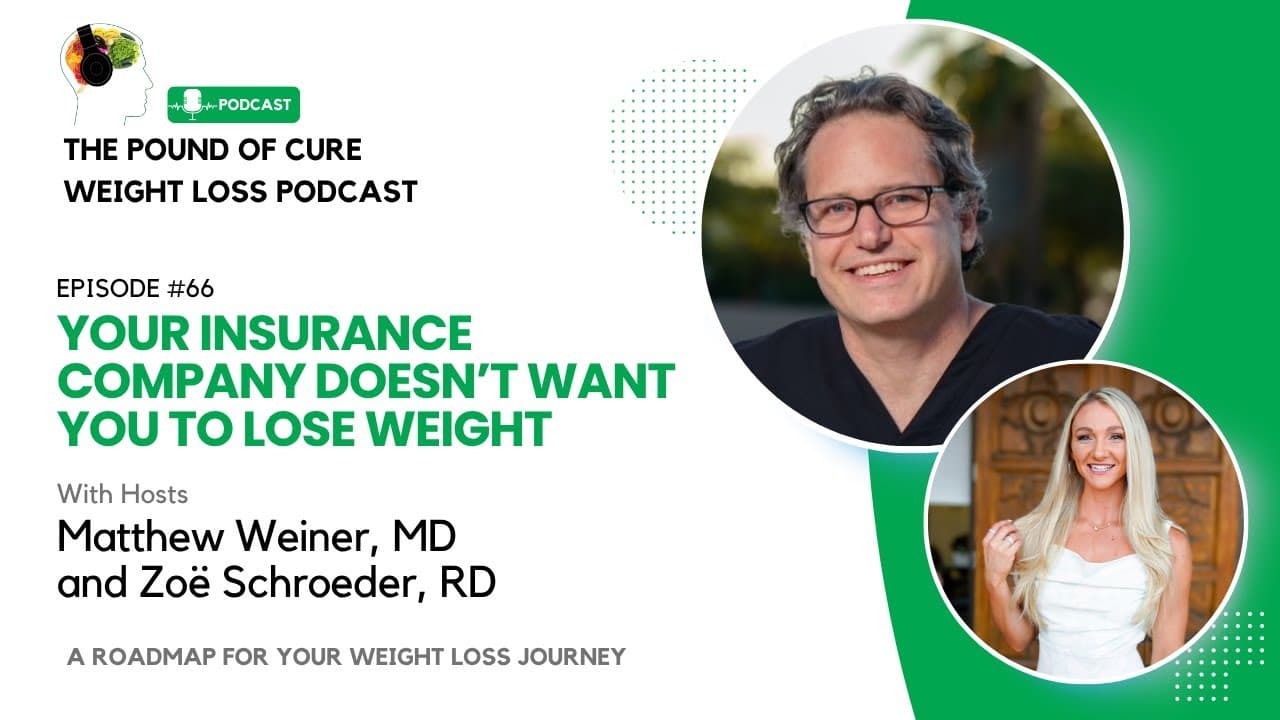
In Episode 66 of the Pound of Cure Weight Loss Podcast, Dr. Matthew Weiner and Zoë tackle critical issues affecting patients struggling with obesity today. They discuss how insurance companies force patients to switch from more effective weight loss medications to inferior options, explore which antidepressants cause the most weight gain, and compare bariatric surgery outcomes to GLP-1 medications. The conversation emphasizes individualized patient care and exposes serious flaws in the American healthcare payment system.
Why Insurance Companies Force Medication Switches
Dr. Weiner starts by discussing a New York Times article titled "Why Patients Are Being Forced to Switch to a Second Choice Obesity Drug." He explains that CVS Caremark, which handles about one-third of all prescriptions in the United States, now only covers Wegovy for weight loss instead of ZepBound.
Talk with our team
Have questions about this episode?
Send our Tucson weight loss team a note about bariatric surgery, GLP-1 medications, nutrition, or your next step with Pound of Cure.
More from this episode
This decision has nothing to do with what works best for patients. According to Dr. Weiner, ZepBound is clearly superior to Wegovy because it produces more weight loss with fewer side effects, particularly less constipation. His practice prescribes Wegovy only when insurance companies mandate it.
The Role of Pharmacy Benefit Managers
Caremark is a pharmacy benefit manager, or PBM. Dr. Weiner emphasizes that PBMs choose their formularies to optimize their own profits, not to reduce drug costs for patients. This explains why GLP-1 medications cost $1,200 per month in the United States but only $200 in other countries.
When Caremark made this switch, hundreds of patients immediately called the practice saying they received letters stating they could no longer get ZepBound and had to switch to Wegovy. While the conversion was made easy without requiring new prior authorizations, the change creates serious problems for patients.
Patient Impact of Forced Switches
The full dose of Wegovy is equivalent to only 5 milligrams of ZepBound. Patients who were taking 10 milligrams or higher doses of ZepBound are effectively getting a dose decrease, which will likely cause them to gain weight.
Many patients had already tried Wegovy without success before their doctors switched them to ZepBound. Now they are being forced back onto a medication that did not work for them.
Wegovy causes significantly more side effects than ZepBound, especially constipation. Dr. Weiner reports that constipation is the number one reason patients tell him they stop taking weight loss medications. Daily suppositories for bowel management is not something most people want to depend on long term. When patients stop their medications due to side effects, they lose the health benefits, which ultimately benefits Caremark financially.
Healthcare System Collapse Predictions
Dr. Weiner believes this move by Caremark represents desperate attempts to squeeze every last dollar before a financial collapse of the healthcare payment system. He notes that UnitedHealthcare has lost half its value recently. Healthcare represents 17 percent of the United States GDP, so a 10 percent reduction in healthcare costs would mean a 1.7 percent drop in GDP, which qualifies as recession numbers.
Dr. Weiner predicts we are headed toward a healthcare recession and that he will witness the collapse of major insurance companies like Cigna, United, Blue Cross, and Aetna during his remaining 10 to 15 years of practice. He wants to be on the front lines creating new ways of paying for healthcare and treating patients.
The Future of GLP-1 Medication Access
Dr. Weiner suspects this Caremark policy may be short lived. Eli Lilly might make a countermove, though he worries they are pushing Lilly Direct, where the pharmaceutical company essentially owns the pharmacy and refers patients to specific telemedicine companies like Form Health.
He compares this to Optum owning both doctors and Medicare Advantage plans, allowing them to control the entire cycle to generate maximum revenue. Dr. Weiner does not like pharmaceutical companies owning physicians and pharmacies.
As medication prices drop to $300 per month, many people will be willing to pay out of pocket, which might become Lilly's strategy. Dr. Weiner emphasizes that your insurance company does not care about you or your health. They want to extract as much money as possible while you are healthy, and when you get sick, they want you to die as quickly as possible.
Antidepressants and Weight Gain
Zoë introduces an article from MSN about how some antidepressants contribute to weight gain more than others. Dr. Weiner has been discussing this topic since creating his first video about medications causing weight gain in 2014.
Research on SSRIs and Weight
In the last year or two, large studies using Epic electronic medical records have examined how different antidepressants affect weight. Researchers can quickly compare weights of people taking specific medications versus those not taking them.
The studies show that people gain weight with these medications. Weight gain can range from half a pound to three or four pounds or even more. Different medications cause different amounts of weight gain.
Lexapro (escitalopram) caused more weight gain than sertraline (Zoloft). Paxil was the worst for weight gain. Dr. Weiner also notes that Paxil is a difficult antidepressant to stop. You cannot just quit it or you will have severe withdrawal symptoms. Patients must wean off Paxil very slowly over months.
The Prescription Process Problem
Dr. Weiner explains that the broken healthcare system has sucked so much money out that medical practices are barely getting by financially. Employed physicians must hit metrics or their salaries go down. This creates incentives to rush patients through appointments and treat the chart rather than the person.
The typical visit becomes: listen to your problem, nod sympathetically three times, then write a prescription. A decision to start an SSRI should probably take an hour or two of counseling, maybe meeting with a therapist, trying meditation and other interventions, and creating a thorough plan before starting medication. None of that happens because there is no financial incentive for it.
Dr. Weiner stresses he is not saying antidepressants are not important. They are incredibly helpful for some people. But they also do not work at all for other people, yet patients keep taking them. The decision needs to be more thoughtful, particularly if you are struggling with your weight, because mood and weight are tightly linked.
Recommendations Before Starting Antidepressants
If you are on an SSRI and it is really helpful, absolutely stay on it. However, do not stop it without your physician because withdrawal can be severe. You must talk to the prescribing physician and wean off appropriately if you decide to discontinue.
The more important point is that the decision to go on these medications, especially if you are struggling with your weight, should be made very carefully. Explore gratitude journaling, meditation, and exercise before considering antidepressants. These interventions can help reduce your weight.
Just like with GLP-1 medications, when you start on Zoloft, when will you stop? For someone who lost a loved one or experienced a stressful event, using medication to get through that period might make sense. But for generalized depression, you are now on another medicine for life.
Zoë mentions a social media trend where people say "I'm so sorry to report that" followed by listing gratitude journaling, going for walks outside, lifting weights, and eating vegetables, "it works, it really does work." Having a nuanced conversation and thoughtful approach without rushing is important.
Dr. Weiner wonders why companies are not offering programs where you pay $59 per month to meet with a coach and work through these interventions before starting antidepressants. There may be liability issues when dealing with mental health, but it could be a good option. He and Zoë joke about creating a wellness community as "Pound of Cure Part 2."
Bariatric Surgery Versus GLP-1 Medications
The final article from Medscape asks whether weight loss surgery instead of GLP-1s or both together is best. Zoë notes that Dr. Weiner has been saying what the article concludes throughout the entire podcast series.
History and Safety of Bariatric Surgery
Bariatric surgery has been performed since the 1970s, with gastric bypass becoming established in the 1980s. Other surgeries like vertical banded gastroplasty (stomach stapling) did not stand the test of time, but gastric bypass did. Sleeve gastrectomy has been performed for about 20 years. Duodenal switch has been available since the 1980s.
Laparoscopic techniques greatly improved safety. The article mentions a 4 percent major complication rate, but Dr. Weiner reports seeing only 1 percent serious complications in his practice. The sepsis rate is approximately 0.1 percent, meaning serious infections after surgery are extremely rare.
Many skilled bariatric surgeons across the country have performed thousands of surgeries with excellent safety records. All outcomes are tracked nationally, and Dr. Weiner reviews this data regularly. Most bariatric surgeons do a very good job and perform surgery safely.
Surgery Versus Medications: The Evidence
There is absolutely no question that in 2025, bariatric surgery is more successful and more cost effective than GLP-1 medications. The only problem is you need to have surgery, which most people do not want to do. Dr. Weiner completely understands that reluctance.
The medications are currently very expensive. The conversation becomes more interesting at $200 or $300 per month. However, even at lower prices, most sleeve gastrectomy patients eventually need the medications too. Surgery does not free you from the need for medications.
The Stepwise Approach
Dr. Weiner emphasizes that the answer is not surgery versus medications, but both. The answer is a stepwise progression through treatment options.
In his practice, almost everybody starts on medications if possible. Patients move to surgery if they need additional weight loss, if they are non-responders to medications, if they lose access to medications, or if they choose surgery because they do not want to be on medications long term.
Almost everyone who comes to the practice starts with medications, even if they are considering bariatric surgery. What matters alongside medication or surgery is the nutritional plan.
Nutrition: The Foundation of Success
Zoë explains that while there are different tools available (medications, surgery), the nutrition changes they work on are pretty similar regardless of which path someone takes. The foundational habits include hydration, movement, and shifting away from processed foods while eating more aligned with the metabolic reset diet.
Avoiding Overwhelm
What is really important to Zoë when first meeting people is helping them not feel overwhelmed. It can feel very overwhelming when your journey seems long with so much to change and so much weight to lose.
People can get stuck in a mindset of "I have to do everything all at once, I have to make all the changes right away." That might work for a couple of weeks or months, but Dr. Weiner emphasizes he does not care what you weigh in six months. What matters is what you weigh in six years.
People coming to the practice have tried many things in the past. The goal is for their work with Pound of Cure to be the last thing they have to do. That means taking a smaller, more stepwise approach.
Starting Small for Long-Term Success
If the metabolic reset diet feels too overwhelming, start by focusing on eating a pound of vegetables a day. This naturally crowds out higher processed foods and reduces snacking on other things. There is a cascade effect where producing results, whether weight loss or feeling better with more energy and less hunger and cravings, provides positive feedback that builds momentum.
This momentum creates motivation to continue moving forward, especially with support from the community at Pound of Cure. This approach helps people not feel overwhelmed and builds confidence and self-trust to keep progressing.
The nutrition changes, lifestyle changes, and movement changes are not habits you do short term just to lose weight. The goal is establishing them as habits and changing your identity. There is a powerful difference between "I like to go for a morning walk because of how it sets me up for success for the day" versus "I'm going for a walk in the morning because I'm trying to lose weight."
Changing Your Identity
Dr. Weiner loves the concept of changing your identity. Many people say "I'm not the type of person who likes vegetables or who eats vegetables" or "I'm not the type of person who enjoys walking outside." That often sells yourself short.
You can be the type of person you decide to be. As soon as you start imposing limitations based on your history, you are already blocking your path forward. Getting people to change that idea is critical. As Zoë often says, success is the greatest motivator.
Low Dose Medications with Maximum Nutrition
Dr. Weiner likes to get people on medications as soon as possible because it builds trust in the program. Most people want to get on medications right away since that is what they came for.
The practice focuses on low doses. The shortage and cost of medications means the total cost is much less when the dose is lower. That puts pressure on better nutrition, which is valuable.
The low dose, maxing out nutrition approach is absolutely the single best first step for anybody's weight loss journey, whether they want surgery or not. If you are a super responder and that low dose with good nutrition drops 100 pounds, you are done. You will probably be happy staying on a low dose.
The risk of long term use of low dose GLP-1 medications is minimal, and it will probably be inexpensive and only get more affordable over time. Getting that success, building trust in the program, and getting people early results is critically important.
Medication Discontinuation Rates
The article mentioned that between 2018 and 2023, more than half of 125,000 people who started GLP-1 medications quit taking them. However, Dr. Weiner points out this was during medication shortages when people could not get access.
He remembers those difficult days when patients found success then could not get their medication. People spent entire days calling every CVS in town trying to track down their prescriptions. You cannot conclude that everybody quits GLP-1s based on data from shortage periods.
People do discontinue medications for various reasons including cost, tolerance, and results, but probably not as much as exaggerated in that article.
The Comprehensive Care Model
Dr. Weiner believes, and acknowledges his bias since this is what his practice does, that if you are not offering the nutrition component, the lifestyle component, the medications, and surgery, you are selling your patients short. You are not giving them the full breadth and opportunity to maximize their results.
If you are not offering medications, you are selling your surgery patients short. If you are not offering nutrition, you are selling your GLP-1 medication patients short. Practices must be fluent in everything.
That is how Pound of Cure is set up, and Dr. Weiner believes that is the future of quality weight loss practices. Programs will be judged by whether they offer comprehensive treatment.
Bariatric Surgery Is Not Going Away
Bariatric surgery will not become just a historical footnote, at least not during Dr. Weiner's career. The practice is starting more new bariatric surgery workups now than possibly ever before in his practice history. Many people are choosing surgery.
This comes from understanding the comprehensive treatment options available for obesity, setting proper expectations, and educating people so they make good choices about their health.
Pound of Cure Platinum Program Details
Zoë invites listeners who want to learn more about getting real prescription medications at affordable prices to check out the Platinum program. This program provides unlimited support from Dr. Weiner and nutrition support from Zoë while having access to real prescription GLP-1 medications.
Dr. Weiner reports that many people are coming because compounded medications are no longer available. Even with the Platinum program plus the cost of real medications, they are paying less than they were for compounded medications.
People were paying around $500 per month for compounded medications. Almost nobody in the Platinum program pays that much. Maybe patients on the highest doses approach that cost, but most patients pay a couple hundred dollars per month for total all-in costs including the practice care, nutrition support, and everything.
That price includes no insurance copays or anything else. It is just the total cost of the program.
The Pound of Cure App Launch
Dr. Weiner announces that depending on when this podcast episode releases, the Pound of Cure app may be available soon. He encourages listeners to follow the practice on social media where they will highlight the app's features.
The app is designed so that everything discussed in the podcast (nutrition and lifestyle, medications, and surgery) is all in one place for patients to learn about, track, and optimize success no matter which of the three paths they are taking.
Zoë expresses pride in the app and everyone who contributed to it. The entire team has put tremendous effort into what Dr. Weiner calls his baby. She is excited to see how much everyone will love it because it will be a powerful tool to help people navigate their weight loss journey long term.
Whether someone is years out from surgery but wants connection with others going through a similar journey, or just starting out, the app will provide valuable support.
Development of the App and Nutrition Program
Dr. Weiner reflects that they have been talking about creating something like this for years. When Zoë started working with the practice, that was when they first started their nutrition program. They kept adding to it over time, and now everything is coming together with the app.
Two things came together simultaneously that made the app possible. First was artificial intelligence. AI added tremendous capabilities and honestly made development feasible. Much AI was used to create the app.
Second was the collapsing healthcare system where people are no longer trusting and are looking for something transparent and educational that gives them power to participate in their weight loss journey and medical decisions.
Dr. Weiner loves that people are coming in with so much knowledge. People sometimes worry about challenging the doctor, but he welcomes it. He encourages patients to read articles, cite them, and bring whatever information they have found. When patients have done research, the conversation becomes really interesting, thoughtful, and useful.
For Dr. Weiner, the more you know, the better your care will go. The app is designed to bring everybody up in their education level so they can make good decisions about their healthcare and weight loss.
How to Stay Connected
Zoë reminds listeners to follow Pound of Cure on social media for all updates and announcements about the app and other practice news.
She hopes listeners enjoyed this episode and asks that you share it with someone who would get value from it. Sharing helps the podcast continue and spreads information about this side of healthcare. There are people out there wanting to help, doing everything they can to support patients on their weight loss journeys.
The team appreciates listeners being here, listening, and sharing the podcast with others who need this information.
Weight loss topics covered in this episode
This conversation is part of the Pound of Cure approach to evidence-based weight loss education, including bariatric surgery, GLP-1 medications, nutrition counseling, metabolic health, and long-term patient support.
For more context, explore our guides to GLP-1 medications, bariatric surgery in Tucson, and the Metabolic Reset Diet.