Podcast Summary
Episode Overview
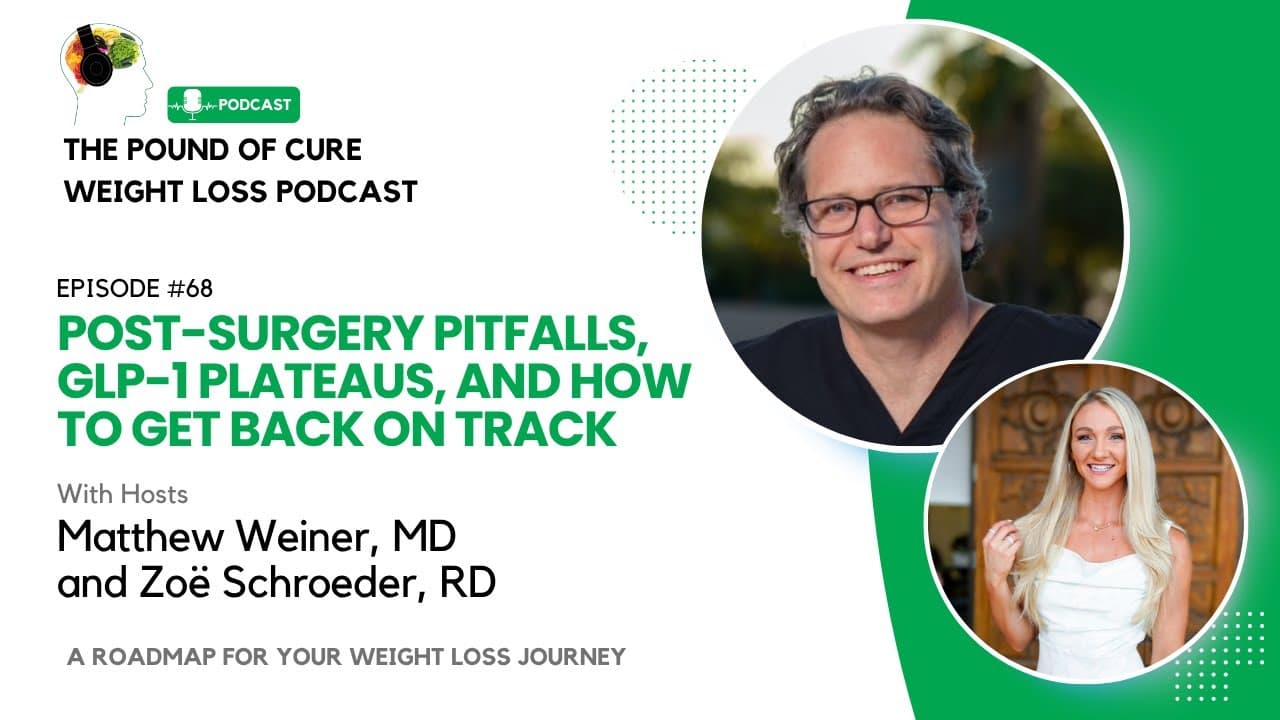
In Episode 68 of the Pound of Cure Weight Loss Podcast, Dr. Matthew Weiner and Zoë announce the official launch of their new mobile app and dive into listener questions about combining bariatric surgery with GLP-1 medications, managing post-surgery symptoms, and navigating common weight loss challenges. The episode features a detailed discussion of the new AI-powered chatbot named Sage, designed to provide personalized Pound of Cure guidance 24/7.
Major Announcement: The Pound of Cure App Is Now Live
After an extensive beta testing period with current patients, the Pound of Cure app is now available on both the App Store and Google Play Store. Dr. Weiner describes this as some of his best work in his entire career, with the standout feature being the integrated AI assistant.
Talk with our team
Have questions about this episode?
Send our Tucson weight loss team a note about bariatric surgery, GLP-1 medications, nutrition, or your next step with Pound of Cure.
More from this episode
The app includes several key features:
- AI chatbot named Sage trained on 20 years of Dr. Weiner's educational materials
- Caloratio food logging system that promotes fiber-rich, whole food choices
- Meal planning and recipe suggestions
- Answers to questions about surgery, medications, and side effects
- Free access for all current nutrition program members
Understanding the AI Assistant: Sage
Dr. Weiner explains that Sage has been carefully trained to provide answers consistent with the Pound of Cure approach. The AI has specific guardrails to ensure it does not give keto or high protein answers that conflict with the practice philosophy. Instead, it focuses on whole foods, metabolic health, and the integration of medications and surgery when appropriate.
Dr. Weiner estimates that by the end of 2025, Sage will provide guidance that is about 90 percent as good as what he can provide directly. By the end of 2026, he believes it will surpass his own capabilities in providing personalized answers and strategies.
The AI is designed to know its limitations. When questions venture into areas requiring direct medical supervision, Sage will recommend speaking with Dr. Weiner or Zoë rather than providing potentially harmful advice.
Podcast Schedule Change
The podcast is moving from Friday releases to Monday releases. This change aims to give listeners the entire workweek to listen during commutes, morning walks, or other convenient times rather than competing with busy weekend schedules.
Question 1: When Should Gastric Bypass Patients Start GLP-1 Therapy?
This question comes up five to seven times per day in Dr. Weiner's practice. The answer depends on multiple factors and has become easier to address now that GLP-1 medications are integrated from the beginning of the surgical journey.
Dr. Weiner uses a weight loss calculator available on the Pound of Cure website that predicts expected weight loss after surgery. Patients should have lost about half their predicted weight by three to four months and about two thirds by six months.
The decision to add GLP-1 medications depends on:
- How far the patient is from their predicted trajectory
- Starting BMI and total weight to lose
- Current nutrition habits and adherence to whole foods approach
- Whether the patient is falling into the portion control trap
The Portion Control Trap
Zoë explains that some patients rely solely on the volume restriction from surgery without changing what they eat. She looks for patients who depend heavily on processed proteins like bars and shakes rather than whole foods rich in fiber. These patients often feel snacky because they are not truly nourishing their bodies.
Before adding GLP-1 medications, the team evaluates whether nutrition optimization could solve the problem. This includes shifting toward whole foods that provide satiety and satisfaction beyond simple protein numbers.
Dr. Weiner emphasizes that there are three levers to pull: surgery, medications, and nutrition. If you are not pulling the nutrition lever as hard as possible, it may not be time to add GLP-1s, especially after gastric bypass which has a good chance of succeeding without additional medications.
Setting Realistic Expectations
Zoë stresses that patients should expect the honeymoon period after surgery to end. Feeling hungrier and being able to eat more food over time is normal and expected. The key is to honor that hunger with nutritious whole foods rather than fear eating more. This creates a sustainable pattern for long-term maintenance.
Question 2: Managing Medication Effects Between Weekly Doses
A listener asked whether they could take their Mounjaro injection a day or two early when appetite and food noise return on days five or six after the shot.
Dr. Weiner notes this question likely involves creative dosing strategies rather than standard prescription pens. With standard four-pen-per-month prescriptions covered by insurance, taking shots more frequently is not possible. He mentions that patients spending $500 to $650 per month can often get medications for less than half the price using alternative dosing strategies.
Frequency Versus Dose Adjustments
Dr. Weiner has moved away from frequency adjustments now that creative dosing allows for precise dose calibration. Instead of jumping from 2.5 mg to 5 mg, patients can try 3 mg or 3.5 mg. His preference is to adjust the dose upward while maintaining weekly injections to achieve more consistent blood levels.
The team wants to avoid reinforcing the mentality that hunger requires an immediate medication shot. This undermines the goal of using GLP-1s as tools rather than magic pills.
The Role of Fiber During Low-Effect Days
Zoë points out that feeling the medication wear off toward the end of the week is expected. The first few days typically bring the strongest effects. Rather than increasing frequency, patients should honor their hunger by eating more fiber-rich whole foods.
She describes fiber as nature's food noise quieter. Following the metabolic reset diet closely during these days helps manage appetite without relying solely on medication peaks.
Dr. Weiner adds that patients on medications for three to six months typically reach a steady state where dose intervals do not cause as much fluctuation as they did in the first few weeks.
Using the Caloratio System
The Caloratio food logging system in the new app does not measure fiber grams directly, but Dr. Weiner notes that if he could pick one number to determine diet quality, it would be fiber. The Caloratio system promotes higher scores when patients eat more fiber naturally.
The app includes a veggie counter that tracks progress toward one pound of vegetables per day. Patients can see whether their veggie icon turns green, providing visual feedback on fiber-rich food consumption.
Question 3: Surgery Decision When Already Successful on GLP-1s
An Instagram commenter scheduled for surgery on Monday had already lost 70 pounds on GLP-1 medications. They are 30 pounds from their goal and have not yet reached the highest medication dose. Should they proceed with surgery or continue medications?
Dr. Weiner's immediate answer: absolutely continue the medications.
He raises several important considerations:
Evaluating the Goal Weight
Where does the 30-pound goal come from? Dr. Weiner notes that the most common goal weight patients mention is 199 pounds, often an arbitrary number rather than a realistic target based on individual factors. The entire concept of goal-setting could fill its own podcast episode.
Medication Type Matters
The answer changes depending on which GLP-1 medication the patient uses. For Wegovy (semaglutide), Dr. Weiner would likely recommend increasing the dose and continuing. For Zepbound (tirzepatide), he exercises more caution about higher doses.
Most of Dr. Weiner's patients use 7.5 mg or less of tirzepatide. While he does prescribe higher doses when needed, he proceeds carefully due to concerns about long-term use of very high doses.
The Overdose Phenomenon
Dr. Weiner has observed what he describes as an overdose situation in some patients on high Zepbound doses for extended periods. This is anecdotal and not a formal warning, but he sees it almost exclusively in patients on 12.5 mg or 15 mg, less so at 10 mg.
The problem resolves by stopping the medication and backing off the dose, but it can be unpleasant. This concern makes him hesitant to rely on the highest tirzepatide doses.
He contrasts this with 2.4 mg of Wegovy, which is simply not as powerful as 15 mg of Zepbound and does not appear to cause the same issues.
Nutrition Still Matters
Before recommending any path forward, Dr. Weiner would want to know the patient's Caloratio score and diet quality. Maximizing nutrition remains essential regardless of medication or surgery decisions.
Question 4: Hiatal Hernia After Gastric Sleeve
A detailed question came from YouTube about a patient 11 months post-sleeve who learned they have a mild hiatal hernia. They experience mild burping after eating, mild difficulty swallowing capsules, and occasional mild constipation that improves with fiber. They have no pain or heartburn. Their questions included whether the condition will worsen, whether it needs treatment now, available treatments, management strategies, and potential health dangers.
Understanding Hiatal Hernias
Dr. Weiner addresses the significant anxiety many patients feel about hiatal hernias, sometimes calling him in the middle of the night worried they need emergency surgery.
The diaphragm is a thick muscle separating the chest from the abdomen. The esophagus passes through a small hole in the diaphragm because the esophagus sits in the chest cavity while the stomach sits in the abdominal cavity.
A hiatal hernia occurs when this hole stretches and allows the stomach or sleeve to slide upward into the chest. Because the sleeve is a skinny tube, it is particularly prone to sliding. The surgery also disrupts some of the natural anchoring structures that normally hold the stomach in place.
Small Hiatal Hernias After Sleeve Are Common
Dr. Weiner emphasizes that a small hiatal hernia after a sleeve does not affect anything at all. It is extremely common and not a cause for concern by itself.
While hiatal hernias generally increase in size over time, Dr. Weiner does not look primarily at the size when deciding whether intervention is needed. Instead, he focuses on the patient's symptoms.
Addressing the Reported Symptoms
Dr. Weiner notes that the symptoms described sound more like a normal sleeve working as expected rather than hernia-related problems:
- Mild burping is standard after sleeve surgery
- Difficulty with capsules relates to the narrow sleeve anatomy
- Constipation involves the colon, not the stomach or hernia
His approach would be to forget about the hiatal hernia and focus on eating behaviors.
Eating Behavior Modifications
Zoë's first questions would address eating speed and mindfulness. Eating too quickly without paying attention to early satiety signals can cause discomfort and burping. She recommends:
- Smaller, more frequent meals throughout the day
- Stopping at the first sign of satisfaction rather than fullness
- Avoiding distracted eating while working, watching TV, driving, or scrolling on phones
- Being present with meals to notice how the body responds
Most people eat distracted more often than they eat mindfully. When attention is elsewhere, it becomes impossible to recognize subtle body signals. Focusing on how you eat helps determine how much you eat.
Why Sleeves Cause Burping
Dr. Weiner explains that a normal stomach is shaped like half a heart. Part of the stomach sits upward and acts as a reservoir to collect swallowed air. This air can either pass through as gas or come up as a single burp.
The sleeve surgery removes this air-collecting portion of the stomach. When patients swallow air, there is no reservoir to manage it, resulting in multiple small burps instead of one larger burp.
This typically improves over time as the body learns to pass air through the digestive system rather than back up. Mild burping in the first year or two after sleeve surgery is standard, not an unpleasant side effect.
Minimizing Air Swallowing
Zoë adds that eating too quickly increases air swallowing. This is also why the practice recommends avoiding straws and carbonated beverages, especially in the early post-surgery period. While these are not lifetime restrictions, avoiding them initially helps patients learn their new anatomy and minimize uncomfortable gas and burping.
Question 5: Vaping Without Nicotine Before Gastric Bypass
The final YouTube question came from someone who quit cigarettes by vaping zero-nicotine flavor pods. They enjoy the physical act of smoking rather than nicotine. The vape pods contain only vegetable glycerin and food-grade flavoring. They wanted to know if bypass surgery is safe despite vaping.
The Smoking and Bypass Connection
Dr. Weiner appreciates that the questioner understands tobacco smoking is incompatible with gastric bypass. He shared a current patient example of someone who promised to quit but did not, resulting in a perforated ulcer requiring hospitalization.
The practice tests everyone for nicotine before gastric bypass and sometimes before sleeve depending on individual factors.
It's Not Just Nicotine
Dr. Weiner explains that nicotine is probably not the primary problem. Inhaled tobacco smoke contains 78 different carcinogens. The combination of all these substances together causes the devastating ulcer problems seen after bypass, not nicotine alone.
The practice does see some issues in patients who vape after gastric bypass, but not the severe perforated ulcers that are impossible to heal and require additional surgery. Vaping-related problems tend to be milder ulcers treatable with medication.
The Verdict on Nicotine-Free Vaping
Dr. Weiner would not exclude this patient from gastric bypass surgery. Since they use no nicotine, they will test negative on pre-surgical screening.
However, he is not endorsing vaping as safe or acceptable. The best option remains quitting entirely.
Behavioral Strategies for Quitting Vaping
Zoë approaches this as a behavioral change challenge. Simply removing a habit leaves a void that must be filled. She recommends finding replacements:
- If it is about flavor, try fruit-infused water
- If it is the hand-to-mouth movement, drink tea or find another oral substitute
- Identify specific triggers or anchor habits that create the vaping urge
- Modify the environment to disrupt patterns
The Habit Loop
Dr. Weiner breaks down the habit structure: trigger, behavior, and reward. For this person, triggers might include stress or social situations. The behavior is vaping. The reward is the enjoyment and sensation they experience.
You can disrupt any part of this chain. Eliminate triggers, change the behavior, or remove the reward. His creative suggestion: switch to an unpleasant flavor. This was advice he used to give smokers who could not quit. Menthol smokers dislike regular cigarettes and vice versa, so switching types sometimes helped break the cycle.
He encourages not giving up quickly on quitting vaping entirely.
Unknown Health Risks
Zoë recalls hearing about lung conditions in people who vape, with fluid accumulation causing problems. Dr. Weiner remembers the popcorn lung outbreak several years ago that made vaping seem extremely dangerous. It turned out to be one specific ingredient that should not have been added, found primarily at sketchy smoke shops.
While that specific scare was somewhat overblown, Dr. Weiner remains skeptical about vaping safety. It has become epidemic among young people, particularly on college campuses where students walk around vaping constantly.
He does not follow the research literature closely outside of how it relates to bariatric surgery, but his instinct is that inhaling vegetable glycerin and the thousands of compounds that might be in food-grade flavoring cannot be completely safe. He predicts future research will reveal harms we do not currently understand.
The Caloratio Food Logging Philosophy
Throughout the episode, the Caloratio system comes up multiple times as a central tool in the Pound of Cure approach. Unlike traditional calorie counting or macro tracking, this system scores foods based on how close they are to their natural state.
Processed foods receive low scores. Whole plant foods receive high scores. The system automatically promotes fiber intake without requiring patients to manually calculate fiber grams, which can be tedious and discouraging.
The veggie tracker provides a simple visual goal: one pound of vegetables per day. Patients work toward turning their veggie icon green, creating a gamified experience that makes nutrition changes more engaging.
Dr. Weiner states clearly that if he could choose only one nutritional metric to measure diet quality, it would be fiber. The Caloratio system achieves this indirectly by rewarding whole plant foods naturally high in fiber.
The Three Levers of Weight Loss
A recurring theme is the concept of three levers patients can pull:
- Bariatric surgery (sleeve or bypass)
- GLP-1 medications (Wegovy, Zepbound, Mounjaro)
- Nutrition (whole foods, fiber, metabolic reset diet)
The goal is pulling as many levers as hard as possible to drive maximum weight loss. The team discourages relying exclusively on one lever, particularly medications or surgery, while neglecting nutrition.
This philosophy explains why someone doing well on medications alone might not need surgery, and why someone struggling after surgery should optimize nutrition before adding medications.
Tools Not Magic Pills
Both Dr. Weiner and Zoë emphasize repeatedly that GLP-1 medications are tools, not magic pills or cures. They facilitate easier behavior change by reducing appetite and food noise, creating a window where establishing positive habits feels more manageable.
The positive reinforcement of weight loss while using medications makes behavior change stick. But without the behavior change component, particularly nutrition optimization, the medications alone will not create lasting success.
Looking Ahead
The episode concludes with an invitation for listeners to:
- Download the new app from the App Store or Google Play
- Test the features and provide feedback
- Submit questions via social media comments for future Q&A episodes
- Remember that current nutrition program members have full free access to all app features
Dr. Weiner reassures patients that the app is not a scheme to extract more money. Anyone already enrolled in nutrition programs receives complete access as part of their existing investment.
The move to Monday releases aims to better serve listeners by giving them the full workweek to engage with content during convenient times rather than competing with weekend activities.
Weight loss topics covered in this episode
This conversation is part of the Pound of Cure approach to evidence-based weight loss education, including bariatric surgery, GLP-1 medications, nutrition counseling, metabolic health, and long-term patient support.
For more context, explore our guides to GLP-1 medications, bariatric surgery in Tucson, and the Metabolic Reset Diet.