Podcast Summary
Episode Overview
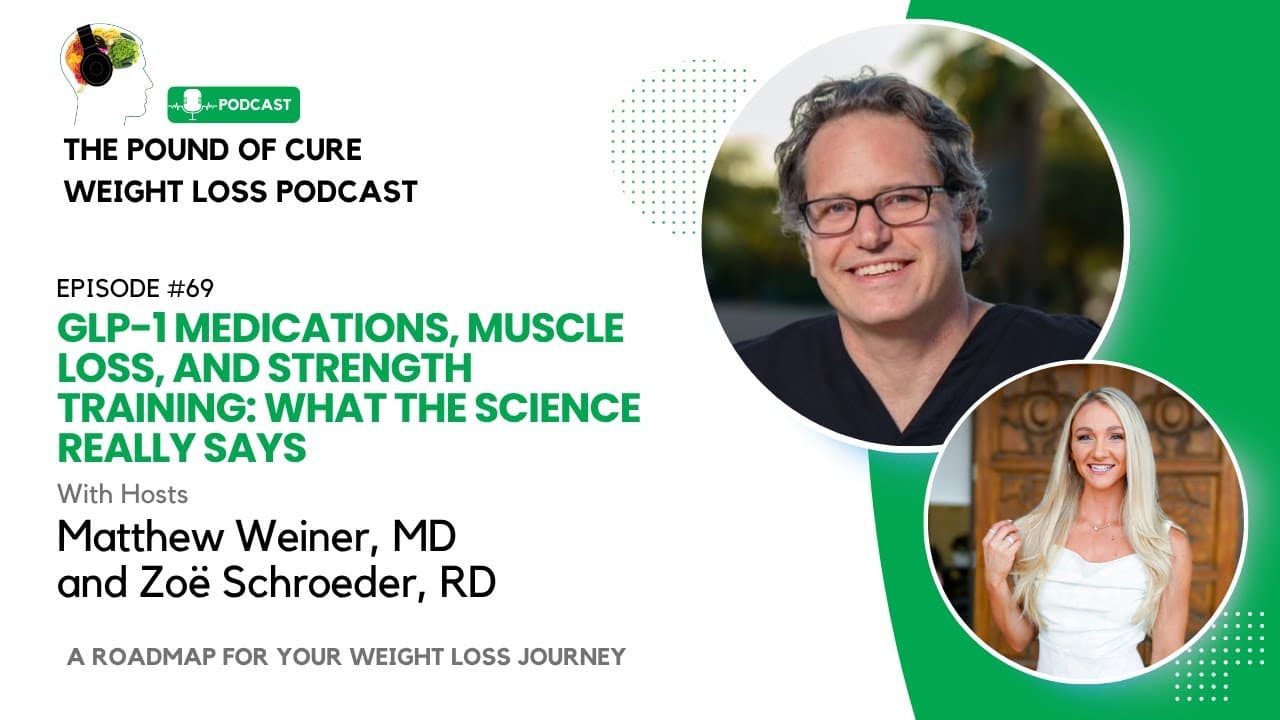
In Episode 69 of the Pound of Cure Weight Loss Podcast, Dr. Matthew Weiner and registered dietitian Zoë examine the latest research on GLP-1 medications, addressing common misconceptions about muscle loss, evaluating new combination therapies, and exploring emerging applications in cancer treatment. The discussion emphasizes the critical importance of strength training and proper nutrition for patients using these medications, while also teaching listeners how to critically evaluate scientific studies that often make headlines.
Understanding Scientific Studies: What Makes Research Valid
The Problem with Small Sample Sizes
Talk with our team
Have questions about this episode?
Send our Tucson weight loss team a note about bariatric surgery, GLP-1 medications, nutrition, or your next step with Pound of Cure.
More from this episode
The episode begins with a Medscape article suggesting that less frequent GLP-1 dosing may maintain weight loss. Dr. Weiner immediately points out a critical flaw: the study included only two people. As he explains, while two patients technically constitute a study rather than a case report, it provides no more scientific value than anecdotal evidence from chatting with two friends.
This serves as an important lesson for patients: approximately 90 percent of scientific studies are either wrong or of poor quality. Many studies are published primarily to advance careers and gain notoriety, not necessarily to benefit patients. When evaluating research, patients should look beyond catchy headlines and examine the actual study design and sample size.
Correlation Versus Causation
Throughout the episode, Dr. Weiner distinguishes between observational studies that show correlation and randomized controlled trials that demonstrate causation. This distinction becomes particularly important when discussing the ovarian cancer research later in the episode. Just because two things occur together does not mean one caused the other. Double-blinded randomized controlled trials are the gold standard for proving that an intervention actually causes a specific outcome.
Combination Medications for Muscle Preservation: Promise or Problem?
The New Drug Combination Study
A Reuters article reported on research combining Wegovi (semaglutide) with two additional medications: Trevogrumab and Garectosmab. The study showed that patients using this three-drug combination preserved more muscle mass compared to those using semaglutide alone. Weight loss was 11.3 percent with the combination versus 10.4 percent with semaglutide alone.
However, Dr. Weiner identifies several significant concerns with this approach:
Concerning Side Effect Rates
A striking 28 percent of patients stopped the treatment due to side effects. Dr. Weiner notes that if 28 percent discontinued the medication, at least another 28 percent likely experienced similar side effects but chose to endure them. This represents a much higher discontinuation rate than typically seen with GLP-1 medications alone.
For long-term medication use, patient comfort is essential. The goal is not simply to achieve weight loss at any cost, but to find sustainable treatments that patients can tolerate comfortably over time.
The Chemistry Gets Complicated
As more medications are combined, the potential for harm increases. Most drugs in development never make it to market because researchers discover problems during testing. When combining three different medications in one treatment, the likelihood that at least one will cause issues increases substantially.
Dr. Weiner compares this to combination blood pressure medications that include multiple ingredients in one pill. While convenient, these combinations introduce additional complexity and risk.
The Superior Alternative: Strength Training and Nutrition
Why Strength Training Is Non-Negotiable
Rather than adding more medications to preserve muscle, Zoë emphasizes that patients already have access to proven strategies: proper nutrition and strength training. She describes muscle as precious, valuable tissue that the body will eliminate if not properly supported, because muscle is metabolically expensive to maintain.
Dr. Weiner states clearly that anybody taking a GLP-1 medication should participate in strength training if they are physically capable. Even patients using walkers or with limited mobility can perform seated exercises.
Minimum Effective Dose of Exercise
Zoë recommends a minimum of two days per week of strength training. The difference between two days per week and no days per week is enormous. Similarly, the difference between one day per week and zero days is substantial. Patients do not need to spend two hours in the gym four days per week. Just 30 minutes twice a week makes a huge difference in muscle preservation and overall health.
Strength training does not require expensive gym memberships or intimidating equipment. Options include:
- Bodyweight exercises at home
- Resistance bands
- Hand weights
- Weight machines
- Seated exercises for those with mobility limitations
The Two Essential Components for Muscle Preservation
When experiencing rapid weight loss from bariatric surgery or GLP-1 medications, two factors are critical:
Adequate Protein Intake: Muscles and all body tissues need amino acids from dietary protein. Without sufficient protein, the body cannot maintain muscle mass even with exercise.
Strength Training Stimulus: The muscles need mechanical stress from resistance training to signal the body to preserve and build tissue. Weight loss is primarily driven by nutrition changes, but weight maintenance and muscle preservation are driven through intentional exercise.
Benefits Beyond Muscle
Zoë emphasizes that strength training provides benefits far beyond muscle preservation, including:
- Improved bone health
- Better mental health
- Enhanced cognitive function
- Improved hormonal balance
- Better digestion
- Improved sleep quality
These benefits are particularly important for postmenopausal women, who represent a large portion of the weight loss patient population and may be the most intimidated by strength training.
The Pharma Money Grab
Dr. Weiner characterizes the muscle-preserving medication combination as a money grab rather than a genuine advancement in science. Pharmaceutical companies recognize that patients worry about looking too frail or too skinny, or about having loose skin. By identifying these pain points, companies can market additional medications as quick fixes.
Zoë notes that this preys on common patient concerns, when patients can already achieve muscle preservation through strength training and nutrition without adding more medications.
GLP-1 Medications and Cancer Treatment: A Game Changer
Ovarian Cancer Survival Data
Dr. Weiner describes the ovarian cancer research as the most exciting development covered in this episode. An observational study examined patients with ovarian cancer, comparing outcomes between those taking GLP-1 receptor agonists and those not taking these medications.
The results were dramatic: all-cause mortality was 19.71 percent in patients not taking GLP-1s, compared to just 7.94 percent in patients taking GLP-1s. That represents less than half the death rate in the GLP-1 group.
Why This Matters for Cancer Treatment
Dr. Weiner explains that increased survival in cancer studies is actually quite rare. When comparing different chemotherapy regimens, researchers often see only one to two percent differences in outcomes. Clinical decisions and treatment pathways are built around these very minor improvements.
The ovarian cancer finding is particularly significant because:
- Ovarian cancer is one of 13 obesity-related cancers
- GLP-1 medications work through a completely different pathway than existing cancer treatments
- The medications are generally well-tolerated
- They can potentially be used in combination with existing therapies
The Value of Different Treatment Pathways
When a new treatment works through a different biological pathway, it can be combined with existing treatments without competing for the same mechanism of action. Dr. Weiner compares this to HIV treatment, which was transformed by triple therapy using multiple drugs that each targeted different pathways. Cancer treatment has always involved multimodal therapy including surgery, radiation, and multiple medications.
GLP-1 medications represent a new tool that works differently from existing cancer treatments, potentially replacing or complementing medications like tamoxifen for breast cancer.
Important Limitations
The study showed no survival advantage for patients with metastatic cancer at diagnosis. Dr. Weiner notes that nutrition is critical for survival in advanced cancer. Giving patients with metastatic disease a medication that decreases food intake could potentially be harmful, offsetting any benefits the medication might provide.
Why GLP-1s May Help with Cancer
Zoë asks whether the benefit comes from reduced inflammation throughout the body. Dr. Weiner suggests this is one possibility. Another potential mechanism involves the relationship between calorie intake and longevity. Research shows that lower calorie diets increase lifespan, possibly due to reduced oxidative stress from food metabolism. GLP-1 medications naturally reduce food intake, which may contribute to improved cancer outcomes.
Addressing Weight Gain from Cancer Treatment
Zoë points out that many women experience significant weight gain during breast cancer treatment, particularly with tamoxifen. GLP-1 medications could help manage this difficult side effect while simultaneously reducing cancer risk. By reducing obesity, these medications also reduce the risk of cancer recurrence.
The Future of GLP-1s in Oncology
Dr. Weiner predicts that GLP-1 medications will quickly enter cancer treatment protocols for obesity-sensitive cancers. This reflects the nature of obesity as a disease affecting every organ system. When obesity is treated effectively, the risk of disease in every organ system decreases.
He recalls being taught in medical school that miracle drugs do not exist, but acknowledges that GLP-1 medications are proving this wrong by treating so many different conditions across multiple body systems.
Oral Semaglutide: Convenience or Compromise?
Not Actually a New Development
The article discussing oral semaglutide by year's end presents it as new and exciting, but Dr. Weiner notes that oral semaglutide called Rybelsus has been available for a long time. When Dr. Weiner first started the non-surgical weight loss practice at Pound of Cure, the team used quite a bit of Rybelsus, thinking that a pill would be preferable to a shot.
Real-World Experience with Oral Semaglutide
The team quickly discovered two significant problems with oral semaglutide:
Lower Efficacy: Weight loss with oral semaglutide did not approach the results seen with injectable semaglutide.
More Side Effects: Patients experienced significantly more nausea with the oral medication compared to injections.
Analyzing the New Study
The study examined a 25-milligram dose of oral semaglutide, almost twice the highest previously available dose of 14 milligrams. The study included 307 people split two-to-one, with approximately 202 people receiving the medication and about 105 receiving placebo.
Concerning Dropout Rates
Out of 200 people in the treatment group, approximately 40 dropped out, representing a 25 percent discontinuation rate. This high dropout rate raises questions about long-term tolerability, which is critical for lifelong weight management.
Weight Loss Results
The study showed 13.6 percent weight loss, which approaches the results seen with Wegovi but still falls short of tirzepatide outcomes. Additionally, 80 percent of participants lost more than five percent of their body weight, meaning 20 percent were non-responders who did not achieve meaningful weight loss.
This 20 percent non-responder rate is higher than typically seen with injectable semaglutide (approximately 15 percent) and injectable tirzepatide (15 percent at low doses, 10 percent at high doses).
Why Oral Formulations Are Less Effective
Dr. Weiner explains the biological reason for the difference between oral and injectable medications. When you take a pill, it goes through enterohepatic circulation, meaning it travels to the liver first. The liver is designed to detoxify and break down substances, which it does to oral semaglutide.
In contrast, when you take an injection, the medication is absorbed by the lymphatic system and enters the bloodstream directly without passing through the liver first. This means:
- The medication is not broken down as quickly
- Lower doses are needed for effectiveness
- Dosing can be less frequent
This explains why injectable Wegovi requires only 2.4 milligrams once weekly, while oral semaglutide requires 25 milligrams daily-ten times the dose.
What Patients Actually Care About
Dr. Weiner observes that pharmaceutical companies may be overstating the value of a pill formulation. He asks Zoë whether patients complain about taking shots. Zoë confirms that this is not a major concern for patients. People rarely complain about injections but frequently discuss side effects and lack of weight loss.
Once-weekly dosing is convenient, and patients who have started GLP-1 therapy have already decided they are comfortable with injections. The practice has been able to get all but the most severe needle-phobic patients comfortable with injections.
The Real Future: Extended Dosing
Rather than moving toward oral formulations, Dr. Weiner believes the more popular direction will be extended-release formulations allowing once-monthly dosing. Taking a shot on the first of each month while maintaining constant blood levels without fluctuation would likely be far more attractive to patients than taking a daily pill with more side effects and lower efficacy.
Resources and Next Steps
The Pound of Cure App
Dr. Weiner encourages listeners to download the Pound of Cure app, available on both iOS and Google Play stores. Many features are currently free. The app was designed to help patients:
- Avoid the spiral of self-blame common in weight loss journeys
- Access evidence-based treatment advice
- Make informed lifestyle decisions
- Incorporate a comprehensive metabolic approach
- Avoid purchasing ineffective products that prey on desire for weight loss
Dr. Weiner spends most of his weekends working on app development, with major AI enhancements planned over the next six months to a year.
Coming Soon: Protein Tracker
Based on patient feedback and input from Zoë, the next version of the app will include a protein tracker to help users monitor their daily protein intake in grams. This feature should be available shortly after this episode drops.
The development team actively listens to user feedback and implements requested features. Patients are encouraged to share what is working, what is not working, and what additional features would be helpful.
Providing Feedback
Listeners can provide feedback through social media channels or YouTube. The team wants to hear how the app serves patients and what improvements would make it more valuable. The current version is just the beginning, with many updates planned based on user input.
Key Takeaways for Patients
Question Scientific Headlines: Not all studies are created equal. Look for sample size, study design, and potential conflicts of interest before accepting research findings.
Prioritize Strength Training: Every patient on GLP-1 medications who is physically capable should incorporate strength training at least two days per week to preserve muscle mass.
Focus on Protein: Adequate protein intake is essential for muscle preservation, especially during rapid weight loss.
Avoid Unnecessary Medications: Natural approaches to muscle preservation through diet and exercise are more effective and safer than adding multiple medications.
Stay Informed About Cancer Research: GLP-1 medications show promising applications beyond weight loss, particularly for obesity-related cancers.
Injectable Formulations Remain Superior: Despite the appeal of oral medications, injectable GLP-1s offer better efficacy, fewer side effects, and less frequent dosing.
Use Available Resources: The Pound of Cure app provides evidence-based guidance to support long-term weight management success.
Weight loss topics covered in this episode
This conversation is part of the Pound of Cure approach to evidence-based weight loss education, including bariatric surgery, GLP-1 medications, nutrition counseling, metabolic health, and long-term patient support.
For more context, explore our guides to GLP-1 medications, bariatric surgery in Tucson, and the Metabolic Reset Diet.