Podcast Summary
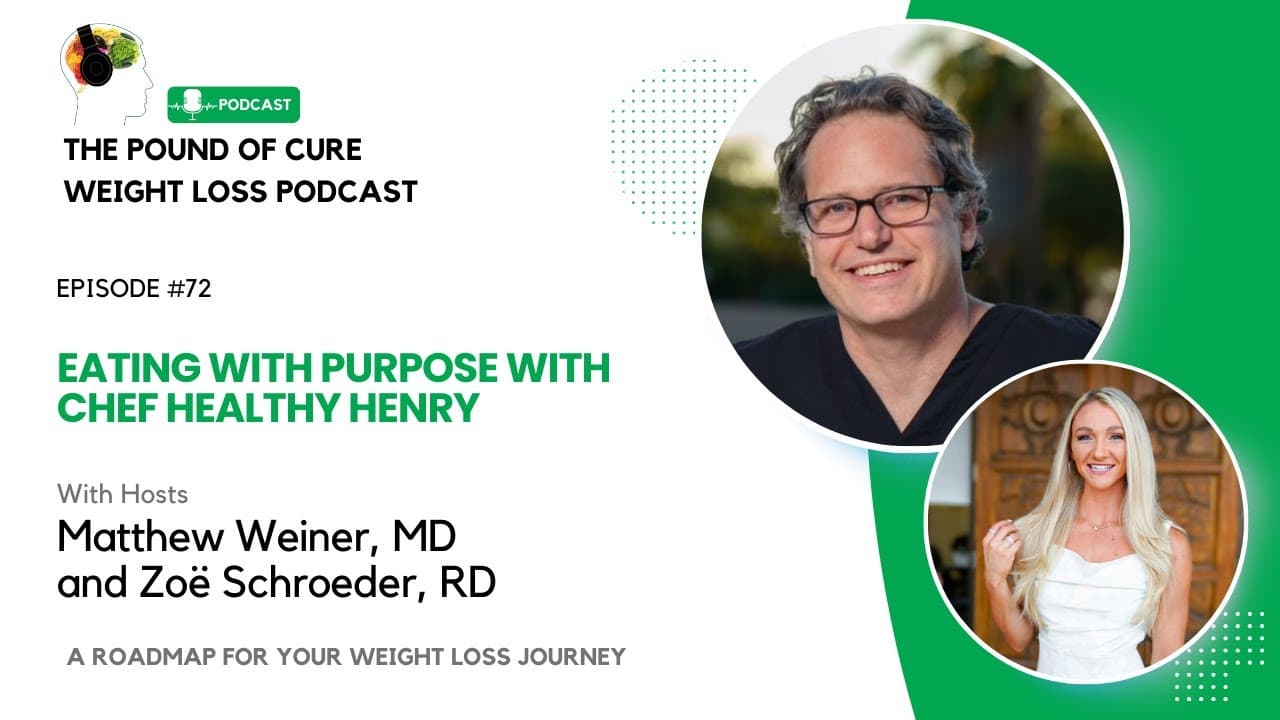
Episode Guide: Eating with Purpose with Chef Healthy Henry
Introduction to Chef Healthy Henry
In this episode of the Pound of Cure Weight Loss Podcast, Dr. Matthew Weiner and Zoë welcome Chef Healthy Henry, a culinary school graduate who transformed his approach to food after bariatric surgery. Henry shares his journey from weighing nearly 400 pounds to losing 140 pounds through gastric sleeve surgery almost five years ago. He attended culinary school 20 years ago and worked in the industry doing dinner parties and cooking classes before health issues led him to make significant changes.
Dr. Weiner and Henry met at the Obesity Help conference, an organization that brings bariatric patients together from across the country for education and support. Henry notes that he appreciates this conference because it focuses on people sharing stories, supporting each other, and learning rather than social media trends. He has attended for four years and sees patients making lifelong friendships at these gatherings.
Talk with our team
Have questions about this episode?
Send our Tucson weight loss team a note about bariatric surgery, GLP-1 medications, nutrition, or your next step with Pound of Cure.
More from this episode
The Birth of Chef Healthy Henry
After his gastric sleeve surgery, Henry began creating healthy recipes for himself as part of changing his lifestyle to prevent weight regain. When he attended conferences like Obesity Help, he discovered that many patients wanted to cook healthy meals but did not know how. They lacked recipes and cooking knowledge. This inspired Henry to share what he was already doing in his own kitchen with the broader bariatric and weight loss community.
He has been developing Chef Healthy Henry as a brand for approximately three years, focusing on helping people learn practical cooking skills and develop sustainable healthy eating habits. His approach is rooted in his personal experience as both a trained chef and a bariatric surgery patient.
Understanding the Protein Flip Method
The cornerstone of Henry's approach is what he calls the Protein Flip Method. This concept challenges the traditional American plate where a large piece of meat or fish is the star of the meal. Instead of eating six ounces of chicken as the main focus, Henry recommends reducing that to three ounces of chicken and dispersing protein and fiber throughout the rest of the plate.
In the Protein Flip approach, every component on the plate plays an important role. You might have three ounces of chicken, some quinoa for additional protein, and high fiber vegetables. The goal is to create a 50-50 balance where everything works together rather than having one dominant protein source with minimal sides.
Henry also introduces the concept of secondary proteins. These are garnishes and additions like chia seeds, pepitas (pumpkin seeds), yogurt dressings, or other protein-rich toppings that add flavor and nutrition without being the main component. By thinking of these as secondary proteins rather than just garnishes, you can boost the overall protein and nutritional content of your meal.
This approach aligns well with other eating philosophies like the Mediterranean diet, which Henry notes already follows this pattern. Many other countries naturally eat this way, with vegetables and grains as the foundation and smaller amounts of meat for flavor. Americans tend to be more meat and potatoes focused, which is harder on digestion, harder on the planet, and contributes to obesity.
Why the Protein Flip Works for Bariatric Patients
For people who have had bariatric surgery or are taking GLP-1 medications, the Protein Flip Method is particularly valuable because they cannot eat large quantities of food. Henry emphasizes that these patients must eat with purpose. They need to know exactly what they are eating, why they are eating it, and how they are eating it because they have limited space in their stomach and limited capacity on their plate.
The early post-surgery diet is typically very protein focused, with lots of protein shakes, protein powder, protein bars, cottage cheese, string cheese, and yogurt. As patients progress and can tolerate soft foods and then solid foods, they need to start bringing in fiber and nutrient-dense vegetables. While protein remains important, fiber is equally crucial and often underrated.
Henry notes that the three to five year mark after bariatric surgery is when the body resets and weight regain often begins. This is the time when patients need to have developed sustainable cooking skills and healthy eating habits. During the initial weight loss honeymoon phase, patients should be learning how to cook healthy food not just for themselves but for their families, because these skills will sustain them forever.
The Role of Plant Proteins
When Americans think about protein, they typically think of chicken, fish, and beef. However, Henry emphasizes the importance of plant proteins like beans, nuts, seeds, and whole grains. The Pound of Cure program makes plant proteins unlimited, allowing patients to eat as much as they like.
Plant proteins offer advantages over animal proteins. When you eat something like black rice, you are not just getting protein but also fiber, nutrients, and other beneficial compounds all in one food. Plant proteins are versatile and can be enhanced with flavorful additions like vegetable stock instead of water when cooking.
Henry admits that before losing weight, he was someone who dismissed plant proteins and focused only on chicken and meat. As he took control of his lifestyle, he started including quinoa, black rice, seeds, and other plant-based protein sources. He notes that seeds are particularly underrated because people worry about their fat content, but adding just a small amount can transform a dish.
Pepitas (pumpkin seeds) are especially transformative when toasted. Henry recommends toasting seeds and spices to bring out their flavors and give dishes a rustic, authentic feel.
Rethinking Dairy as a Secondary Protein
Henry takes a unique approach to dairy in his Protein Flip Method. While dairy is scientifically classified as an animal protein, Henry categorizes it separately as a secondary protein. As a chef, he does not use dairy as a primary protein source but rather as a garnish or flavor enhancer.
Yogurt dressings are a perfect example. Using a couple of tablespoons of yogurt as a dressing adds protein and flavor without making dairy the main component of the meal. This approach helps bariatric patients who may rely heavily on dairy for protein in the early post-surgery stages transition to a more varied diet.
Dr. Weiner reflects that when he wrote Pound of Cure 12 years ago, he was more restrictive about dairy. If he were rewriting the book today, he would ease those restrictions, especially for fermented dairy like yogurt and kefir. These fermented dairy products offer probiotic benefits that are superior to over-the-counter probiotic supplements.
When you take a probiotic supplement, you typically get only a few bacterial strains. When you eat probiotic foods like yogurt or kefir, you can get hundreds of different bacterial strains that are more aligned with a natural, healthy intestinal microbiome. The bariatric diet cookbook that Dr. Weiner later developed includes recipes for making your own kefir, showing this evolution in thinking.
Zoë adds that many people ask what probiotic supplements they should take, but the whole foods approach of getting probiotics from Greek yogurt, kefir, and other fermented foods is more effective and natural.
Overcoming Barriers: Time and Money
Two of the most common objections Henry hears are that people cannot afford to eat healthy and they do not have time to cook. He acknowledges these challenges, especially for busy parents working multiple jobs with children at home.
His primary solution is meal prep. Dedicate one day to cooking, turn on music, light candles, and create a pleasant atmosphere. Prepare meals for the entire week ahead. When you are rushing around on Wednesday night, you will have food ready because you prepared on Sunday.
Henry also emphasizes involving children in the cooking process. He grew up helping in the kitchen, peeling potatoes and doing prep work before his mother got home. When children are part of the cooking process, they learn valuable skills and cooking does not fall on just one person. This also teaches children how to cook healthy meals from a young age, setting them up for lifelong success.
For equipment, Henry recommends investing in resealable freezer bags and individual meal prep containers. These can be purchased affordably at stores like Costco. They stack well in the refrigerator and make it easy to grab prepared meals throughout the week.
An air fryer is another valuable tool Henry recommends. It helps cut down on cooking time and kids often love using them, which can help get children more involved in the kitchen. However, Henry uses his air fryer as just one tool among many, not as his only cooking method.
Enhancing Flavor and Creating Authentic Dishes
Healthy eating does not mean bland eating. Henry emphasizes the importance of spices and authentic ingredients. Different cuisines have their own varieties of the same spice. For example, Mexican oregano, Italian oregano, and Greek oregano are all different. If you are making a Mexican dish, use Mexican oregano to make it authentic.
Toasting spices and seeds brings out their flavors and creates a rustic, satisfying quality in dishes. Henry also suggests creating the right atmosphere while cooking. If he is making an Italian dish, he plays Italian music to get into the mood and feel like he is in Italy. If he is making Mexican food, he plays Spanish music.
This approach to cooking makes the experience more enjoyable and helps people get comfortable in their kitchens. All these small touches, from music to toasted spices to authentic ingredients, help create an experience rather than just a meal. When you feel what you are cooking and eating, it becomes much more satisfying.
Using AI as a Cooking Tool
Dr. Weiner asks Henry about using artificial intelligence for cooking and recipe development. Henry explains that he uses AI as a tool in specific situations. He often builds dishes around seasonal ingredients he finds at the farmers market, like tri-color carrots, or he works on making healthier versions of recipes people send him.
AI is particularly useful when you need ideas beyond what you already know. If someone wants to make a dish with pepitas but does not know what they are or how to prepare them, AI can quickly provide that information. The same is true for less common ingredients like nopales (cactus), which is very healthy but unfamiliar to many people.
AI can also provide nutritional information for dishes, giving you a general ballpark of where you stand with calories, protein, and other nutrients. However, Henry emphasizes that you need to know what you are looking for and how to ask the right questions. Providing context is crucial. Are you a post-bariatric surgery patient? Are you young or old? Are you cooking for a family? Do you have specific food preferences or restrictions?
Dr. Weiner agrees that AI is a fantastic starting point or branching off point for exploring new dishes and flavors. However, there will always be a role for expertise from people like Chef Healthy Henry to really customize, cater, and take recipes to the next level. AI is a tool, not a replacement for human expertise and the personal touch that makes food truly special.
The Protein Flip Method Cookbook
Henry has just completed The Protein Flip Method cookbook, which is 83 pages and contains 26 recipes. The cookbook is available on his website at Chef Healthy Henry. He mentions that his web team is uploading it as they record the podcast, making this podcast episode an exclusive first announcement.
The cookbook includes much more than just recipes. It explains how to control insulin with the Protein Flip Method, discusses kitchen staples, provides ideas for enhancing flavors, and offers spice and rub suggestions. Henry also shares information about who he is, what he is doing, and why people should trust him based on his long experience and passion for helping others.
The recipes cover a wide variety including fish, vegetarian options, and meat dishes. Everything is designed to be adventurous and include different types of cuisine. Henry has a promo code available for podcast listeners and plans to offer a discount.
Looking ahead, Henry hopes to expand the cookbook with another 75 pages to create a larger hardcover edition. All of his cooking videos going forward will be aligned with the Protein Flip concept. He has been creating recipes using this approach and plans to release three videos per week once the cookbook launch is complete. He is also working on getting a trademark for the Protein Flip Method.
Where to Find Chef Healthy Henry
Henry is active on multiple platforms sharing his healthy cooking videos and recipes. You can find him on YouTube, TikTok, and his website under Chef Healthy Henry. On Instagram, his handle is slightly different: @chefhealthyhenry.eats.well. He explains that his original Instagram account was hacked, so he had to rebuild his following on the new account. Despite this setback, he has done an excellent job building up the new account by reaching out to people who followed him previously and asking them to spread the word.
Henry admits he is a one-man operation doing everything himself, from cooking to filming to editing videos to developing recipes and writing cookbooks. This means he has to prioritize and dedicate time to each project. While working on the Protein Flip Method cookbook, he created videos that have not yet been edited and released. Once the cookbook is launched and the trademark process is underway, he plans to return to his regular schedule of three videos per week.
His website features 200 recipes covering many different types of cuisine, from Asian to Mexican to Italian and more. Everything is designed to be adventurous, healthy, and high in protein and fiber.
Seasonal Cooking and Current Focus
Henry explains that everything he does is seasonal. At the time of recording, he is transitioning from spring and summer menus to fall offerings. During spring and summer, he focused on salads and fresh ingredients from the farmers market. As fall arrives, he is shifting to soups, stews, and comfort foods.
Regardless of the season, all recipes maintain the high protein, high fiber concept that is central to the Protein Flip Method. Seasonal cooking ensures that ingredients are at their peak flavor and nutrition while also connecting people to the natural rhythms of the year.
Henry is a regular at farmers markets and encourages others to shop there as well. Farmers markets offer the freshest seasonal produce and often feature interesting varieties like tri-color carrots that can inspire new dishes.
Challenging the Protein-Only Trend
Dr. Weiner expresses concern about the current trend on social media promoting extremely high protein intake with little emphasis on other nutrients. He sees constant messages about protein, carbs, and carnivore diets, with influencers suggesting people should eat only protein and track nothing else, aiming for 150, 200, or even 400 grams of protein per day for those who work out heavily.
This is why Dr. Weiner believes the Protein Flip concept needs to get more attention. The current protein-centric messaging is unbalanced and does not reflect a healthy relationship with food or a sustainable eating pattern.
Henry agrees and emphasizes that the Protein Flip is not about eliminating meat or vegetables. You eat everything, but everything plays its part. You reduce a little bit here and add a little bit there. This way, you do not feel restricted. If you want chicken or beef, you can have it, just in a smaller portion, with more protein coming from other sources throughout the plate.
Life is about enjoying things, especially food. Food should be nourishing, enjoyable, comforting, and nutritious all at the same time. If you can eat everything you want but in smaller portions and balanced combinations, you get the best of everything.
Avoiding Binary Thinking About Food
Dr. Weiner points out that as soon as nutrition becomes a binary decision (you either eat something or you do not), it becomes overwhelming, difficult, and feels punitive and restrictive. One of the key messages from this conversation with Henry, and something Zoë does well with patients, is meeting people where they are and making them better.
Improvement is not binary. It is not about declaring this is my last cheeseburger forever. That kind of thinking makes change much harder. Henry agrees, noting that once you say something is your last whatever, cravings start to creep in. Your mind begins craving it and that is when it gets truly difficult. You are shooting yourself in the foot before you even begin.
Instead, reduce portions a little bit and add other things to your meals. Be more adventurous. Who wants to eat a burger every day? Try Asian food, Mexican food, Italian food, and other cuisines. Variety keeps eating interesting and sustainable for the long term.
The Calorie Ratio System and Food Quality
Dr. Weiner explains a concept from the Pound of Cure program called the Calorie Ratio system. Traditional food logging and tracking focuses on data we have readily available: carbohydrates, protein, fat, and calories. But this information alone is not enough to determine whether something is healthy.
As an example, a hot dog and an almond have the exact same macronutrient breakdown. The only difference is that almonds contain significantly more fiber. Just looking at macros is insufficient for understanding food quality.
The Pound of Cure Calorie Ratio system is based on the quality of food rather than just quantity. When you eat vegetables, your score goes way up, even though vegetables have almost no calories and barely register when tracking traditional metrics like calories or carbohydrates. Using traditional tracking, eating vegetables seems insignificant. Using the Calorie Ratio system, vegetables are appropriately recognized as extremely valuable.
The Protein Flip approach will score very well on the Calorie Ratio system because it emphasizes vegetables and distributes protein and fiber throughout the plate rather than focusing on a large portion of meat.
Dr. Weiner notes that he wrote Pound of Cure 12 years ago and wonders if there are things he would change. He is pleased that he still believes in the core principles, though there are a few adjustments he would make. He would make nuts unlimited rather than limiting them to one or two ounces. He would be less restrictive about dairy, especially yogurt. And he would expand the plant-based salad dressing section to include yogurt-based dressings.
Eating with Purpose: A Philosophy for Life
Throughout the conversation, Henry repeatedly returns to the phrase eating with purpose. Zoë notes this as a powerful closing thought that encompasses many components of healthy eating.
Eating with purpose includes mindful eating, eating to fuel your body, eating for connection and creating memories with your children in the kitchen. It means understanding what your purpose is for each meal. Are you trying to fuel your body? Are you trying to balance everything out? Do you need recovery after a workout? These are different types of purposes.
There is also the purpose of nourishing your brain and soul. These are your comfort foods, and there is still room for those. There are many different purposes for eating, and all of them have value.
For bariatric patients and anyone with limited capacity for food, eating with purpose is especially critical. Every bite should count toward your nutrition, satisfaction, and wellbeing.
The Importance of Community and Collaboration
Henry expresses excitement about getting the Protein Flip Method out into the world because he believes it addresses a real need. Dr. Weiner, Zoë, and Henry all work to help people improve their lifestyles and health, each in their own way. When they come together as a team, they can attack the obesity issue from different angles and reach more people.
Henry values the relationships he has built with professionals like Dr. Weiner and Zoë. They met at the Obesity Help conference and have stayed in contact, supporting each other's work. This kind of collaboration and community is essential for making progress on the obesity epidemic.
Henry will be attending the Obesity Help conference again this year, which should be taking place around when this podcast episode airs. He encourages others to attend if possible, as it offers valuable education, support, and the opportunity to connect with others who have had similar experiences with bariatric surgery.
Key Takeaways
The Protein Flip Method offers a flexible, sustainable approach to healthy eating that is particularly well-suited for bariatric surgery patients and anyone trying to improve their nutrition. By reducing the portion of meat or fish and distributing protein and fiber throughout the plate, you create balanced meals that are satisfying, nutritious, and easier to digest.
Plant proteins, dairy as a secondary protein, and creative use of garnishes and seasonings all contribute to meals that are both healthy and enjoyable. Meal prep, involving family members in cooking, and creating a pleasant cooking atmosphere help make healthy eating sustainable for busy people.
The philosophy of eating with purpose reminds us that every meal has value beyond just calories and macros. Food can fuel us, nourish us, comfort us, and bring us together with others. By avoiding restrictive, binary thinking and instead focusing on balance, variety, and quality, we can develop a healthy relationship with food that lasts a lifetime.
Chef Healthy Henry's new cookbook, The Protein Flip Method, provides 26 recipes and comprehensive guidance on implementing this approach. You can find him on YouTube, TikTok, Instagram (@chefhealthyhenry.eats.well), and his website at Chef Healthy Henry for recipes, videos, and more information.
Weight loss topics covered in this episode
This conversation is part of the Pound of Cure approach to evidence-based weight loss education, including bariatric surgery, GLP-1 medications, nutrition counseling, metabolic health, and long-term patient support.
For more context, explore our guides to GLP-1 medications, bariatric surgery in Tucson, and the Metabolic Reset Diet.