Podcast Summary
Episode Overview
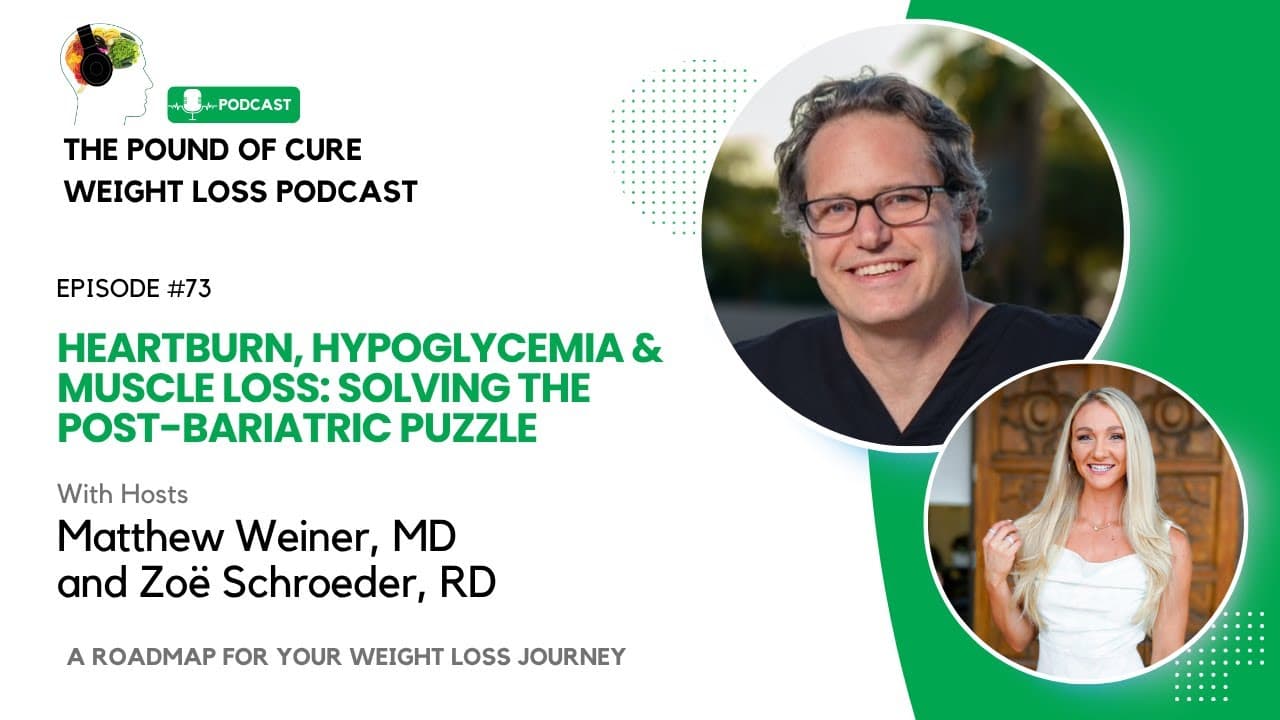
In Episode 73 of the Pound of Cure Weight Loss Podcast, Dr. Matthew Weiner is joined by Deidre Schodroski, his surgical partner of six years, to address common post-bariatric surgery challenges. Together, they have performed approximately 2,000 surgeries and bring extensive clinical experience to patient questions. This episode focuses on heartburn after gastric sleeve, iron deficiency after gastric bypass, hypoglycemia management, protein shake intolerance, and muscle loss concerns. The discussion provides practical, evidence-based solutions for patients at every stage of their weight loss journey.
Heartburn After Gastric Sleeve Surgery
Why Heartburn Develops After Sleeve
Talk with our team
Have questions about this episode?
Send our Tucson weight loss team a note about bariatric surgery, GLP-1 medications, nutrition, or your next step with Pound of Cure.
More from this episode
Many patients develop acid reflux 6-12 months after gastric sleeve surgery, even if they had no reflux symptoms before the procedure. This is unfortunately a very common complication of sleeve gastrectomy and represents one of the primary weaknesses of this surgery type.
Non-Surgical Management Strategies
Before considering revision surgery, patients should try several conservative approaches:
Dietary modifications form the first line of defense. Avoid foods high in fats and refined carbohydrates that trigger reflux. Practice mindful eating by chewing food thoroughly and eating slowly. Never drink liquids while eating, and avoid eating within 2-3 hours of bedtime.
Medication management typically begins with proton pump inhibitors (PPIs). The over-the-counter dose of pantoprazole is 20 milligrams, but prescription doses start at 40 milligrams once daily. If symptoms persist, the dose can be increased to 40 milligrams twice daily before considering surgical options.
Long-Term PPI Use Concerns
Studies from approximately two years ago suggested a correlation between chronic PPI use and dementia, but newer research presented at recent GI conferences indicates this relationship is not causative. The association appears related to other long-term health conditions rather than the PPI itself. However, PPIs can cause hypocalcemia (low calcium), gastric polyps, and increase osteoporosis risk. While monitoring continues after bariatric surgery, avoiding lifelong medication when possible remains preferable.
When Endoscopy Is Necessary
Every patient with heartburn after gastric sleeve requires an upper endoscopy to guide treatment decisions. Endoscopy findings vary widely, from minimal inflammation to significant esophagitis or Barrett's esophagus. Barrett's esophagus occurs when the esophageal lining changes from normal cells to small intestine cells due to chronic acid exposure.
The endoscopy also identifies hiatal hernias, which cannot be seen from outside the body. A hiatal hernia occurs when the stomach slides up into the chest cavity and is only visible on CT scan, endoscopy, or other diagnostic imaging. Large hiatal hernias worsen positional reflux, making it difficult to lie flat at night as stomach contents pool above the diaphragm.
Surgical Revision Options
If conservative management fails after 1-2 years, surgical revision becomes appropriate. Conversion from gastric sleeve to gastric bypass, combined with hiatal hernia repair when present, typically resolves heartburn symptoms immediately, often by the morning after surgery.
Dr. Weiner and Deidre perform this revision surgery approximately once weekly, sometimes more frequently. The procedure is quite safe with serious complication rates around 1 percent or lower. Patients generally recover as well as those undergoing primary gastric bypass surgery. The surgical team now incorporates a small amount of mesh in hiatal hernia repairs to improve long-term durability.
Weight Loss After Revision Surgery
Conventional wisdom suggests patients lose only 20-30 pounds with revisional surgery. However, actual results vary significantly based on several factors. Patients who have regained substantial weight tend to lose more than those still at their lowest weight. Those who respond well metabolically to surgery, maintain excellent nutrition with whole foods, stay physically active, and address comorbidities like diabetes often exceed the expected 20-30 pound loss.
Combining revision surgery with GLP-1 medications produces even better outcomes, as surgery increases medication responsiveness. Weight loss occurs more slowly than with primary bariatric surgery but can be substantial with the right approach.
Prevention Considerations
Patients considering initial bariatric surgery who already have severe reflux should strongly consider gastric bypass over sleeve to avoid worsening symptoms and take advantage of the reflux-resolving benefits of bypass.
Protein Shake Intolerance After Surgery
Why Taste Changes Occur
Many patients experience dramatic taste changes after bariatric surgery, particularly after gastric bypass. Protein shakes loved before surgery often taste too sweet, have wrong texture, or become completely intolerable. Even trying multiple brands and flavors fails to identify an acceptable option for some patients.
The Artificial Sweetener Problem
The primary culprit behind protein shake intolerance is the artificial sweetener content in pre-made shakes. This ingredient causes the most problems for post-surgical patients.
Whole Food Protein Shake Solutions
Making homemade protein shakes using whole food ingredients solves this problem for most patients. Use Greek yogurt or protein-fortified lactose-free milk like Fairlife as a base. Add fruits and vegetables to reach nutritional targets. The Pound of Cure app features an AI dietitian named Sage that generates recipes on demand. For example, requesting "20 recipes for whole food protein shakes that equal 30 grams of protein" produces results in 30 seconds.
Lactose-Free Options
Many bariatric patients, especially those who had gastric bypass, develop lactose sensitivity after surgery. Fairlife now offers a lactose-free line of coffee-flavored shakes. Core Power shakes are also lactose-free alternatives to traditional whey protein products.
Alternative Protein Sources
Whey isolate provides the best protein absorption but is not the only option. Some patients cannot tolerate whey protein itself, regardless of lactose content. Plant-based proteins like pea protein or soy protein work well for these individuals. Collagen protein is another option, though it is not absorbed as efficiently as whey isolate.
Trial and Error Approach
Patients should not become attached to the protein shake used during the pre-operative diet, as post-surgery preferences will likely change. Purchase 5-6 different types of shakes after surgery with varying flavors, brands, and protein sources. Try all five, and if none work, try another five until finding an acceptable option.
Iron Deficiency After Gastric Bypass
Why Iron Deficiency Develops
Patients two or more years after gastric bypass commonly develop anemia requiring iron infusions. This occurs because gastric bypass permanently alters nutrient absorption. All bypass patients must take a multivitamin containing iron for the rest of their lives.
Some individuals are poor iron absorbers even before surgery, unrelated to heavy menstrual cycles or other obvious causes. These patients require iron supplementation beyond standard multivitamins from the start.
The Multivitamin Requirement
Gastric sleeve patients can sometimes manage with over-the-counter multivitamins, but gastric bypass is less forgiving. Bypass patients require bariatric-specific multivitamins with adequate iron content. Many patients 10-20 years post-surgery forget this requirement or switch to gummy multivitamins (which contain no iron), standard adult multivitamins, or women's 50-plus formulations that lack sufficient iron.
When Iron Infusions Are Truly Necessary
Very few bypass patients genuinely require ongoing iron infusions despite perfect vitamin compliance. When infusion dependency occurs, it typically indicates another pathologic issue. Examples include Crohn's disease (which affects iron absorption) or genetic anemias. Without bowel resection, the body absorbs iron adequately with the correct supplementation dose.
The cycle of repeated iron infusions without addressing underlying vitamin compliance is an unsustainable way to live. Consistent vitamin intake and annual lab monitoring prevent this situation.
Managing Iron-Related Constipation
Constipation from iron supplementation affects many patients. Iron bisglycinate (also called gentle iron) causes less constipation than ferrous sulfate, which is the standard elemental iron in most multivitamins. Studies support this difference, though individual responses vary.
Ferrous sulfate causes severe constipation in approximately half of users. Patients struggling with constipation should try chelated iron formulations like bisglycinate or vegetable-based irons. Slow-absorbing iron preparations also reduce constipation. However, iron bisglycinate requires slightly higher doses than elemental iron to achieve the same effect.
If iron causes constipation but levels are low, the solution is managing constipation through other means rather than discontinuing necessary supplementation.
Annual Monitoring Protocol
Check iron levels at least once yearly after gastric bypass. If levels are low, increase monitoring to twice yearly and adjust supplementation accordingly. This simple protocol prevents the need for most iron infusions.
Hypoglycemia After Gastric Bypass
Understanding Post-Bypass Hypoglycemia
Patients three or more months after gastric bypass may experience nighttime episodes of racing heart, dizziness, sweating, and weakness that improve after eating or drinking. These symptoms indicate hypoglycemia (low blood sugar), which is a real risk after bypass surgery.
Two Mechanisms Causing Low Blood Sugar
The first mechanism is dumping syndrome, characterized by rapid transit of carbohydrates directly into the intestine because food bypasses the pyloric sphincter. This rapid transit causes intense glucose absorption, triggering a large insulin response that drops blood sugar dangerously low.
The second mechanism involves increased GLP-1 hormone production after gastric bypass. Higher GLP-1 levels stimulate greater insulin production by the pancreas, creating hyperinsulinemia that drives blood sugar down.
Dietary Management Strategies
Avoid foods high in fat, sugar, or refined carbohydrates, as these trigger dumping syndrome. High-carbohydrate and high-sugar foods cause rapid glucose spikes followed by insulin overproduction and blood sugar crashes. Symptoms include nausea, sweating, lightheadedness, heart pounding, and vomiting.
Eat a whole food diet emphasizing lean proteins and plant-based proteins. Include foods that maintain steady blood sugar levels in every meal, such as beans, nuts, leafy greens, avocado, and chickpeas.
Meal Timing Importance
Skipping meals causes hypoglycemia because bypassing part of the small intestine prevents glucose absorption between meals. Long gaps between eating drop blood sugar very low, then eating causes a bigger spike, bigger insulin response, and subsequent crash.
Eat every 3-4 hours, at minimum consuming a snack. Choose snacks that stabilize blood sugar like legumes, beans, and nuts rather than bread, candy, or juice, which are full of rapidly absorbed carbohydrates.
Overnight Hypoglycemia Prevention
Many patients experience hypoglycemia overnight because dinner occurs too early with no food intake until breakfast. Eating a meal or snack around 7-8 PM prevents nighttime episodes. Good evening snack options include protein with fruit (such as cottage cheese and blueberries) or a handful of nuts.
Medication Options
If dietary changes and meal timing adjustments fail to control hypoglycemia, medication can slow carbohydrate absorption and stabilize blood sugar. Acarbose is the most commonly used medication and works fairly well for most patients. Other medications can decrease insulin production by the pancreas, but most patients achieve control with diet, timing, and acarbose.
GLP-1 Medications for Hypoglycemia
Studies show GLP-1 medications work for hypoglycemia by decreasing liver glucose production, slowing intestinal carbohydrate absorption, affecting pancreatic insulin production, and slowing insulin clearance. However, clinical experience shows limited real-world effectiveness. When GLP-1s do help, it may be due to very low doses. Higher doses decrease food intake, worsening hypoglycemia by reducing regular eating. Low-dose Ozempic or Zepbound might be worth exploring, though more research is needed.
Using AI to Identify Trigger Foods
The Pound of Cure app allows patients to log food and hypoglycemic episodes. Take a picture of meals for automatic logging. Record each episode with time and symptoms. Input this data into the Sage AI tool and ask it to identify foods triggering low blood sugar. AI excels at managing large datasets like food logs and symptom patterns, potentially identifying specific trigger foods causing episodes.
Artificial sweeteners may trigger hypoglycemia by stimulating insulin release without providing carbohydrates, lowering blood sugar without compensating glucose. This is usually a solvable problem through trial and error, though solutions are not always straightforward.
Muscle Loss with Weight Loss
Muscle Loss Is Inevitable with Weight Loss
A patient who had gastric sleeve in 2015 lost significant lean muscle mass, then lost more muscle after starting Monjaro in 2024 without exercising. Muscle loss accompanies all weight loss, regardless of method. This is an unavoidable aspect of losing weight.
Three Weight Loss Methods
Lifestyle modification breaks into calorie deprivation (low-calorie diets requiring willpower) and changing food types (moving from low calorie ratio processed foods to high calorie ratio whole foods). Medications and surgery are the other two methods. Lifestyle modification, especially calorie deprivation, actually causes the most muscle loss.
Why Calorie Deprivation Causes Maximum Muscle Loss
During calorie deprivation, the body perceives famine and protects fat stores as emergency reserves. Skeletal muscle is far more metabolically active than other tissues (only the brain burns more calories). The body preferentially breaks down skeletal muscle, converts the protein to carbohydrate, and uses it for fuel. Only after exhausting muscle stores with minimal fat usage does the body finally burn fat reserves. This survival mechanism maximizes muscle loss during low-calorie dieting.
Surgery and Medications Preserve More Muscle
Bariatric surgery and GLP-1 medications cause less muscle loss than starvation or severe calorie restriction diets. They may even preserve more muscle than standard lifestyle diets, with research supporting this finding in upcoming podcast episodes.
Actionable Steps to Minimize Muscle Loss
Nobody should remain obese to preserve muscle mass, as obesity maintains diabetes and hypertension. The goal is maximizing fat loss while minimizing muscle loss during necessary weight reduction.
Weight-bearing exercise and lifting weights are critically important for muscle preservation. Good nutrition without junk food and avoiding calorie deprivation also help minimize muscle loss. Consume adequate protein from whole food sources, as the body uses whole food protein more effectively than protein shakes and bars.
The Importance of Muscle Activation
Eating sufficient protein alone does not build muscle. Weight-bearing or resistance exercise in any form is required to activate muscle growth. Patients can build muscle even after surgery and medications with proper nutrition and exercise. One patient in the practice became a bodybuilder post-surgery, and others became marathon runners, demonstrating that substantial muscle building is possible.
Pre-Existing Muscle Base Matters
Patients who exercised regularly and built lean muscle before surgery or medications find it easier to maintain that muscle mass than those who never worked out. Being younger also helps with muscle preservation.
Body Composition Testing
DEXA scans are the most accurate method for measuring lean muscle mass versus fat mass. They show the comparison between fat and muscle and can demonstrate improvements in lean muscle mass. However, DEXA results do not always correlate with aesthetic appearance or scale weight, which frustrates some patients. Still, increased lean muscle mass represents a valuable non-scale victory.
Body composition machines using hand-held impedance measurements are unreliable. Factors like hand sweat or salt contamination significantly impact results, making these devices feel like carnival tricks rather than accurate assessment tools.
The Actionable Information Question
Regardless of body composition test results showing muscle loss, the recommendations remain the same: eat more protein and lift weights. If tests show excellent muscle preservation, the advice is identical. Therefore, body composition testing adds mostly noise rather than actionable information.
Some healthcare providers discourage GLP-1 medication use due to muscle loss concerns. However, all weight loss causes muscle loss regardless of method. Avoiding treatment to preserve muscle while remaining obese and diseased makes no medical sense.
Looking Ahead
Future episodes will alternate between Deidre focusing on surgical topics and Zoe discussing nutrition and medications. Dr. Weiner will be present for every episode. The Pound of Cure app is currently in beta version and will fully launch within 1-2 months. The app includes the Calorie Ratio food logging system, the Sage AI agent, and tools supporting weight loss through lifestyle, medications, surgery, or combinations of these approaches. Download the app to provide feedback during active development.
Weight loss topics covered in this episode
This conversation is part of the Pound of Cure approach to evidence-based weight loss education, including bariatric surgery, GLP-1 medications, nutrition counseling, metabolic health, and long-term patient support.
For more context, explore our guides to GLP-1 medications, bariatric surgery in Tucson, and the Metabolic Reset Diet.