Podcast Summary
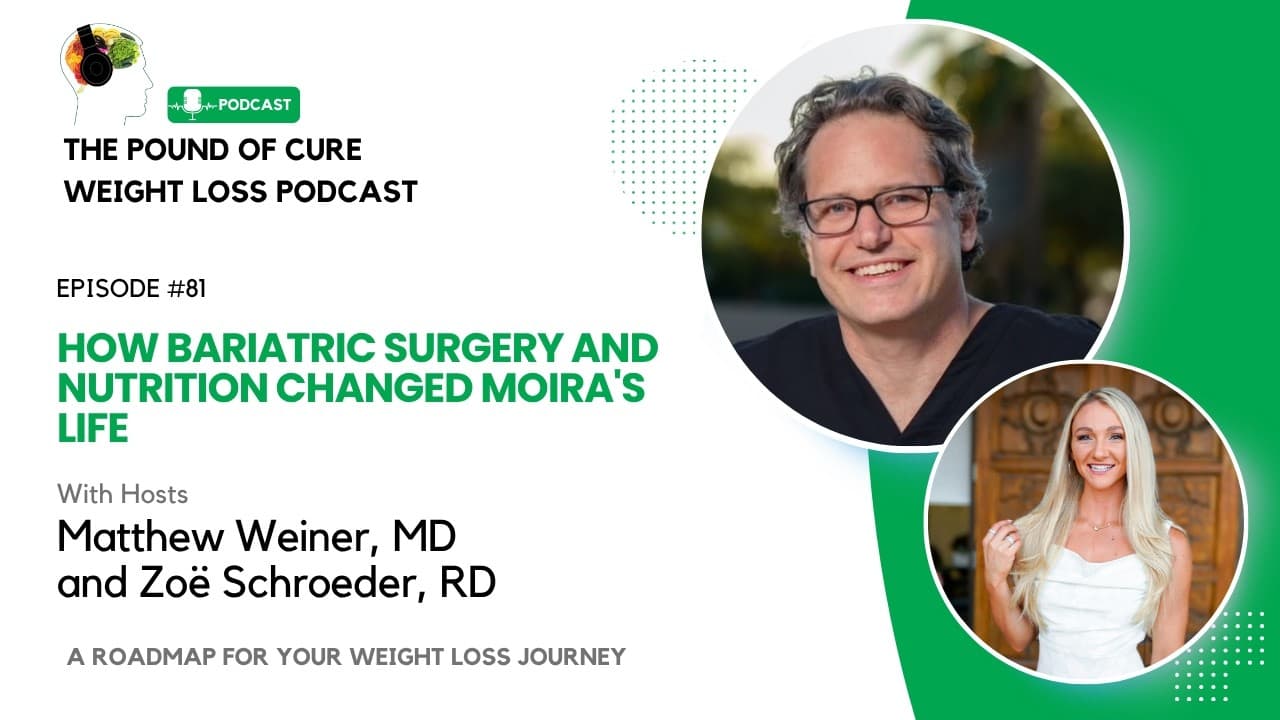
Episode 81: How Bariatric Surgery and Nutrition Changed Moira's Life
In this inspiring episode of the Pound of Cure Weight Loss Podcast, patient Moira Allen shares her transformative journey through weight loss, bariatric surgery, and lifestyle changes. Hosts Dr. Matthew Weiner and nutritionist Zoe discuss practical strategies for sustainable health, the importance of exercise safety, and how combined treatments can empower lasting weight management.
Moira's Weight Loss Journey: A 30-Year Struggle
Moira began gaining weight around age 30 after years of being very fit. Despite her determination to lose weight before turning 40 and then 50, the pounds continued to accumulate. Her weight eventually prevented her from getting a needed knee replacement, as her doctor told her she was too heavy for the surgery.
Talk with our team
Have questions about this episode?
Send our Tucson weight loss team a note about bariatric surgery, GLP-1 medications, nutrition, or your next step with Pound of Cure.
More from this episode
After struggling for years, Moira was referred to the Pound of Cure clinic. She initially chose not to pursue surgery right away and spent two years trying GLP-1 medications, starting with Wegovy and then moving to Zepbound. While these medications helped her lose 30 pounds, she wasn't yet surgery-ready and her knee continued to deteriorate.
The Decision for Gastric Bypass Surgery
In February of the previous year, Moira underwent gastric bypass surgery. She describes it as the best decision she ever made and wishes she had done it 15 years earlier. The surgery propelled her weight loss in ways the medications alone could not.
Combined with the 30 pounds lost on GLP-1 medications, Moira has now lost 50 additional pounds since surgery, totaling 80 pounds of weight loss. She went from wearing size 2X clothes to medium and large sizes.
Life-Changing Health Improvements
At 57 years old, Moira has experienced remarkable health transformations. She no longer takes blood pressure medication, her cholesterol is down, and she no longer needs a CPAP machine for sleep apnea. These changes occurred primarily in the year following her gastric bypass surgery.
About six months after her weight loss surgery, Moira was finally able to have her knee replacement. She spent two to three months recovering from that procedure. For the last three to four months, she has been actively exercising and truly living what she calls her "best self."
Preparing for Knee Surgery Through Exercise
Immediately after having weight loss surgery, Moira began lifting weights and doing kettlebell workouts to prepare for her upcoming knee replacement. She performed squats and other exercises that helped strengthen her body for the surgery and recovery process.
Rediscovering Active Family Life
Moira's family has always been avid bike riders and mountain bikers. While she now avoids aggressive mountain biking due to fear of falling and injuring her new knee, she has returned to cycling in meaningful ways.
She now commutes to work by bike two days per week. Although she lives only five miles from work, she takes a longer route in the morning, riding about 16 miles out and back, then rides the four and a half miles home after work. On weekends, the family does at least one big ride, often around 30 miles.
The Profound Impact of Weight Loss on Daily Life
Moira reports that regular exercise has made her more energized, helps her sleep better, improves her work performance, and makes her more attentive in general. She attributes these improvements to the combination of exercise and healthy eating.
She describes feeling like she has found herself again after this past year, making up for time she feels she wasted struggling with her weight.
Understanding the Timeline of Weight Loss Treatment
Dr. Weiner emphasizes an important point about Moira's journey: it took two and a half to three years total to reach her current success. This timeline is critical for patients to understand.
The availability of GLP-1 medications has actually made the weight loss process take longer in many cases. However, these medications are valuable tools that allow the medical team to identify different types of responders:
- Super responders who do extremely well on medications alone
- Non-responders who may move faster toward surgery
- Partial responders like Moira who benefit from a combined approach
When you add in recovery time from procedures like knee replacement, the overall journey extends even further. Dr. Weiner stresses that while the process is not instant, there is an answer for people who are 80, 90, or 100 pounds overweight and losing mobility. The key message: if this story resonates with you, the time to start is now.
The Challenge of Exercise Nutrition After Bariatric Surgery
Moira encountered significant challenges fueling her body for long bike rides after surgery. On one memorable occasion, she and her husband went on a 20-mile ride in the desert. After eating her normal breakfast of an egg and ham, she completely "bonked" (ran out of energy) and had to walk her bike back for the last three miles. She was so depleted and unbalanced that riding slowly was impossible.
This bonking experience happened several times. Even when she felt fine during a ride, she would sometimes get home feeling shaky and almost dry heaving. She would have to quickly consume something like applesauce before even being able to shower.
Developing a Nutrition Strategy for Endurance Exercise
Working with Zoe, Moira developed a nutrition protocol specifically designed for her small post-surgery stomach:
Before the ride: She eats a small amount of oatmeal in the morning to get carbohydrates, combined with a little bit of a protein shake (sometimes not even the whole shake). About 30 minutes before leaving, or during the drive to the ride location, she eats a banana or half a banana.
During the ride: Initially, Moira would take small packs of applesauce. She found traditional energy goo packs too hard on her stomach and unpleasant to consume. Her husband and son protectively made her stop every half hour to consume nutrition, even when she felt fine. This regular fueling prevents the dangerous energy crashes she experienced before.
Now she takes a banana and a protein bar with her. She has found that whole fruits work better for her than processed options, providing sugar and potassium without causing stomach upset.
Special strategy: For longer rides with a halfway stopping point, Moira will pack a piece of high-grain bread with no-sugar peanut butter. During a charity ride, having half a peanut butter sandwich at the turnaround point gave her exactly the fuel she needed to complete the return journey.
Expert Guidance on Performance Nutrition After Weight Loss Surgery
Zoe explains that combining GLP-1 medications, bariatric surgery, and performance nutrition requires special considerations. While traditional endurance athletes use sugary gels and goos to quickly deliver glucose for energy, bariatric surgery patients cannot handle concentrated added sugars.
After gastric bypass, consuming high-sugar processed foods causes blood sugar to spike and then crash. This makes the whole food approach essential nine times out of ten for bariatric patients who want to be active.
The Importance of Trial and Error
Each individual needs to discover what works for their body through experimentation. For bariatric patients, easily digestible whole foods are typically the answer.
Timing Nutrition Around Performance
For a two-hour bike ride after bariatric surgery, proper timing is critical:
2 hours before: Eat a solid breakfast combining carbohydrates and protein (like oatmeal with protein). Allow full digestion time.
30-60 minutes before: Consume a small amount of easily digestible carbohydrates, such as half a banana or a fruit puree pouch.
During exercise: Small frequent feedings are better than larger portions spaced further apart. This keeps blood glucose levels stable and prevents dangerous dips that are harder to recover from. Every 30 to 45 minutes is appropriate for most people.
After exercise: Replenish with carbohydrates for energy, protein for muscle protein synthesis, electrolytes for rehydration, and plain water.
Why Protein Alone Is Not Enough
If you only fuel with protein, your body will not get the energy it needs to successfully complete exercise while feeling good. Carbohydrates are essential for performance.
Understanding Reactive Hypoglycemia in Bariatric Patients
Dr. Weiner explains that gastric bypass patients, and to a lesser extent sleeve patients and those on GLP-1 medications, must deal with reactive hypoglycemia. This occurs when blood sugar spikes after consuming processed sugary foods and then bottoms out dramatically.
For endurance athletes running 26 miles, consuming sugar along the way is reasonable. But for gastric bypass patients, this approach causes dangerous blood sugar crashes. Dr. Weiner suspects this reactive hypoglycemia was part of what Moira experienced when walking her bike after bonking.
The Perfect Endurance Food: Bananas
Dr. Weiner highlights bananas as ideal for endurance athletes, particularly those who have had bariatric surgery. Tennis players have long favored bananas, and for good reason. They contain fiber that prevents reactive hypoglycemia while providing enough sugar and carbohydrates to fuel performance and stabilize blood sugar.
The Benefits of Beans and Legumes
Another excellent choice for gastric bypass patients is beans and legumes, including dried peas and dried chickpeas. These foods work exceptionally well for blood sugar stability because of their unique carbohydrate structure.
The carbohydrates in beans and legumes are straight-chain rather than branched-chain. Digestive enzymes break down carbohydrates from the ends, so a straight chain has only two ends to work from, while a branched chain can have hundreds of ends. This means beans digest more slowly, providing sustained energy and preventing the reactive hypoglycemia that bariatric patients are particularly susceptible to.
Moira shares that she munches on dried peas at work and plans to take them on rides for the halfway stopping point.
Starting an Exercise Program After Weight Loss
Zoe provides practical guidance for someone who has just lost 50 pounds and has been sedentary. Her approach emphasizes baby steps.
Step 1: Start With Walking
For most people, walking is the easiest and most accessible way to begin. However, the starting point varies by individual. Zoe recently worked with someone who cannot walk, so they set a goal of following a 10-minute YouTube video for seated arm exercises without hand weights, just to get blood flowing.
For those who can walk, the goal is not to jump from 1,000 steps to 10,000 steps per day. Instead, start small. Perhaps walk a couple of laps around the backyard daily, then gradually build up. Eventually, work toward a morning walk or walking at whatever time works for your schedule.
Movement Sprinkles for Busy People
Many people struggle to find dedicated exercise time. Zoe recommends "movement sprinkles" - two to five minute activity bursts sprinkled throughout the day, done three times daily.
Examples include:
- Pacing around your office during phone calls
- Taking the long way to reach the bathroom on the other end of the hospital
- Removing the garbage can from your office so you must get up and walk to throw things away
These movement sprinkles increase non-exercise activity thermogenesis (NEAT), which is your daily general activity level apart from structured exercise.
Step 2: Add Resistance Training
Once you have established consistent aerobic exercise like walking or biking, the next step is adding resistance training. This does not mean spending an hour at the gym lifting free weights.
For beginners, Zoe recommends:
- Starting with body weight exercises
- Using resistance bands
- Following YouTube videos at home with light free weights
If possible, take advantage of the free introductory personal training sessions most gyms offer. Use these sessions not necessarily for an intense workout, but to ask questions about equipment use, proper form, and safety.
Moira's Workplace Exercise Integration
Moira has successfully integrated exercise into her work routine. During phone calls where she is just listening, she uses hand weights or does kettlebell swings. She keeps a stair stepper under her desk that she uses during calls. Her coworkers have been supportive and have even started borrowing her weights, making fitness "addicting" for the whole office.
The Critical Importance of Avoiding Injury
Both Dr. Weiner and Moira have made deliberate decisions to avoid aggressive mountain biking due to injury risk. Dr. Weiner shares his own story of getting into mountain biking in Arizona a few years ago at age 53. One day he flipped over his handlebars in a complete wipeout. While he was not injured, he recognized it as a sign and never took another aggressive bike ride.
He emphasizes a crucial point: injury is your number one enemy with exercise. At 57, Moira knows that recovery takes much longer than it would have in her younger years.
The Exercise Paradox
Dr. Weiner makes a striking statement: he has seen more people gain weight from exercise than lose it. This often surprises people, but he is not saying people should not exercise. Exercise is critical and he loves it. Exercise helps with heart health, mood, mobility, and prevents dementia, cancer, and heart attacks.
However, exercising specifically to lose weight often leads to over-exercising, which causes injury, which then causes weight gain. Dr. Weiner hears this story approximately once a week in his office.
Joint Soreness vs. Muscle Soreness
An important principle: muscle soreness after exercise is good, but joint soreness is bad. When choosing activities, be mindful of this distinction. Biking is excellent for your knees and overall joints. Your muscles may be sore afterward, but your joints probably will not be.
If you do get injured, you have potentially taken years off your ability to do that activity. This makes injury prevention paramount.
The Power of Combined Treatment
Moira currently takes 12.5 mg of Zepbound (a GLP-1 medication) in combination with having had gastric bypass surgery. Dr. Weiner describes this combination as extraordinarily powerful.
While you can identify legitimate concerns about GLP-1 medications alone and about bariatric surgery alone, when you combine the two treatments, very few negative things can be said. The combination addresses the weaknesses of each individual treatment.
Why This Combination Works So Well
Minimized weight regain: Weight regain is a significant problem with bariatric surgery alone, but the addition of GLP-1 medications dramatically reduces this issue.
Improved comfort: GLP-1 medications are actually more comfortable after gastric bypass than in patients with normal stomach anatomy. Common GLP-1 side effects like heartburn and gastroparesis are minimized because there is not a large stomach for food to sit in. Acid reflux becomes essentially non-existent after gastric bypass.
Long-term maintenance: Patients maintain their weight loss for much longer periods.
Psychological benefit: Perhaps most importantly, patients feel comfortable and in control of their weight. This sense of control is transformative.
The Common Thread: Feeling Out of Control
Dr. Weiner notes that when he sees new patients, the most common experience they share is feeling their weight is completely out of control. The weight keeps going up despite their efforts, impacting health, lifestyle, and ability to participate in desired activities. This is a devastating feeling.
When Moira first came to the clinic, she was in this place. Now, she feels 100% in control of her weight. She is not getting on the scale with anxiety about whether she has gained weight. Her weight is no longer a primary focus. Instead, she focuses on building muscle and overall health.
This represents an incredible victory and freedom from something that likely consumed enormous mental energy before treatment.
Time Reclaimed
Dr. Weiner reflects on how much time Moira used to spend thinking about, worrying about, and dealing with her weight. Now she spends that time on her bike and doing strength training. This shift represents the profound impact of successful treatment.
Treatment Is Possible for Everyone
With the combination of treatments now available, Dr. Weiner tells patients who weigh 500 pounds and want to reach 220 pounds: "All right, great, no problem. Let me show you how."
This confidence comes from understanding that surgery, medications, and lifestyle changes work synergistically together.
The Essential Role of Lifestyle Changes
Zoe emphasizes an important caveat: the combination of treatments can be perfect, but if you are not also putting in effort on the lifestyle side with nutrition and exercise, you will not get the perfect result.
Moira's success comes from three things working together:
- Medications (GLP-1s)
- Surgery (gastric bypass)
- Lifestyle changes (nutrition and exercise)
The magic is that the medications and surgery actually help make the nutrition and lifestyle changes easier to implement and sustain. This synergistic effect is what creates lasting transformation.
Beta Testing the GoLoli App
Dr. Weiner announces that the Pound of Cure program has developed a new app called GoLoli (spelled G-O-L-O-L-I), currently in beta testing with an anticipated full release in April.
Interested individuals can sign up to be beta testers at gololi.ai.
Features of the New App
The app represents a dramatically different and improved approach to weight loss support. Recent additions include exercise logging capability.
The artificial intelligence in the app knows:
- Your exercise activities
- Your fluid intake
- Your food intake
- Your medications
- Your weight
The AI is guided by the Pound of Cure program principles and uses all this information to help create personalized plans. It keeps you accountable and provides coaching along the way.
Dr. Weiner describes the app as taking their entire program and putting it in the palm of your hand.
Key Takeaways From Moira's Story
Moira's journey offers hope for anyone struggling with weight, particularly those who:
- Have struggled for decades without success
- Need orthopedic surgery but are too heavy
- Feel their weight is out of control
- Want to return to activities they love
Her experience demonstrates that:
- Treatment takes time (two to three years is realistic)
- Combining treatments is more effective than single approaches
- The journey requires active participation in nutrition and exercise
- Injury prevention is critical for long-term success
- Small, consistent efforts compound into major transformations
- Life can genuinely be reclaimed after years of struggle
Most importantly, Moira's story shows that at 57 years old, after 30 years of weight struggles, transformation is absolutely possible. She now rides 30 miles on weekends, commutes by bike to work, and describes herself as living her best life.
Her final message to the Pound of Cure team says it all: "I couldn't have done it without every one of you." This collaborative approach between medical treatment, nutritional guidance, and patient commitment is the foundation of sustainable weight loss success.
Weight loss topics covered in this episode
This conversation is part of the Pound of Cure approach to evidence-based weight loss education, including bariatric surgery, GLP-1 medications, nutrition counseling, metabolic health, and long-term patient support.
For more context, explore our guides to GLP-1 medications, bariatric surgery in Tucson, and the Metabolic Reset Diet.