
Podcast Summary
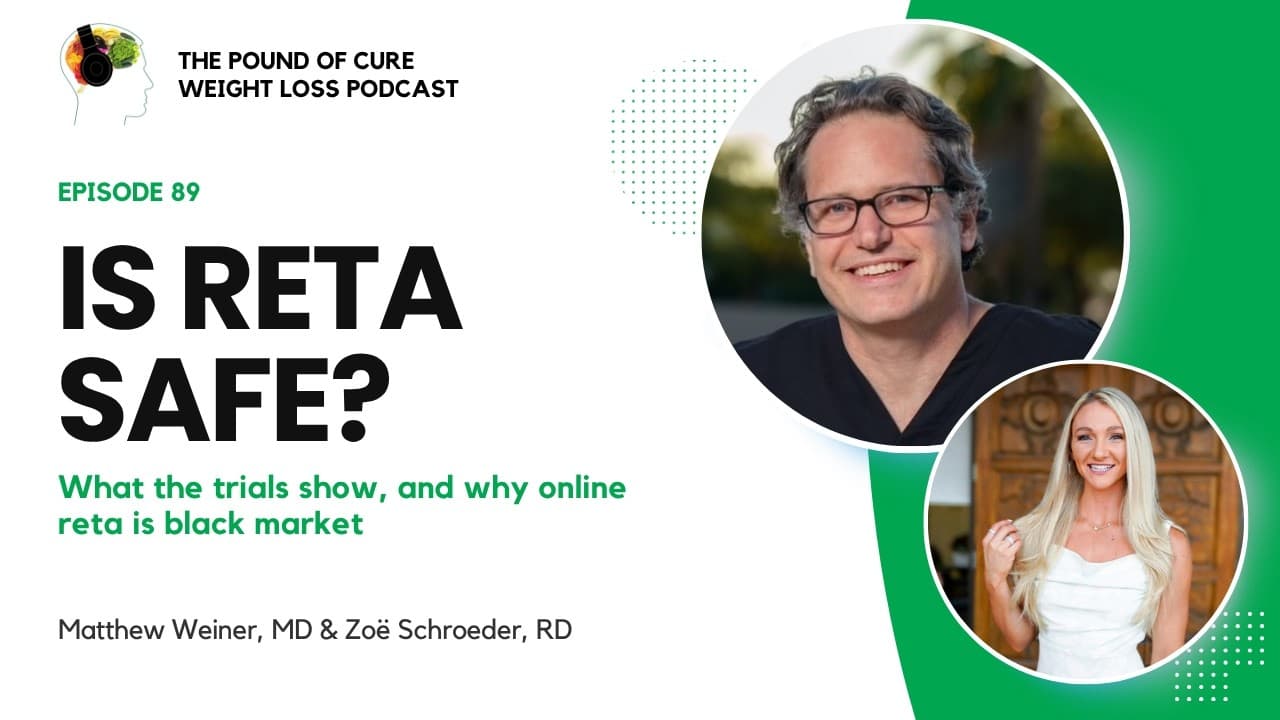
Zoë Schroeder, a registered dietitian at Pound of Cure, and Dr. Matthew Weiner, a bariatric surgeon and weight loss expert, discuss the safety of Retatrutide, often referred to as "Reta." Dr. Weiner states he would not prescribe or endorse Retatrutide, especially black market versions, due to safety concerns.
Two Reported Deaths
Recent news reports indicate two deaths associated with products sold as Reta. Both individuals were women, aged 41 and 49, and both experienced cardiac arrest. One death was linked to severe dehydration and malnutrition, and the product was purchased from an online peptide seller. The source of the other product is unknown.
Why Reta is Different from Compounded GLP-1s
Talk with our team
Have questions about this episode?
Send our Tucson weight loss team a note about bariatric surgery, GLP-1 medications, nutrition, or your next step with Pound of Cure.
More from this episode
Dr. Weiner highlights that Reta is not currently FDA approved. He contrasts this with compounded Semaglutide and Tirzepatide, which were legally compounded during shortages from legitimate overseas manufacturers. While there were debates about the safety of compounded GLP-1s, the primary concern with Reta is its lack of FDA approval. This means there's no guarantee of what's actually in the vial or its dosage.
Dr. Weiner outlines three possibilities for the reported deaths:
- Toxic Compound: The individuals may have received a dangerous or poisonous substance, not actual Reta, due to mismanufacturing or compromise.
- Poor Management: Side effects of the medication, such as severe dehydration or malnutrition, may have been mismanaged, leading to cardiac arrest.
- Drug Itself: There might be inherent problems with Retatrutide that predispose individuals to sudden death.
Without FDA approval and comprehensive data, it is impossible to definitively know the cause.
Understanding GLP-1 Agonists
GLP-1 medications work by triggering specific receptors. There are different types:
- Single Agonists: Work on the GLP-1 receptor (e.g., Semaglutide/Ozempic).
- Double Agonists: Work on GLP-1 and GIP receptors (e.g., Tirzepatide/Zepbound).
- Triple Agonists: Work on GLP-1, GIP, and Glucagon receptors (Retatrutide).
Glucagon is a primal enzyme involved in the body's stress response, released with epinephrine, and helps release glucose. Sustained activation of this fight-or-flight pathway, as seen with a triple agonist, raises concerns about increased heart rate and other potential issues. Dr. Weiner has expressed concern about Reta for this reason.
Weight Loss and Side Effects
The TRIUMPH-1 study on Retatrutide showed impressive weight loss, with participants losing approximately 25% of their body weight at the 12mg dose after 80 weeks. This is higher than Tirzepatide's 21% weight loss. However, Reta also showed a higher rate of side effects, with 18% of participants in the clinical trial stopping the drug due to adverse effects. A notable new side effect is dysesthesias, or a generalized burning skin sensation, which is not typically seen with Semaglutide or Tirzepatide. Zoë compares this to the tingling sensation from beta-alanine in pre-workout supplements.
Dr. Weiner questions whether an additional 4% weight loss (compared to Tirzepatide) is worth the unknown risks associated with an unapproved drug. He emphasizes that safety is paramount.
Stopping Reta and Preventing Muscle Wasting
When stopping any GLP-1 medication, including Reta, individuals typically regain some, but not all, of the lost weight over time. To minimize weight regain and prevent muscle wasting, Zoë recommends two key strategies:
- Nutrition: Prioritize whole, lean, high-quality protein intake to preserve existing muscle tissue. Protein supplements can be used as needed to meet daily requirements.
- Strength Training: Engage in resistance training a couple of days a week. Even bodyweight exercises can be effective in stimulating muscle and preventing muscle wasting.
Dr. Weiner stresses that these medications are not magic. They require proper supervision, careful dosing, and consideration of other medical conditions. He advises working with a healthcare provider on lifestyle changes, including nutrition and resistance training, to ensure safe and effective weight management. The Pound of Cure app offers tools for food logging, nutrition quality assessment, and coaching.
Future of Weight Loss Medications
Dr. Weiner notes that a new drug called Cagrisema (Semaglutide + Amylin) is coming out from Novo Nordisk. Amylin is another peptide that has been around for a long time. This combination is expected to show enhanced weight loss with reduced muscle loss, as it combines two known drugs. He anticipates that this will be a significant development in the future of weight loss medications.
Final Thoughts
Dr. Weiner reiterates that he would not prescribe black market Reta. He emphasizes that patients should work with a healthcare provider who can properly supervise their treatment, manage side effects, and integrate lifestyle changes. He encourages individuals to utilize resources like the Pound of Cure app for nutrition tracking and support.
Weight loss topics covered in this episode
This conversation is part of the Pound of Cure approach to evidence-based weight loss education, including bariatric surgery, GLP-1 medications, nutrition counseling, metabolic health, and long-term patient support.
For more context, explore our guides to GLP-1 medications, bariatric surgery in Tucson, and the Metabolic Reset Diet.