
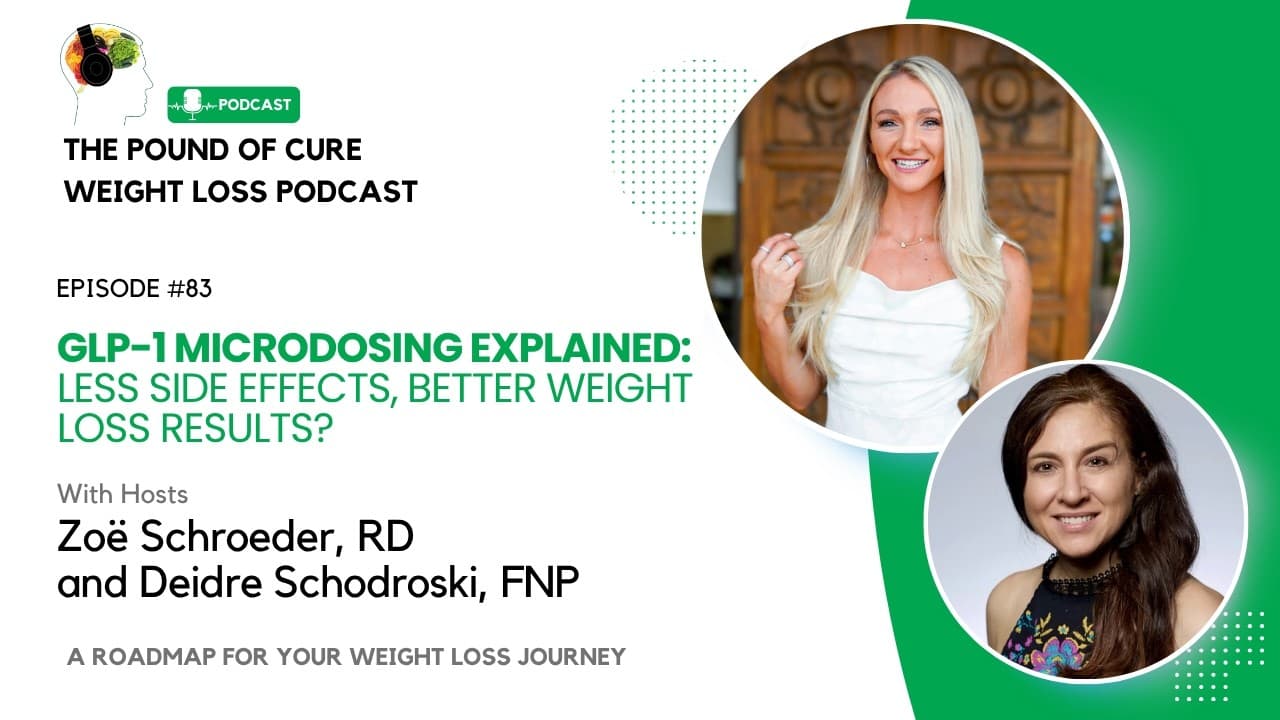
Podcast Summary
Understanding GLP-1 Microdosing for Weight Loss
GLP-1 medications like Ozempic, Wegovy, and Zepbound have transformed obesity treatment, but the standard dosing approach doesn't work for everyone. In this episode, registered dietitian Zoe teams up with Deidre, FNP, to explore GLP-1 microdosing, an alternative approach that uses smaller medication doses to potentially reduce side effects while still achieving meaningful weight loss results.
What Is GLP-1 Microdosing?
GLP-1 microdosing refers to using lower doses of medications like semaglutide (Ozempic, Wegovy) and tirzepatide (Zepbound) than the manufacturer's standard recommended amounts. Rather than following the typical escalation schedule designed for clinical trials, microdosing allows healthcare providers to customize medication doses based on individual patient responses.
Talk with our team
Have questions about this episode?
Send our Tucson weight loss team a note about bariatric surgery, GLP-1 medications, nutrition, or your next step with Pound of Cure.
More from this episode
This approach recognizes that weight loss medications affect each person differently. Some patients experience significant results at lower doses, while others may need higher amounts to see benefits. The key principle behind microdosing is finding the lowest effective dose that produces results while minimizing unwanted side effects.
Why Standard FDA-Approved Dosing May Not Fit Everyone
The episode highlights an important point that many patients don't realize: FDA-approved dosing schedules are designed primarily for clinical trials. These standardized protocols help researchers collect consistent data across large patient populations, but they weren't necessarily created to optimize individual patient experiences.
Manufacturer dosing typically follows a predetermined escalation schedule, increasing medication amounts at set intervals regardless of individual response. This one-size-fits-all approach can lead to unnecessary side effects for some patients who might achieve their weight loss goals at lower doses.
The Case for Lower Doses in Obesity Medicine
Deidre and Zoe discuss why smaller doses might actually lead to better long-term weight loss results for certain patients. When patients experience fewer side effects, they're more likely to continue their medication consistently over time. Adherence is crucial for sustained weight loss success.
Severe gastrointestinal symptoms like nausea, vomiting, and digestive discomfort are among the most common reasons patients discontinue GLP-1 medications. By starting with lower doses and increasing more gradually than standard protocols suggest, healthcare providers can help patients build tolerance while still progressing toward their weight loss goals.
How GLP-1 Microdosing Differs from Standard Protocols
Standard manufacturer protocols for GLP-1 medications typically involve starting at a specific dose and increasing every four weeks until reaching a maintenance dose. For example, Wegovy (semaglutide) usually starts at 0.25 mg weekly and escalates to 2.4 mg over several months.
Microdosing takes a more individualized approach. Healthcare providers may start at even lower doses than the standard starting point, increase more slowly, or maintain patients at lower doses indefinitely if those amounts are producing desired results. The focus shifts from reaching a predetermined target dose to finding each patient's optimal therapeutic dose.
Benefits of the Microdosing Approach
The episode explores several potential advantages of GLP-1 microdosing for weight loss patients:
Reduced Side Effects
Lower doses generally produce fewer and less severe side effects. Patients may experience minimal nausea, better appetite regulation without complete food aversion, and fewer digestive complications. This improved tolerability can make the weight loss journey more sustainable.
Better Long-Term Adherence
When patients feel better on their medication, they're more likely to take it consistently over months and years. Long-term adherence is essential because GLP-1 medications work best when used continuously as part of a comprehensive obesity treatment plan.
Cost Considerations
While not explicitly detailed in the episode description, using lower doses may have financial implications for patients paying out of pocket, as medication supplies can last longer when smaller amounts are used per injection.
Personalized Medicine
Microdosing represents a shift toward personalized obesity medicine. Rather than forcing every patient through the same protocol, this approach acknowledges individual differences in medication response, metabolism, and tolerance.
Current Conversations in Obesity Medicine
The episode positions GLP-1 microdosing as one of the biggest conversations happening in obesity medicine right now. As these medications become more widely prescribed, healthcare providers are gaining real-world experience that sometimes differs from clinical trial data.
Medical professionals are increasingly recognizing that flexible dosing strategies may serve patients better than rigid protocols. This evolution reflects a broader trend in metabolic health treatment toward individualized care plans rather than standardized approaches.
Important Considerations for Patients
Patients interested in GLP-1 microdosing should understand several key points:
Work with Qualified Providers
Microdosing requires careful medical supervision. Healthcare providers experienced in obesity medicine can assess individual responses, adjust doses appropriately, and monitor for both effectiveness and safety.
Patience with the Process
Microdosing may mean slower initial weight loss compared to standard dosing protocols. However, the trade-off is often better tolerability and sustainability. Weight loss is a marathon, not a sprint, and consistent progress over time matters more than rapid initial results.
Not a Substitute for Lifestyle Changes
Like all GLP-1 medications, microdosed treatments work best when combined with nutrition guidance, physical activity, and behavioral modifications. The medication is a tool to support these efforts, not a replacement for them.
Individual Results Vary
Some patients may find that microdosing provides all the benefits they need, while others may eventually require higher doses to continue seeing results. Regular communication with healthcare providers helps ensure the approach remains effective.
GLP-1 Medications Discussed
The episode specifically mentions several GLP-1 medications that may be used in microdosing approaches:
Ozempic and Wegovy (Semaglutide)
These medications contain the same active ingredient but are marketed for different purposes. Both can potentially be used in microdosing protocols under medical supervision.
Zepbound (Tirzepatide)
This newer medication combines GLP-1 activity with GIP receptor activation. Its dosing may also be customized based on individual patient responses.
The Role of Healthcare Providers in Microdosing
Deidre, FNP, brings the nurse practitioner perspective to this discussion, highlighting how frontline providers are adapting medication protocols based on patient feedback and outcomes. The collaboration between nursing professionals and registered dietitians like Zoe demonstrates the team-based approach needed for successful obesity treatment.
Healthcare providers considering microdosing approaches must balance clinical judgment with regulatory guidelines, patient safety, and treatment effectiveness. This requires ongoing education about emerging practices in obesity medicine.
Looking at Long-Term Weight Loss Success
The episode raises an important question: can smaller doses lead to better long-term results? While counterintuitive, this possibility makes sense when considering adherence, sustainability, and quality of life factors.
Weight loss success isn't just about the number on the scale. It encompasses how patients feel during treatment, whether they can maintain their results, and if the approach fits into their daily lives long-term. Microdosing may offer advantages in all these areas for appropriate patients.
Questions to Ask Your Healthcare Provider
Patients interested in learning more about GLP-1 microdosing should consider discussing these points with their obesity medicine provider:
- Could a lower dose be effective for my specific situation?
- How would microdosing affect my treatment timeline?
- What signs indicate that a dose adjustment might be needed?
- How do we balance minimizing side effects with achieving weight loss goals?
- What monitoring would be involved with a microdosing approach?
The Future of Personalized Obesity Treatment
This episode reflects broader trends in metabolic health toward individualized treatment strategies. As more patients use GLP-1 medications and providers gain experience, the understanding of optimal dosing continues to evolve beyond initial clinical trial parameters.
The conversation between Zoe and Deidre provides patients with valuable insights into current thinking about GLP-1 medication use, helping them become informed participants in their own weight loss journeys. Understanding that options exist beyond standard protocols empowers patients to have meaningful discussions with their healthcare teams about what approach might work best for their individual needs.
Weight loss topics covered in this episode
This conversation is part of the Pound of Cure approach to evidence-based weight loss education, including bariatric surgery, GLP-1 medications, nutrition counseling, metabolic health, and long-term patient support.
For more context, explore our guides to GLP-1 medications, bariatric surgery in Tucson, and the Metabolic Reset Diet.