Podcast
Episode 30June 20, 202450 min

GLP-1 Supplement Scams

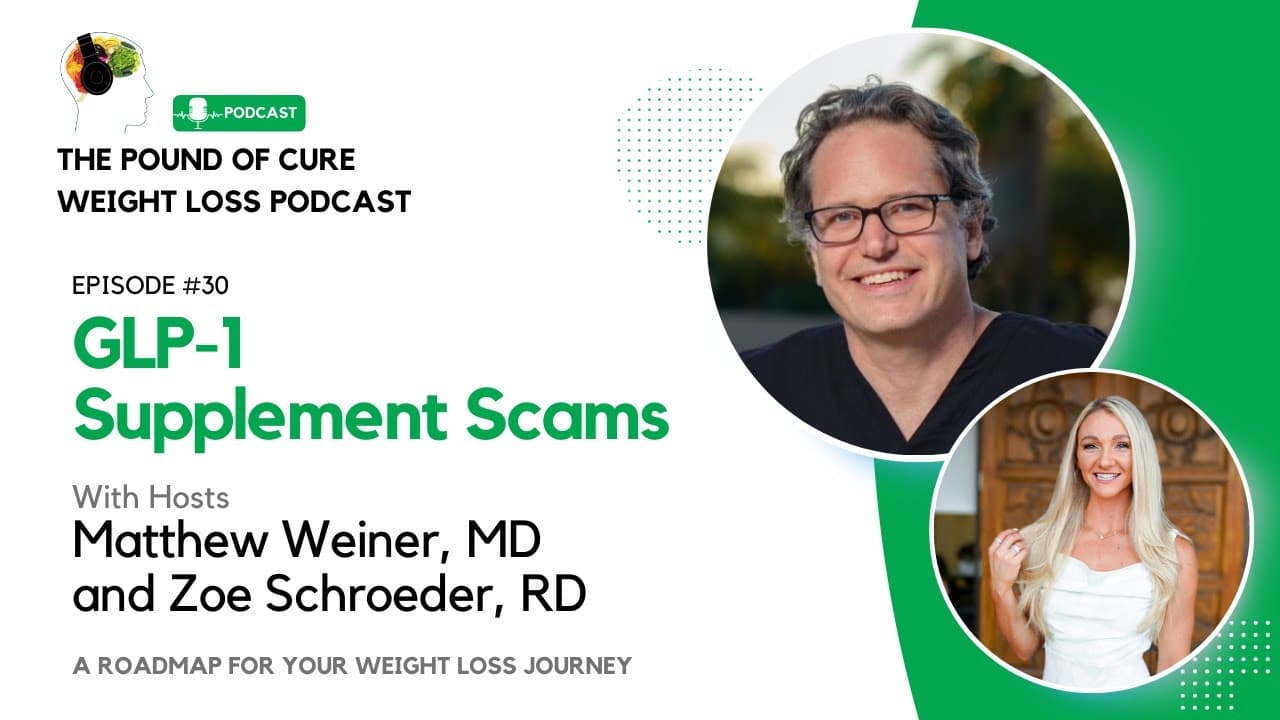
GLP-1 Supplement Scams podcast artwork

Episode 30 of The Pound of Cure Weight Loss Podcast is titled, GLP-1 Supplement Scams. In our In the News segment, we cover an article in Today titled, Poppi Prebiotic Soda Brand Faces Class-Action Lawsuit Over Gut Health Claims. Poppi is a brand of soda marketed as a prebiotic and this lawsuit is questioning the validity of the claim. In our Patient Story segment, we talk to Graham who had a highest weight of 311 pounds. He opted for the gastric bypass and we...

Podcast Summary

Understanding GLP-1 Supplement Scams and Making Informed Weight Loss Decisions

The weight loss industry is flooded with products making bold promises, and the latest trend involves supplements claiming to offer the same benefits as prescription GLP-1 medications. In this episode of The Pound of Cure Weight Loss Podcast, we examine the truth behind these supplement scams and share an inspiring patient success story that highlights the importance of evidence-based weight loss approaches.

The Problem with Prebiotic and Supplement Health Claims

The episode begins by examining a lawsuit against Poppi, a popular prebiotic soda brand. The company marketed their beverages as promoting gut health, but a class-action lawsuit now questions whether these claims hold up to scientific scrutiny. This case illustrates a larger problem in the wellness industry: products often make health claims that sound impressive but lack substantial evidence to support them.

Talk with our team

Have questions about this episode?

Send our Tucson weight loss team a note about bariatric surgery, GLP-1 medications, nutrition, or your next step with Pound of Cure.

More from this episode

This situation mirrors what we're seeing with GLP-1 supplements. While prescription GLP-1 medications like semaglutide and tirzepatide have demonstrated significant weight loss results in clinical trials, over-the-counter supplements claiming similar benefits simply don't have the same research backing.

What Are GLP-1 Medications and Why Do They Work?

GLP-1 (glucagon-like peptide-1) medications are prescription drugs that mimic a naturally occurring hormone in your body. These medications work by slowing digestion, reducing appetite, and helping regulate blood sugar levels. The prescription versions have undergone rigorous testing and FDA approval processes to demonstrate their safety and effectiveness for weight loss and metabolic health.

The key difference between prescription GLP-1 medications and supplements is accountability and proven results. Prescription medications must meet strict standards, while supplements exist in a far less regulated space.

Why GLP-1 Supplements Are Misleading

Many supplements claim to boost your body's natural GLP-1 production or provide similar benefits to prescription medications. However, these products face several critical problems:

  • Supplements cannot legally contain the same active pharmaceutical ingredients as prescription GLP-1 medications
  • The ingredients in these supplements have not been proven to produce clinically significant weight loss
  • Supplement manufacturers are not required to prove their products work before selling them
  • The dosing and quality control of supplements varies dramatically between brands
  • No over-the-counter supplement can replicate the mechanism of action of prescription GLP-1 drugs

When something sounds too good to be true in the weight loss world, it usually is. If a supplement could truly deliver the same results as a prescription medication, it would need to go through the same rigorous approval process.

Graham's Bariatric Surgery Success Story

The episode features Graham, a patient who reached a highest weight of 311 pounds before choosing gastric bypass surgery. His story demonstrates the effectiveness of evidence-based bariatric interventions when approached with commitment and proper medical guidance.

Gastric bypass is a surgical weight loss procedure that reduces stomach size and reroutes the digestive system. Like GLP-1 medications, bariatric surgery has substantial research supporting its effectiveness for significant weight loss and improvement in obesity-related health conditions.

Graham's journey reminds us that sustainable weight loss requires more than quick fixes or miracle supplements. It demands a comprehensive approach that addresses nutrition, metabolic health, behavioral changes, and often medical or surgical intervention.

Making Smart Decisions About Weight Loss

When evaluating any weight loss product or program, consider these important factors. Does the approach have peer-reviewed research supporting its effectiveness? Is it recommended by qualified medical professionals? Are the claims realistic and based on science rather than marketing hype?

The most effective weight loss strategies typically involve a combination of nutritional changes, physical activity, behavioral modification, and when appropriate, medical interventions like GLP-1 medications or bariatric surgery. These approaches have years of research demonstrating their effectiveness and safety when properly supervised.

The Importance of Medical Guidance

Working with qualified healthcare providers ensures you receive treatments that are safe, effective, and appropriate for your individual health situation. A weight loss physician can help you understand which options have genuine evidence behind them and which are simply marketing schemes designed to take your money.

Whether you're considering GLP-1 medications, bariatric surgery, or other weight loss approaches, having expert guidance makes a significant difference in both your results and your safety. Medical professionals can monitor your progress, adjust your treatment plan as needed, and help you navigate the overwhelming amount of information and misinformation in the weight loss space.

The Bottom Line on GLP-1 Supplements

GLP-1 supplement scams prey on people's desire for an easy solution to weight loss. While prescription GLP-1 medications represent a genuine breakthrough in obesity treatment, supplements claiming similar benefits lack the evidence and regulation to support their promises.

Instead of wasting money on unproven supplements, focus on evidence-based approaches that have demonstrated real results. Whether that involves lifestyle modifications, prescription medications, or surgical interventions depends on your individual circumstances and should be determined in consultation with qualified medical professionals.

Your weight loss journey deserves treatments that actually work, not expensive placebos marketed with false hope.

Weight loss topics covered in this episode

This conversation is part of the Pound of Cure approach to evidence-based weight loss education, including bariatric surgery, GLP-1 medications, nutrition counseling, metabolic health, and long-term patient support.

For more context, explore our guides to GLP-1 medications, bariatric surgery in Tucson, and the Metabolic Reset Diet.