Podcast Summary
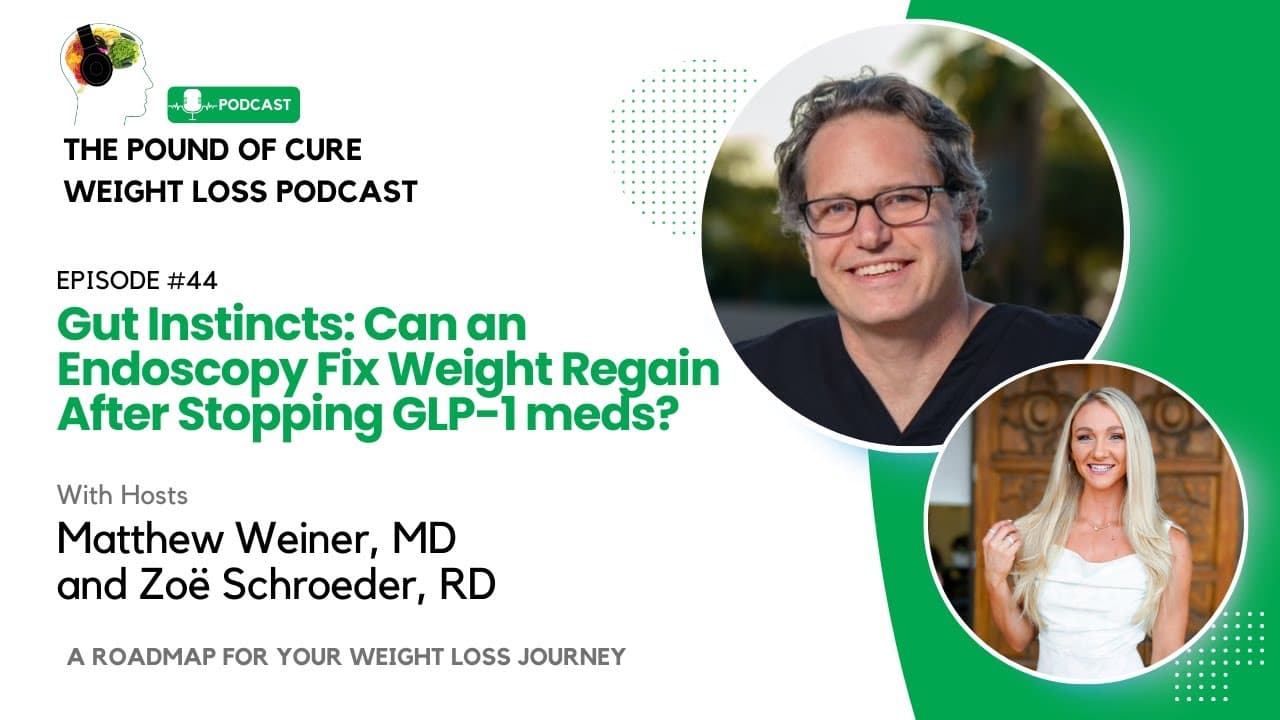
Gut Instincts: Can an Endoscopy Fix Weight Regain After Stopping GLP-1 Meds?
If you've experienced success with GLP-1 medications like Ozempic or Wegovy but worry about what happens when you stop, you're not alone. Weight regain after discontinuing these medications is a common concern that affects many patients. In this episode of the Pound of Cure Weight Loss podcast, Dr. Matthew Weiner and registered dietitian Zoe Schroeder explore an innovative endoscopic procedure that might help prevent weight regain and discuss practical strategies for maintaining your weight loss results.
Understanding Weight Regain After GLP-1 Medications
GLP-1 medications have revolutionized weight loss treatment, helping countless patients achieve significant results. However, research shows that many people experience weight regain when they stop taking these medications. This happens because GLP-1 drugs work by reducing appetite and slowing digestion, but these effects typically diminish once treatment ends.
Talk with our team
Have questions about this episode?
Send our Tucson weight loss team a note about bariatric surgery, GLP-1 medications, nutrition, or your next step with Pound of Cure.
More from this episode
The challenge isn't simply a matter of willpower. Your body's metabolic responses and hunger hormones can shift dramatically after stopping GLP-1 therapy, making it difficult to maintain your progress through diet and exercise alone. Understanding this reality is the first step in developing a sustainable long-term weight management plan.
What Is Duodenal Mucosa Ablation?
One of the most exciting developments discussed in this episode is duodenal mucosa ablation, a minimally invasive endoscopic procedure that targets the lining of your small intestine. This innovative treatment involves using controlled thermal energy to resurface the duodenal mucosa, the first part of the small intestine where many metabolic signals originate.
The procedure is performed through an endoscopy, similar to a routine upper GI scope, but with specialized equipment. By treating this specific area of the intestine, the procedure appears to reset certain metabolic pathways that influence blood sugar control and weight regulation. Early research suggests this approach may help patients maintain weight loss and improve metabolic health even after stopping GLP-1 medications.
Unlike bariatric surgery, duodenal mucosa ablation doesn't permanently alter your anatomy. The procedure is reversible as the intestinal lining naturally regenerates over time, though the metabolic benefits may persist longer.
How This Procedure Supports Long-Term Weight Management
The science behind duodenal mucosa ablation relates to the gut's role in metabolic signaling. Your small intestine doesn't just digest food; it also produces hormones and sends signals that affect insulin sensitivity, hunger, and fat storage. When the duodenal lining is treated, it appears to improve how your body responds to food and regulates blood sugar.
For patients coming off GLP-1 medications, this could mean:
- Better blood sugar control without medication
- Reduced hunger and improved satiety signals
- Enhanced insulin sensitivity
- Support for weight maintenance after initial weight loss
- A bridge therapy between medication and long-term lifestyle management
Practical Strategies for Preventing Weight Regain
While innovative procedures offer new options, Dr. Weiner and Zoe Schroeder emphasize that successful long-term weight management requires a comprehensive approach. Whether you're considering duodenal mucosa ablation or other treatments, certain nutrition and lifestyle strategies remain essential.
Protein intake becomes especially important when transitioning off GLP-1 medications. Adequate protein helps preserve muscle mass, supports satiety, and keeps your metabolism functioning optimally. Working with a registered dietitian can help you develop eating patterns that support your goals without relying solely on medication.
Regular physical activity, stress management, and adequate sleep also play critical roles in metabolic health. These lifestyle factors influence the same hormones and pathways that GLP-1 medications and endoscopic procedures target, creating a synergistic effect when combined.
Who Might Benefit From This Approach
Duodenal mucosa ablation may be particularly relevant for patients who have achieved weight loss with GLP-1 medications but face challenges with long-term medication access, side effects, or simply want to transition off pharmaceutical treatment. It might also benefit those with metabolic syndrome or type 2 diabetes who need additional metabolic support beyond lifestyle changes alone.
However, this procedure is still considered emerging technology. Not all patients will be candidates, and it's important to discuss your individual situation with a qualified bariatric specialist who can evaluate whether this approach aligns with your health goals and medical history.
The Future of Weight Management
This episode highlights how weight loss treatment continues to evolve beyond the traditional choice between medication and surgery. Minimally invasive endoscopic procedures represent a growing middle ground, offering metabolic benefits without permanent anatomical changes.
As research advances, we're learning that successful weight management often requires a personalized combination of approaches. For some patients, this might mean GLP-1 medications followed by an endoscopic procedure and ongoing nutritional support. For others, different combinations may prove more effective.
Taking the Next Step
If you're concerned about weight regain after stopping GLP-1 medications, or if you're interested in learning more about emerging treatments like duodenal mucosa ablation, consulting with a bariatric medicine specialist is an important first step. These conversations should include your complete medical history, weight loss goals, and preferences regarding different treatment approaches.
The Pound of Cure Weight Loss podcast continues to bring you the latest evidence-based information on weight management strategies, helping you make informed decisions about your health journey. Understanding all your options empowers you to choose the path that best supports your long-term success.
Weight loss topics covered in this episode
This conversation is part of the Pound of Cure approach to evidence-based weight loss education, including bariatric surgery, GLP-1 medications, nutrition counseling, metabolic health, and long-term patient support.
For more context, explore our guides to GLP-1 medications, bariatric surgery in Tucson, and the Metabolic Reset Diet.
