Podcast Summary
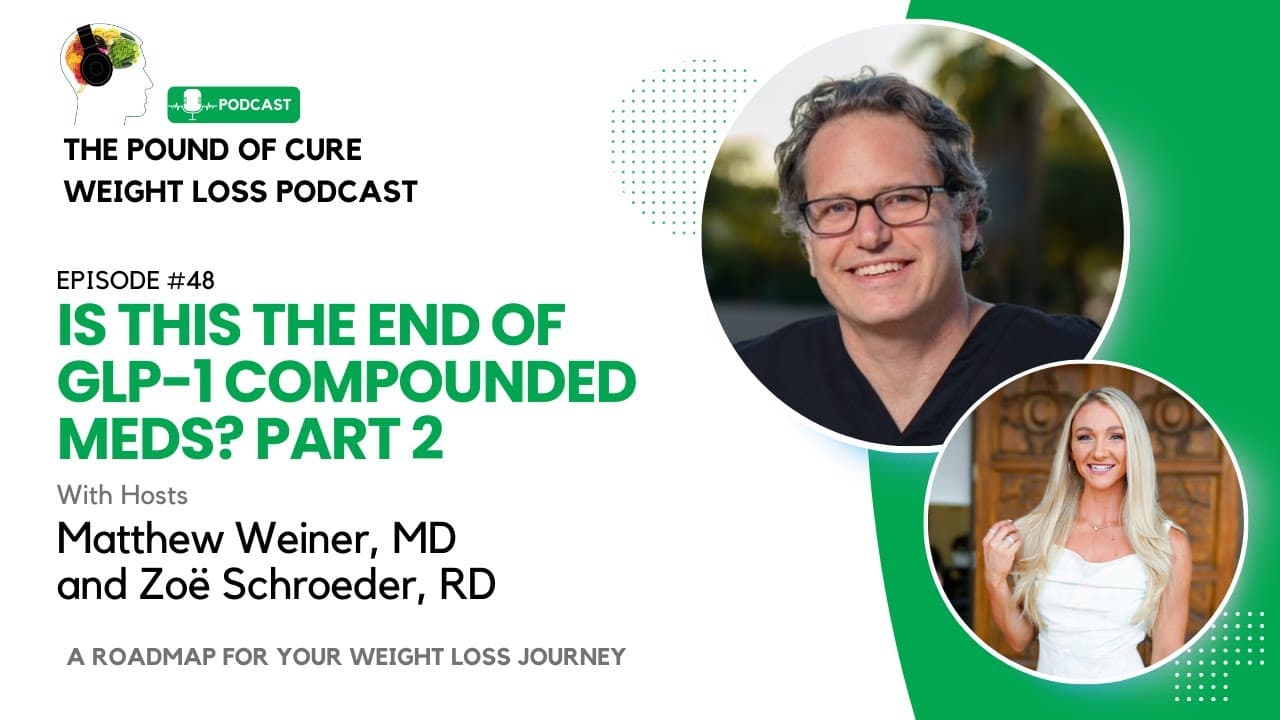
In Episode 48 of the Pound of Cure Weight Loss podcast, Dr. Matthew Weiner and Zoe Schroeder tackle three critical topics that affect anyone on a weight loss journey: the uncertain future of compounded GLP-1 medications, the misleading nature of health halos, and persistent diet myths that continue to confuse patients seeking sustainable weight loss.
The conversation begins with an important update about compounded GLP-1 medications. These medications have become a lifeline for many patients who cannot afford or access brand-name options like Wegovy and Zepbound. Dr. Weiner explains that the availability of compounded versions depends entirely on whether the FDA declares a shortage of the brand-name medications. When pharmaceutical companies can meet demand, compounding pharmacies must stop producing these alternatives. This creates uncertainty for patients who rely on more affordable compounded options to manage their weight and metabolic health.
The discussion reveals the delicate balance between pharmaceutical supply chains and patient access to care. Compounded medications have filled a crucial gap for thousands of patients who benefit from GLP-1 therapy but face financial barriers with brand-name products. Dr. Weiner helps listeners understand the regulatory framework that governs when and how compounding pharmacies can produce these medications, emphasizing that changes could happen with little warning as manufacturers ramp up production.
The episode then shifts to a phenomenon that trips up many well-intentioned dieters: the health halo effect. This psychological trap occurs when people perceive certain foods as so healthy that they overeat them or ignore their actual nutritional content. Dr. Weiner and Zoe explain how foods marketed as organic, gluten-free, or natural can carry a health halo that leads people to consume them in quantities that undermine weight loss efforts.
Talk with our team
Have questions about this episode?
Send our Tucson weight loss team a note about bariatric surgery, GLP-1 medications, nutrition, or your next step with Pound of Cure.
More from this episode
The health halo effect is particularly dangerous because it operates below conscious awareness. A granola bar labeled as organic and natural might contain just as many calories and as much sugar as a candy bar, but the health halo convinces people it's a guilt-free choice. Similarly, gluten-free cookies are still cookies, and organic potato chips are still fried and caloric. Dr. Weiner emphasizes that successful weight loss requires looking beyond marketing claims to understand what you're actually putting in your body.
This conversation extends to restaurant claims and menu labeling. When a menu item is described as fresh, local, or farm-to-table, diners often assume it must be lower in calories or better for weight loss. In reality, fresh pasta with locally sourced cream sauce can easily contain over a thousand calories. The health halo creates a false sense of security that leads to poor portion control and unexpected calorie consumption.
The final segment addresses common diet myths that refuse to die despite scientific evidence to the contrary. Dr. Weiner debunks misconceptions that continue to circulate in weight loss communities and on social media. These myths often sound logical or appeal to our desire for simple solutions, which is why they persist even when research shows they're unfounded.
One area of focus is the confusion around specific foods or nutrients being labeled as universally good or bad. The truth about nutrition is almost always more nuanced than social media posts suggest. Context matters, including portion sizes, overall dietary patterns, individual metabolic responses, and personal health goals. What works for one person's weight loss journey may not work for another, and rigid rules based on myths can actually make sustainable weight loss harder to achieve.
Dr. Weiner stresses the importance of critical thinking when evaluating diet advice. Just because something is repeated frequently or endorsed by influencers doesn't make it scientifically valid. Patients benefit most from understanding the actual evidence behind nutritional recommendations and working with knowledgeable professionals who can personalize advice based on individual circumstances and medical history.
Throughout the episode, the underlying message is clear: successful long-term weight loss requires cutting through misinformation, understanding the real nutritional value of foods beyond their marketing, and staying informed about the tools available to support your journey. Whether those tools include GLP-1 medications, bariatric surgery, or evidence-based nutrition strategies, making informed decisions is essential.
The conversation between Dr. Weiner and Zoe provides practical guidance that listeners can apply immediately. By recognizing health halos, questioning diet myths, and understanding the changing landscape of weight loss medications, patients can navigate their weight loss journey with greater confidence and better results. The episode reminds us that knowledge is power when it comes to metabolic health, and that sustainable weight loss comes from understanding reality rather than falling for marketing hype or persistent misconceptions.
Weight loss topics covered in this episode
This conversation is part of the Pound of Cure approach to evidence-based weight loss education, including bariatric surgery, GLP-1 medications, nutrition counseling, metabolic health, and long-term patient support.
For more context, explore our guides to GLP-1 medications, bariatric surgery in Tucson, and the Metabolic Reset Diet.
