Podcast
Episode 14February 28, 202443 min

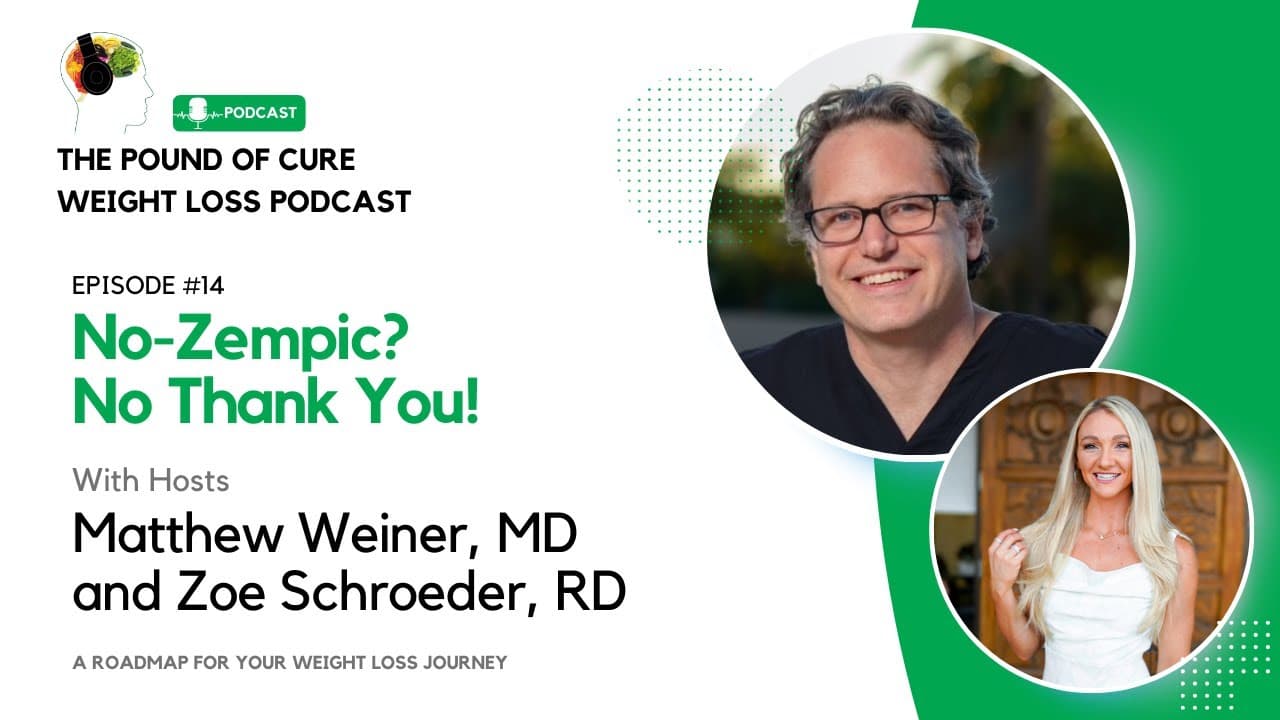
No-Zempic? No Thank You!

No-Zempic? No Thank You! podcast artwork

Episode 14 kicks off with a Kohlrabi recipe from Dr. Weiner and continues with tales of variable reactions to GLP-1 medications like Ozempic, the conundrum of weight regain post-VSG surgery, and the intricate dance of GLP-1 dosing. Join our circle as we converse on genetic factors influencing treatment efficacy, the alternatives for the non-responders, and the art of maintaining an injury-free fitness routine, and the all-too-common hidden sugars lurking in protein bars. Facing obesity is an...

Podcast Summary

Understanding GLP-1 Medications and Weight Loss: What Happens When Ozempic Doesn't Work?

In this comprehensive episode of the Pound of Cure Weight Loss podcast, Dr. Matthew Weiner and his team explore the complex world of GLP-1 medications like Ozempic and Wegovy, addressing a critical question many patients face: what happens when these medications don't produce the expected results?

Why Some Patients Don't Respond to GLP-1 Medications

Not everyone experiences the same dramatic weight loss results from GLP-1 medications that have dominated recent headlines. This episode dives deep into the reasons why some individuals are non-responders to these treatments. Genetic factors play a significant role in determining how effectively your body responds to medications like Ozempic, Wegovy, and Mounjaro.

Talk with our team

Have questions about this episode?

Send our Tucson weight loss team a note about bariatric surgery, GLP-1 medications, nutrition, or your next step with Pound of Cure.

More from this episode

The discussion reveals that medication response is highly individualized. While some patients experience significant appetite suppression and steady weight loss, others may notice minimal effects despite following the prescribed treatment plan. Understanding this variability is crucial for setting realistic expectations and developing alternative strategies when first-line treatments don't deliver results.

Navigating Weight Regain After Bariatric Surgery

One of the most challenging aspects of weight loss treatment is maintaining results over time. This episode addresses the difficult reality of weight regain following vertical sleeve gastrectomy (VSG) and other bariatric surgery procedures. Many patients who initially achieve excellent results find themselves struggling months or years after their procedure.

The conversation explores why this happens and what options exist for patients experiencing this frustrating setback. The combination of metabolic adaptation, hormonal changes, and lifestyle factors all contribute to the complex puzzle of long-term weight maintenance. For VSG patients facing weight regain, GLP-1 medications can sometimes provide a valuable tool, though as discussed, individual response varies significantly.

The Art and Science of GLP-1 Dosing

Finding the right dose of GLP-1 medication requires a careful, individualized approach. This episode unpacks the intricate process of dose optimization, explaining why the standard titration schedule doesn't work equally well for everyone. Some patients achieve their goals at lower doses, while others require maximum doses to see meaningful results.

The medical team discusses how they work with patients to find the sweet spot between effectiveness and tolerability. Side effects like nausea, fatigue, and gastrointestinal distress can complicate the dosing journey, requiring patience and frequent adjustments. The goal is achieving sustainable weight loss while maintaining quality of life and minimizing unwanted effects.

Alternative Treatments for Non-Responders

For patients who don't respond well to GLP-1 medications, this episode offers hope by exploring alternative approaches to weight management. The conversation emphasizes that medication is just one tool in a comprehensive weight loss strategy. When one approach doesn't work, others may prove more effective.

Alternative options discussed include different medication classes, combination therapies, adjustments to nutrition and exercise protocols, and consideration of surgical interventions for appropriate candidates. The key message is that being a non-responder to one treatment doesn't mean you're out of options. A skilled medical team can help navigate these alternatives to find what works for your unique physiology.

Staying Injury-Free During Your Fitness Journey

Sustainable weight loss requires regular physical activity, but injuries can derail progress quickly. The episode addresses practical strategies for maintaining an injury-free fitness routine, particularly important for patients carrying extra weight or returning to exercise after a long break.

Key recommendations include starting slowly, focusing on proper form, incorporating adequate recovery time, and listening to your body's signals. The discussion emphasizes that consistency matters more than intensity, especially in the early stages of a fitness program. Building a sustainable routine that you can maintain for years is far more valuable than aggressive training that leads to injury and setbacks.

The Hidden Sugar Problem in Protein Bars

Nutrition plays a fundamental role in any weight loss program, and this episode tackles a common pitfall: hidden sugars in seemingly healthy protein bars. Many patients rely on these convenient snacks, unaware that some products contain as much sugar as candy bars.

The conversation provides practical guidance on reading nutrition labels, identifying added sugars under various names, and choosing products that truly support your metabolic health goals. Understanding how to evaluate these products empowers patients to make informed choices that align with their treatment plans rather than undermining their efforts.

Key Takeaways From This Episode

  • GLP-1 medication response varies significantly between individuals due to genetic and metabolic factors
  • Weight regain after bariatric surgery is common but can be addressed with comprehensive treatment strategies
  • Proper medication dosing requires individualized adjustment and patience
  • Multiple alternative treatments exist for patients who don't respond to first-line therapies
  • Injury prevention should be a priority when establishing fitness routines
  • Many protein bars contain excessive hidden sugars that can sabotage weight loss efforts

Moving Forward With Personalized Weight Loss Treatment

This episode reinforces that successful weight management requires a personalized, comprehensive approach. Whether you're considering GLP-1 medications, recovering from bariatric surgery, or simply trying to navigate the complex world of weight loss treatments, understanding that individual variation is normal helps set realistic expectations and reduces frustration when results don't match the experiences others share on social media.

Weight loss topics covered in this episode

This conversation is part of the Pound of Cure approach to evidence-based weight loss education, including bariatric surgery, GLP-1 medications, nutrition counseling, metabolic health, and long-term patient support.

For more context, explore our guides to GLP-1 medications, bariatric surgery in Tucson, and the Metabolic Reset Diet.