Podcast
Episode 49November 7, 202447 min

Novo Nordisk’s Weekend at Bernie’s

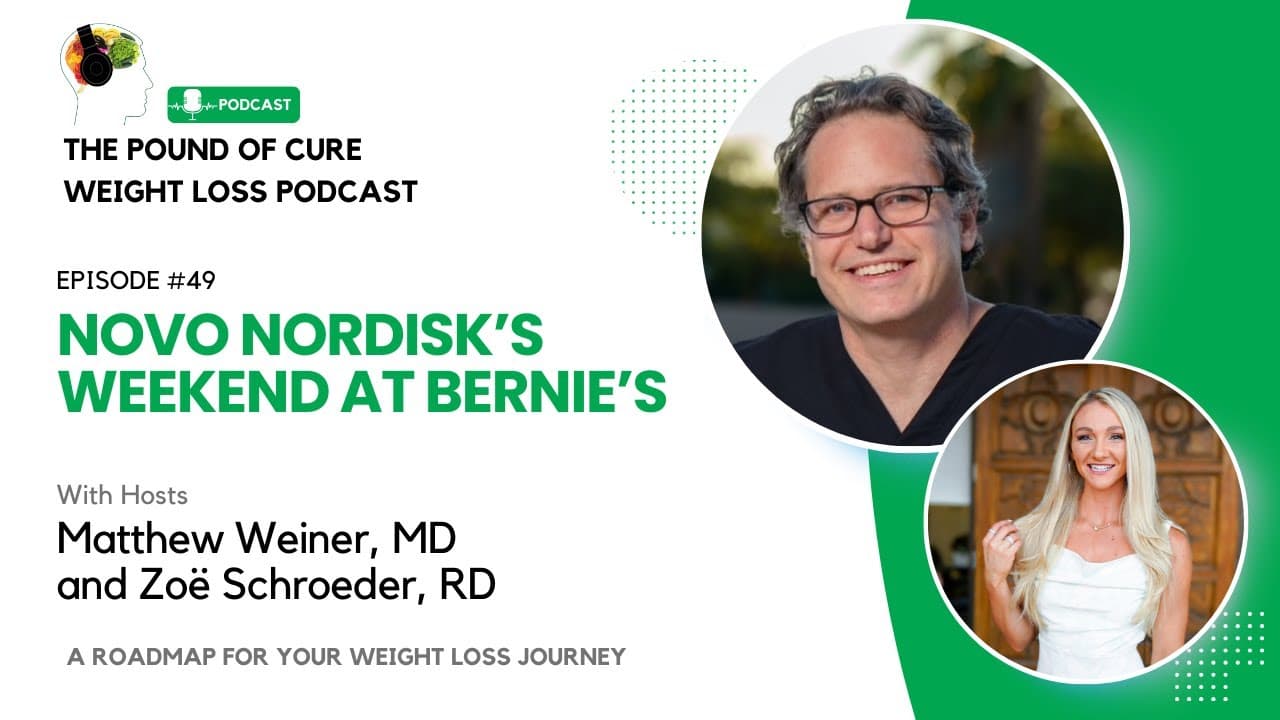
Novo Nordisk’s Weekend at Bernie’s podcast artwork

In Episode 49 of the Pound of Cure Weight Loss Podcast, Dr. Weiner and Zoe examine the steep costs of obesity medications like Wegovy, the influence of pharmacy benefit managers (PBMs), and the role of big pharmaceutical companies in shaping healthcare. Highlighting recent Senate hearings led by Bernie Sanders with Novo Nordisk’s CEO Lars Fruergaard Jørgensen, this episode sheds light on how the current system prioritizes profit, often at the expense of patients’ access to care. Wegovy Cost: ...

Podcast Summary

The high cost of weight loss medications has become a major barrier for millions of Americans struggling with obesity. In this episode of the Pound of Cure Weight Loss Podcast, Dr. Matthew Weiner and Zoe dive deep into why medications like Wegovy carry such steep price tags and what forces are driving healthcare costs beyond the reach of ordinary patients.

The discussion centers on recent Senate hearings where Senator Bernie Sanders questioned Lars Fruergaard Jørgensen, the CEO of Novo Nordisk, about the pricing of Wegovy and similar GLP-1 medications. These hearings revealed uncomfortable truths about how pharmaceutical companies price their products in the United States compared to other countries. While Americans might pay over $1,000 per month for Wegovy, patients in European countries often access the same medication for a fraction of that cost.

Dr. Weiner explains that understanding medication costs requires looking beyond just the pharmaceutical companies themselves. Pharmacy benefit managers, or PBMs, play a significant role in determining what patients actually pay at the pharmacy counter. These middlemen negotiate with drug manufacturers and insurance companies, but their complex rebate systems and lack of transparency often work against patients rather than for them. The episode breaks down how PBMs operate and why their involvement frequently drives up out-of-pocket costs for the people who need medications most.

The podcast explores how the current healthcare system creates perverse incentives that prioritize profits over patient access to care. Pharmaceutical companies argue that high prices in the United States subsidize research and development for the rest of the world. However, critics point out that these same companies spend enormous amounts on marketing and executive compensation while patients struggle to afford life-changing treatments for obesity and metabolic health conditions.

Talk with our team

Have questions about this episode?

Send our Tucson weight loss team a note about bariatric surgery, GLP-1 medications, nutrition, or your next step with Pound of Cure.

More from this episode

For patients considering weight loss treatment options, this episode provides crucial context about the forces shaping their choices. Many people assume that if a medication is FDA-approved and effective, their insurance will cover it. The reality is far more complicated. Insurance coverage for obesity medications remains inconsistent, with many plans excluding these treatments entirely or requiring extensive prior authorization processes that delay or deny access.

Dr. Weiner and Zoe discuss how these cost barriers affect treatment decisions for people with obesity. Some patients who might benefit from GLP-1 medications turn to other options, including bariatric surgery, which often has better insurance coverage despite being a more invasive intervention. Others attempt to navigate discount programs, international pharmacies, or compounded versions of these medications, each approach carrying its own risks and limitations.

The episode also examines the broader implications of medication pricing on public health. When effective treatments exist but remain financially out of reach, the burden of obesity-related health complications continues to grow. Diabetes, heart disease, and other metabolic health conditions that could be prevented or improved with weight loss medications instead progress, ultimately costing the healthcare system far more in the long run.

Listeners learn about the political and economic dynamics that make healthcare reform so challenging. Pharmaceutical companies, PBMs, and insurance companies all have powerful lobbying presence in Washington. Even when lawmakers from both parties recognize problems with drug pricing, translating that awareness into meaningful policy changes faces significant obstacles. The Senate hearings highlighted in this episode represent an attempt to bring public attention to these issues, but real solutions remain elusive.

Dr. Weiner offers practical guidance for patients navigating this complex landscape. He emphasizes the importance of having frank conversations with healthcare providers about costs before starting any weight loss medication. Patients should ask about manufacturer assistance programs, alternative medications, and other treatment approaches that might be more accessible. Understanding the full range of options, from nutrition counseling to surgical interventions, helps patients make informed decisions based on their individual circumstances.

The episode title references the dark comedy "Weekend at Bernie's," suggesting that the current system props up unsustainable practices that serve corporate interests rather than patient needs. This pointed critique challenges listeners to think critically about who really benefits from the status quo in obesity treatment and healthcare more broadly.

For anyone considering GLP-1 medications or other weight loss treatments, this episode of the Pound of Cure Weight Loss Podcast provides essential background on the economic forces shaping access to care. Understanding these dynamics empowers patients to advocate for themselves, ask better questions, and make treatment decisions with eyes wide open to the realities of the American healthcare system.

Weight loss topics covered in this episode

This conversation is part of the Pound of Cure approach to evidence-based weight loss education, including bariatric surgery, GLP-1 medications, nutrition counseling, metabolic health, and long-term patient support.

For more context, explore our guides to GLP-1 medications, bariatric surgery in Tucson, and the Metabolic Reset Diet.