Podcast Summary
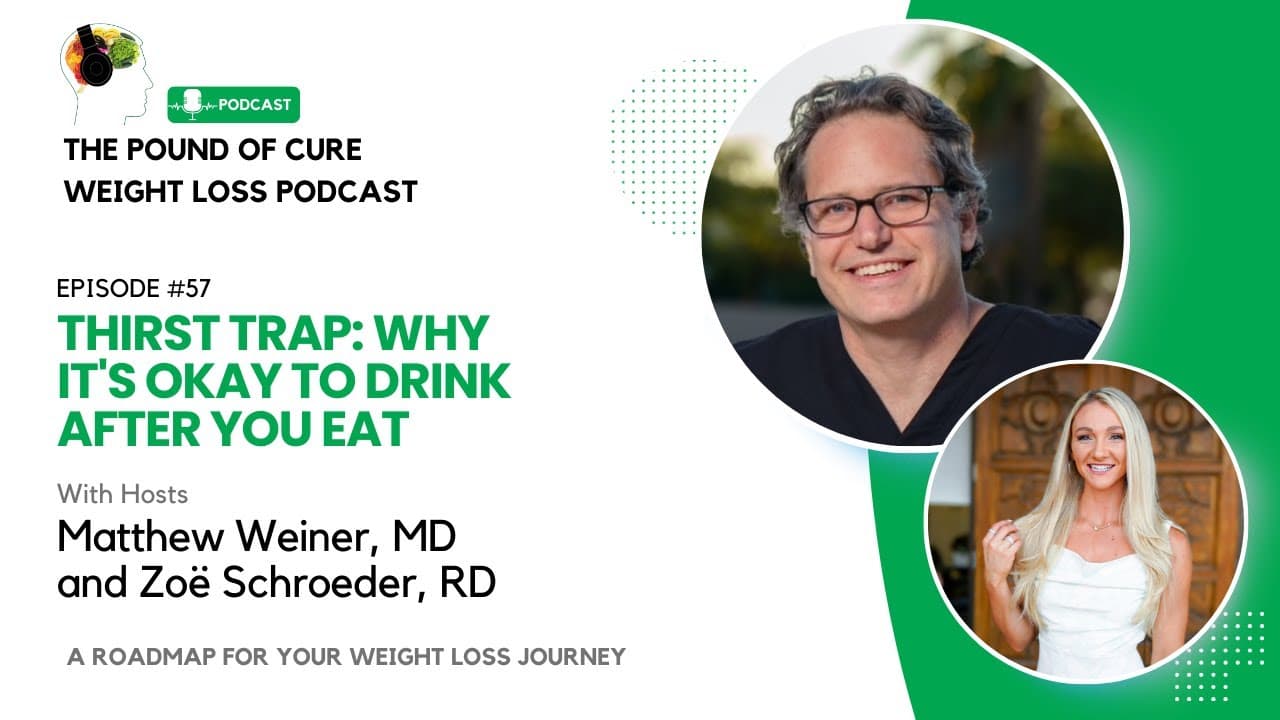
The latest episode of the Pound of Cure Weight Loss podcast tackles one of the most common questions patients ask after bariatric surgery: can you drink water while eating? Dr. Matthew Weiner and registered dietitian Zoe dive deep into this controversial topic while also addressing listener questions about managing cravings, dumping syndrome, and pregnancy after weight loss surgery.
Many patients have been told to avoid drinking liquids during meals after bariatric surgery, but the science behind this recommendation might surprise you. The traditional concern has been that drinking while eating could wash food through your new stomach pouch too quickly, leaving you hungry sooner and potentially leading to overeating later. However, recent research suggests this may not be as problematic as once thought.
The reality is that staying hydrated is crucial for metabolic health and overall wellness, especially when you are working to lose weight. Some patients find that sipping small amounts of water with meals actually helps them eat more mindfully and prevents them from eating too quickly. The key is finding what works best for your individual body and surgical anatomy.
For patients taking GLP-1 medications like semaglutide or tirzepatide, hydration becomes even more important. These medications can slow gastric emptying and reduce thirst signals, making it easy to become dehydrated without realizing it. If having some water with your meals helps you meet your daily hydration goals, the benefits may outweigh the theoretical concerns.
Talk with our team
Have questions about this episode?
Send our Tucson weight loss team a note about bariatric surgery, GLP-1 medications, nutrition, or your next step with Pound of Cure.
More from this episode
The episode also addresses the challenging issue of food noise and cravings that can emerge during weight loss. One listener named Rain shared her struggle with intense chocolate cravings after losing just five pounds. This phenomenon is incredibly common and relates to how our bodies defend against weight loss by increasing hunger signals and food-focused thoughts.
Dr. Weiner explains that our bodies have a metabolic set point, a weight range that our biology tries to defend. When we lose weight and drop below this set point, our brains respond by amplifying thoughts about food, increasing hunger hormones, and slowing our metabolism. This is not a character flaw or lack of willpower. It is a normal biological response that has helped humans survive periods of food scarcity throughout evolution.
The strategies for managing this food noise include eating balanced meals with adequate protein, fat, and fiber to promote satiety. Skipping meals or restricting too severely often backfires by intensifying cravings later in the day. Planning for small, satisfying portions of the foods you crave can also prevent the deprivation mindset that leads to binge eating.
Another listener question focused on dumping syndrome, an uncomfortable condition that can occur after bariatric surgery when food moves too quickly from the stomach into the small intestine. Symptoms include nausea, cramping, diarrhea, dizziness, and rapid heartbeat, typically occurring within 30 minutes to two hours after eating.
Dumping syndrome most commonly happens when patients consume foods high in simple sugars or refined carbohydrates. The rapid influx of these foods into the small intestine triggers a cascade of hormonal and fluid shifts that cause the unpleasant symptoms. While dumping can serve as a deterrent to eating sweets, it can also significantly impact quality of life.
Managing dumping syndrome involves choosing complex carbohydrates over simple sugars, eating smaller portions, including protein with every meal, and avoiding drinking large amounts of liquid with meals (which brings us back to the main topic of the episode). Some patients find that lying down for 30 minutes after eating can also help reduce symptoms.
The podcast also covers the important topic of pregnancy after weight loss surgery. Many women pursue bariatric surgery specifically to improve their fertility and have healthier pregnancies. Weight loss surgery can dramatically improve conditions like polycystic ovary syndrome and insulin resistance that interfere with ovulation and conception.
However, timing is critical. Most bariatric surgeons and obstetricians recommend waiting at least 12 to 18 months after surgery before becoming pregnant. This allows your weight to stabilize and ensures you are meeting your nutritional needs before supporting a growing baby. Pregnancy during the rapid weight loss phase can increase risks of nutritional deficiencies and complications.
Women who become pregnant after bariatric surgery need careful monitoring of vitamin and mineral levels, particularly iron, calcium, vitamin D, vitamin B12, and folate. Working with a healthcare team experienced in bariatric surgery and high-risk obstetrics is essential for the healthiest possible pregnancy outcome.
Throughout the episode, Dr. Weiner emphasizes that there is no one-size-fits-all approach to nutrition after bariatric surgery or while taking weight loss medications. What works beautifully for one patient may not work for another. The goal is to find sustainable strategies that support your physical health, mental wellbeing, and long-term weight management success.
The Pound of Cure Weight Loss podcast continues to provide evidence-based answers to the real questions patients face on their weight loss journeys. Whether you are considering bariatric surgery, currently taking GLP-1 medications, or simply trying to understand the science of weight management, these conversations offer valuable insights into the complexities of metabolic health and nutrition.
Weight loss topics covered in this episode
This conversation is part of the Pound of Cure approach to evidence-based weight loss education, including bariatric surgery, GLP-1 medications, nutrition counseling, metabolic health, and long-term patient support.
For more context, explore our guides to GLP-1 medications, bariatric surgery in Tucson, and the Metabolic Reset Diet.
