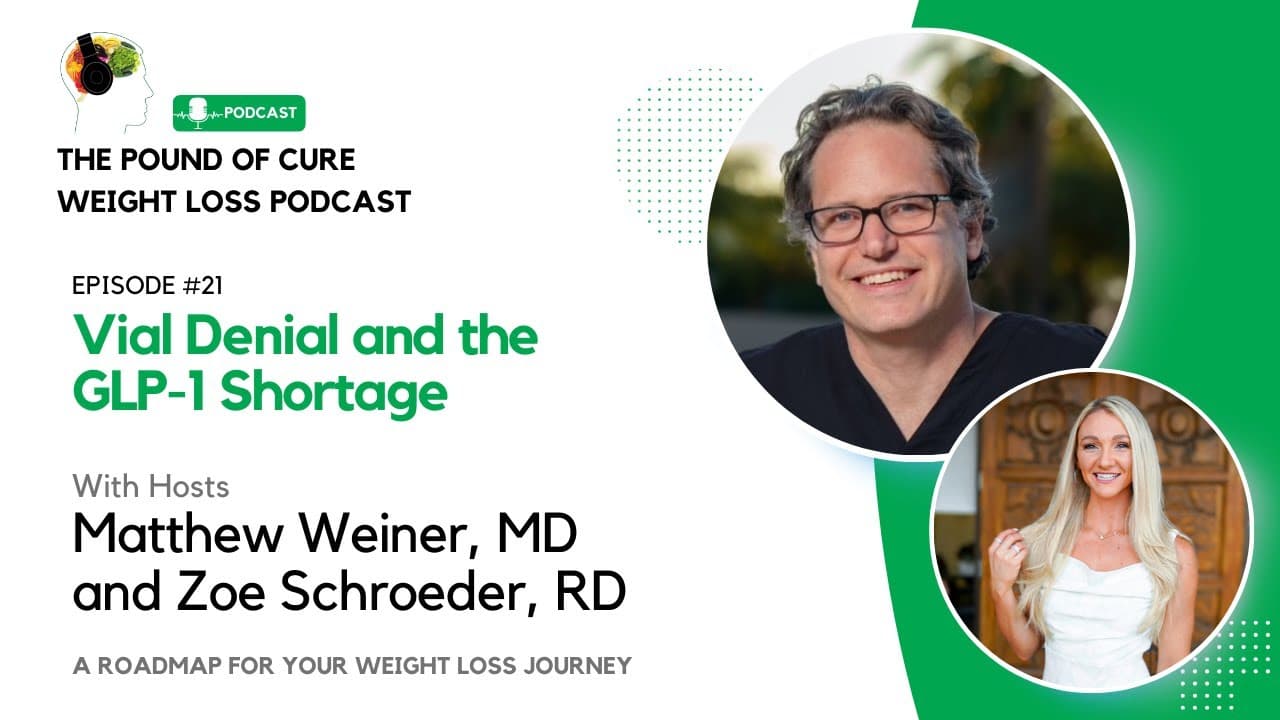
Podcast Summary
Understanding the GLP-1 Medication Shortage and Its Impact on Weight Loss Treatment
The current shortage of GLP-1 medications has left many patients struggling to access these effective weight loss treatments. This episode explores why these shortages persist and examines potential solutions that could help more people receive the care they need.
What Are GLP-1 Medications?
GLP-1 receptor agonists are medications originally developed for diabetes treatment that have proven remarkably effective for weight loss. These medications work by mimicking natural hormones that regulate appetite and blood sugar levels. Popular GLP-1 medications include semaglutide and tirzepatide, which have become increasingly sought-after for their metabolic health benefits.
Talk with our team
Have questions about this episode?
Send our Tucson weight loss team a note about bariatric surgery, GLP-1 medications, nutrition, or your next step with Pound of Cure.
More from this episode
For patients pursuing medical weight loss, these medications can be powerful tools when combined with proper nutrition counseling and lifestyle changes. They help reduce hunger, improve satiety, and support sustainable weight reduction.
The Injector Pen Problem
The shortage of GLP-1 medications stems largely from manufacturing limitations related to injector pens. These pre-filled, single-use devices offer convenience but require complex production processes. The pharmaceutical industry has struggled to keep pace with skyrocketing demand, leaving patients without access to their prescribed treatments.
This supply chain bottleneck affects not only those using GLP-1 medications for weight loss but also diabetes patients who depend on these drugs for blood sugar management.
Canada's Solution: Single-Dose Vials
Canada addressed this shortage by approving an alternative delivery method. Rather than relying exclusively on injector pens, Canadian health authorities allowed pharmaceutical companies to distribute GLP-1 medications in single-dose vials. This approach:
- Simplifies the manufacturing process
- Reduces production bottlenecks
- Increases medication availability
- Maintains the same active medication
- Requires patients to use traditional syringes
This practical solution has helped Canadian patients maintain access to their weight loss and diabetes medications despite global supply constraints.
Why the United States Hasn't Adopted Vials
Despite the success of single-dose vials in Canada, the United States has been slower to embrace this solution. The resistance likely stems from multiple factors, including regulatory hurdles, pharmaceutical company preferences, and concerns about patient acceptance.
Injector pens offer undeniable convenience and may improve medication adherence for some patients. However, when the choice becomes using a vial with a syringe versus having no medication at all, the answer seems clear. Many patients would gladly accept a slightly less convenient delivery method to continue their treatment.
The delay in adopting this solution raises questions about whether patient needs are being prioritized over other considerations in the healthcare system.
The Economics of Obesity Treatment
The GLP-1 shortage highlights broader issues in obesity treatment economics. These medications represent a significant advancement in medical weight loss, offering results that approach those seen with bariatric surgery for some patients. However, access problems and high costs create barriers for many who could benefit.
Weight loss is not simply a matter of willpower. It involves complex metabolic and hormonal processes that medications like GLP-1 agonists can help regulate. When supply issues prevent patients from accessing evidence-based treatments, it undermines comprehensive obesity care.
What This Means for Patients
If you are currently taking or considering GLP-1 medications for weight loss, understanding these supply issues can help you plan ahead. Work closely with your healthcare provider to:
- Monitor medication availability at your pharmacy
- Discuss alternative treatment options if your medication becomes unavailable
- Consider whether you would be willing to use vials and syringes if that option became available
- Explore comprehensive weight loss approaches that combine medication with nutrition and lifestyle changes
For some patients, bariatric surgery may offer a more permanent solution that does not depend on ongoing medication availability.
Looking Forward
The GLP-1 shortage will not resolve quickly without systemic changes. Patients, healthcare providers, and advocacy groups should push for practical solutions like single-dose vials to improve access. The goal should be ensuring that effective treatments reach those who need them, even if it means adjusting our expectations about convenience.
As obesity treatment continues to evolve, addressing supply chain issues will be critical to helping patients achieve better metabolic health and sustainable weight loss. The conversation about vials versus pens may seem technical, but it has real-world implications for millions of people seeking effective weight management solutions.
Weight loss topics covered in this episode
This conversation is part of the Pound of Cure approach to evidence-based weight loss education, including bariatric surgery, GLP-1 medications, nutrition counseling, metabolic health, and long-term patient support.
For more context, explore our guides to GLP-1 medications, bariatric surgery in Tucson, and the Metabolic Reset Diet.
