Podcast Summary
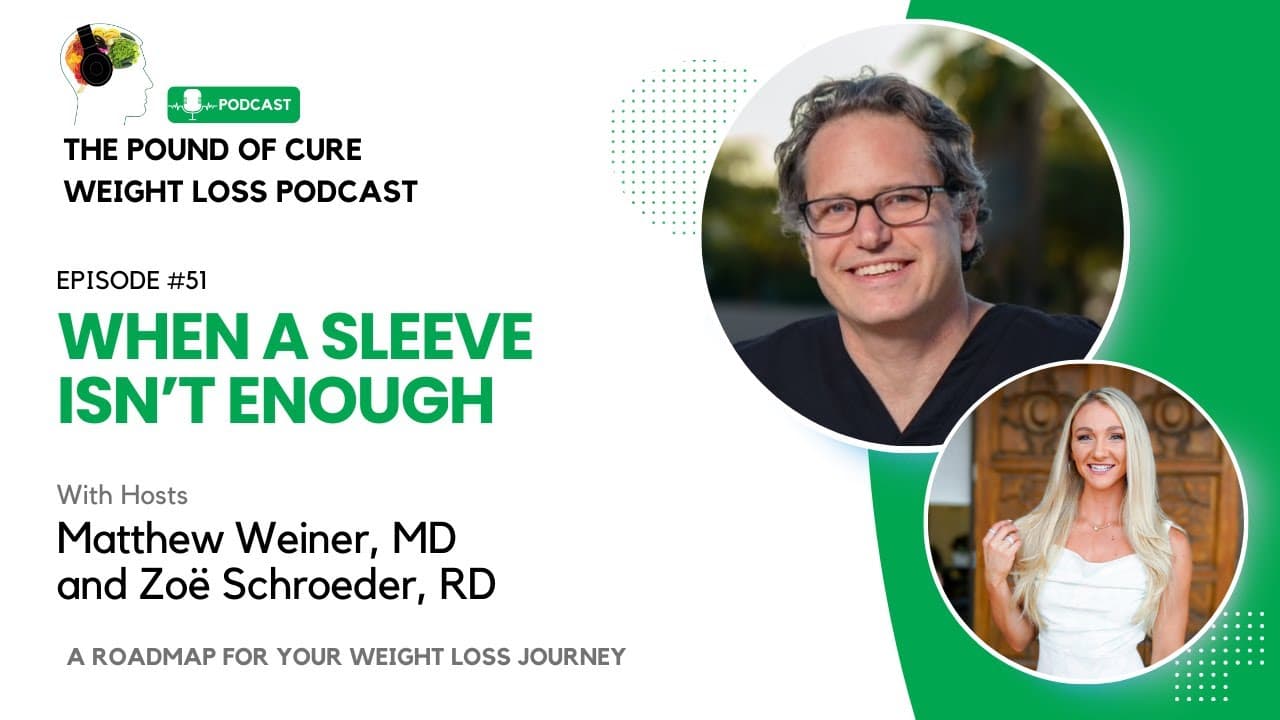
In this comprehensive episode of the Pound of Cure Weight Loss Podcast, Dr. Matthew Weiner and registered dietitian Zoe Schroeder address common concerns from patients navigating their weight loss journeys. The discussion covers important topics ranging from medication safety to practical strategies for overcoming weight loss plateaus after bariatric surgery.
The episode begins with an important discussion about NAION, a rare eye condition that has been reported in some patients taking GLP-1 medications for weight loss and diabetes management. Dr. Weiner explains that while there have been reports of non-arteritic anterior ischemic optic neuropathy in patients using these medications, the absolute risk remains very low. He emphasizes the importance of understanding that correlation does not necessarily mean causation, and patients should discuss any vision changes with their healthcare providers immediately. The benefits of these medications for metabolic health often outweigh the minimal risks for most patients, but individualized assessment is essential.
Zoe Schroeder then tackles a creative question about mocktail alternatives for patients who want to enjoy social beverages without the empty calories and metabolic effects of alcohol. She offers several practical suggestions that can make social gatherings more enjoyable while supporting weight loss goals. Her recommendations include sparkling water with fresh citrus and herbs, kombucha-based drinks for those who enjoy fermented flavors, and creative combinations using sugar-free mixers with muddled fruit. These options provide the ritual and enjoyment of a special drink without compromising nutritional goals or causing the blood sugar fluctuations that can trigger cravings.
The centerpiece of the episode addresses a frustrating scenario many bariatric patients face: limited weight loss after sleeve gastrectomy. One listener shares that despite having the surgery, their weight loss has stalled far short of their goals. Dr. Weiner and Zoe discuss the multiple factors that can contribute to suboptimal results after a gastric sleeve procedure. They explain that while the surgery is a powerful tool, it works best as part of a comprehensive approach to metabolic health.
Talk with our team
Have questions about this episode?
Send our Tucson weight loss team a note about bariatric surgery, GLP-1 medications, nutrition, or your next step with Pound of Cure.
More from this episode
Several reasons can explain why a sleeve gastrectomy might not produce expected results. Some patients may have metabolic resistance that requires additional intervention beyond surgery alone. Others might struggle with grazing behaviors, consuming small amounts of food frequently throughout the day, which can override the restriction created by the smaller stomach. Liquid calories from beverages, sauces, and soft foods can also sabotage results since they pass through the sleeve quickly without providing satiety.
Dr. Weiner discusses how hormonal factors, including insulin resistance, thyroid function, and cortisol levels, can significantly impact weight loss outcomes after surgery. He emphasizes that bariatric surgery is not simply about restriction but also about changing the hormonal signals that regulate hunger, fullness, and metabolism. When these changes do not occur as expected, additional medical management may be necessary.
The conversation then explores potential next steps for patients who have not achieved adequate weight loss after a sleeve procedure. Options include optimizing nutrition by working closely with a dietitian to ensure adequate protein intake while minimizing processed carbohydrates, adding GLP-1 medications to enhance the hormonal benefits of surgery, addressing any underlying medical conditions that may impair metabolism, and in some cases, considering revision surgery to a gastric bypass or duodenal switch procedure.
Zoe provides detailed nutritional guidance for maximizing the effectiveness of a gastric sleeve. She stresses the importance of protein-forward eating, with patients aiming for at least 60 to 80 grams of protein daily depending on their body size and activity level. She also discusses the critical role of hydration, recommending that patients separate drinking from eating by at least 30 minutes to maximize restriction and prevent stretching of the sleeve over time.
The episode concludes with strategies for navigating the murky middle phase of weight loss, that challenging period after the initial rapid weight loss slows but before patients reach their final goals. This phase can be discouraging, but Dr. Weiner and Zoe offer encouragement and practical tips. They recommend focusing on non-scale victories such as improved energy, better sleep, reduced medication needs, and increased physical capabilities. They also suggest adjusting expectations, as weight loss naturally slows over time, and the body requires different strategies as it adapts.
Patients in this phase benefit from reconnecting with their why, remembering the health and quality of life reasons that motivated their weight loss journey in the first place. Adding variety to exercise routines, seeking support from others on similar journeys, and celebrating incremental progress all help maintain motivation during this challenging time.
Throughout the episode, both Dr. Weiner and Zoe emphasize that successful long-term weight management requires a personalized, multifaceted approach. Whether through bariatric surgery, medication, nutrition counseling, or a combination of interventions, the goal is sustainable metabolic health rather than just a number on the scale.
Weight loss topics covered in this episode
This conversation is part of the Pound of Cure approach to evidence-based weight loss education, including bariatric surgery, GLP-1 medications, nutrition counseling, metabolic health, and long-term patient support.
For more context, explore our guides to GLP-1 medications, bariatric surgery in Tucson, and the Metabolic Reset Diet.
