Podcast
Episode 34July 18, 202458 min

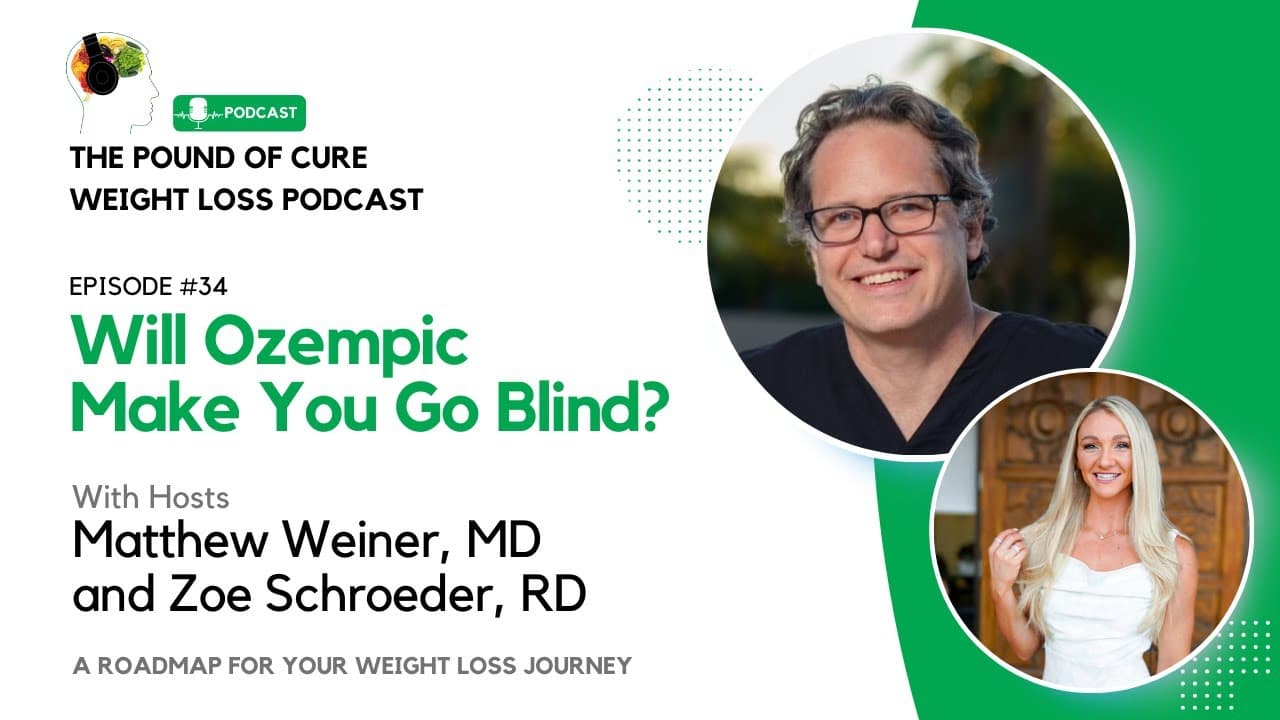
Will Ozempic Make You Go Blind?

Will Ozempic Make You Go Blind? podcast artwork

Episode 34 of The Pound of Cure Weight Loss Podcast is titled, Will Ozempic Make You Go Blind? The title comes from our In the News segment, where we cover an article from The Hill titled, Ozempic/Wegovy May be Linked to Rare Form of Blindness. If you’re taking this medication, this is probably a very scary headline. And, of course, it’s meant to be so that you click through. So, what is the science behind the headline? Tune in to find out! We are very excited to bring you this week’s...

Podcast Summary

Understanding the Link Between Ozempic and Vision Problems

If you've seen recent headlines asking "Will Ozempic Make You Go Blind?" you're not alone in feeling concerned. Episode 34 of The Pound of Cure Weight Loss Podcast tackles this alarming question head-on, breaking down the science behind the scary headlines about GLP-1 medications and eye health.

The conversation stems from an article published in The Hill discussing potential connections between popular weight loss medications like Ozempic and Wegovy and a rare form of blindness. For the millions of people currently using these medications for weight management or diabetes control, understanding the real risks versus media hype is crucial.

What the Research Actually Shows

Talk with our team

Have questions about this episode?

Send our Tucson weight loss team a note about bariatric surgery, GLP-1 medications, nutrition, or your next step with Pound of Cure.

More from this episode

The headlines reference a specific eye condition called non-arteritic anterior ischemic optic neuropathy, or NAION. This is indeed a rare form of vision loss that affects the optic nerve. However, as with many medical news stories, the headline doesn't tell the complete story.

This episode carefully examines the original research, looking at how the study was conducted, how many patients were involved, and what the actual statistical findings mean for people taking GLP-1 medications. Understanding the difference between correlation and causation is essential when evaluating health risks.

GLP-1 Medications and Your Health

GLP-1 receptor agonists have become increasingly popular tools for weight management and metabolic health improvement. These medications work by mimicking a natural hormone in your body that helps regulate blood sugar and appetite. They've shown remarkable effectiveness for:

  • Significant weight loss in people struggling with obesity
  • Improved blood sugar control in type 2 diabetes
  • Reduced cardiovascular risk factors
  • Better overall metabolic health markers
  • Support for long-term weight maintenance

For many patients, including those considering or recovering from bariatric surgery, these medications represent an important option in comprehensive weight management strategies.

Putting Health Risks in Perspective

When evaluating any medical treatment, it's important to understand absolute risk versus relative risk. A rare condition becoming slightly less rare still means the overall likelihood remains very low. This episode helps listeners understand how to interpret medical research and risk statistics.

The podcast emphasizes that every medication carries potential risks, and the decision to use any treatment should involve weighing benefits against possible side effects. For most people using GLP-1 medications under proper medical supervision, the metabolic and weight loss benefits significantly outweigh potential risks.

What This Means for Your Weight Loss Journey

If you're currently taking Ozempic, Wegovy, or similar medications, this episode provides practical guidance on what symptoms to watch for and when to contact your healthcare provider. It's not about creating fear but rather promoting informed awareness.

Weight loss is a complex journey that involves multiple factors including nutrition, physical activity, behavioral changes, and sometimes medical interventions. Whether you're exploring medication options, considering surgical approaches, or focusing on lifestyle modifications, understanding the complete picture of any treatment helps you make better decisions.

The Importance of Medical Supervision

One key takeaway from this discussion is the critical importance of working with qualified healthcare providers when using weight loss medications. Regular check-ups, appropriate monitoring, and open communication with your medical team help catch any potential issues early.

Patients should never start or stop medications based solely on news headlines. Instead, bring your concerns to your doctor who can evaluate your individual risk factors, medical history, and specific situation.

Beyond the Headlines

This episode reminds us that sensational health headlines often prioritize clicks over context. Learning to critically evaluate medical news helps you avoid unnecessary anxiety while staying properly informed about legitimate health concerns.

The podcast provides a balanced, evidence-based perspective that empowers patients to have informed conversations with their healthcare providers. It demonstrates how to look beyond scary headlines to understand what research really means for your personal health decisions.

Taking Control of Your Health

Whether you're using GLP-1 medications, exploring other weight loss options, or simply trying to improve your metabolic health, staying informed about both benefits and risks is essential. This episode equips you with the knowledge to ask the right questions and make decisions aligned with your health goals.

Weight management requires a comprehensive approach that considers your unique medical history, lifestyle factors, and personal preferences. Understanding how to evaluate medical information helps you become an active participant in your own healthcare rather than a passive recipient of alarming headlines.

For anyone concerned about vision changes while taking weight loss medications, the most important step is scheduling a conversation with your healthcare provider. They can assess your individual risk factors and determine appropriate monitoring based on your specific situation.

Weight loss topics covered in this episode

This conversation is part of the Pound of Cure approach to evidence-based weight loss education, including bariatric surgery, GLP-1 medications, nutrition counseling, metabolic health, and long-term patient support.

For more context, explore our guides to GLP-1 medications, bariatric surgery in Tucson, and the Metabolic Reset Diet.