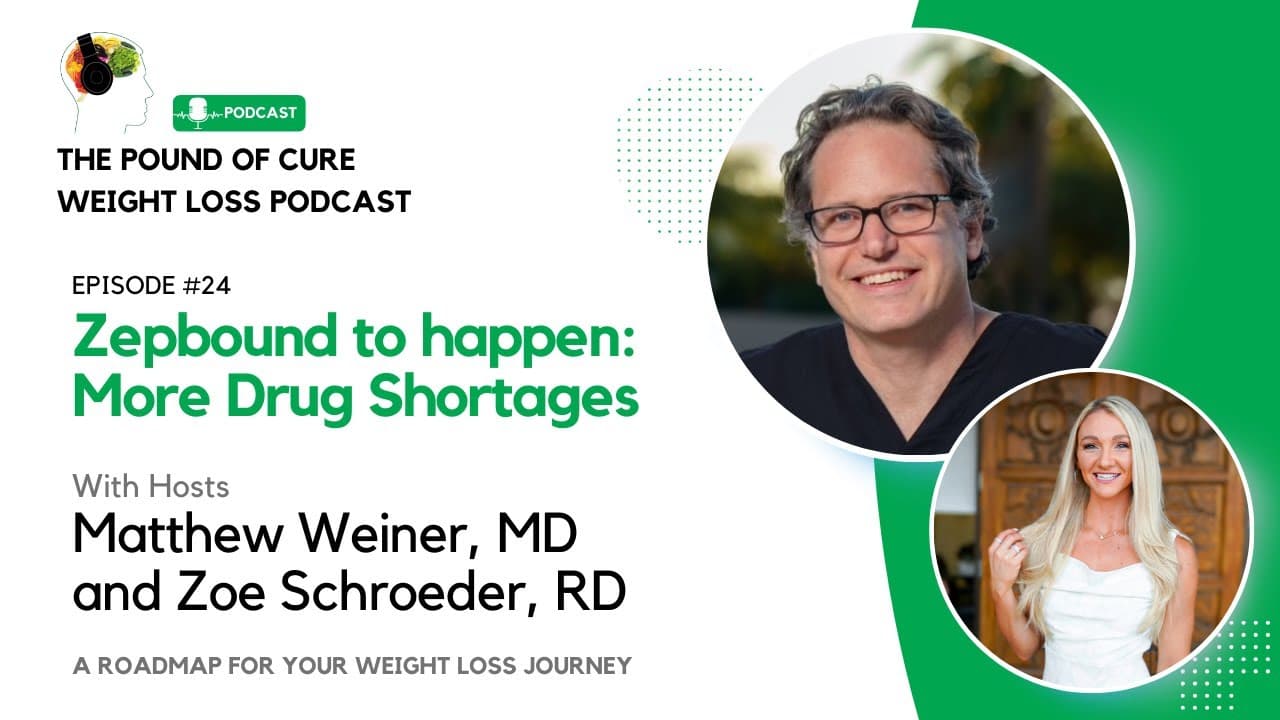
Podcast Summary
Navigating Zepbound Shortages and the Economics of Weight Loss Medications
The latest episode of The Pound of Cure Weight Loss podcast tackles one of the most pressing concerns facing patients seeking medical weight management: ongoing shortages of popular GLP-1 medications like Zepbound. This comprehensive discussion explores both the immediate practical strategies for patients and the broader economic forces shaping access to these transformative treatments.
Understanding the Zepbound Shortage Crisis
Zepbound, along with other GLP-1 receptor agonist medications, has become increasingly difficult to obtain as demand continues to outpace manufacturing capacity. These shortages aren't simply inconvenient. They represent a significant challenge for patients who have found success with these medications and are now struggling to maintain their treatment continuity.
Talk with our team
Have questions about this episode?
Send our Tucson weight loss team a note about bariatric surgery, GLP-1 medications, nutrition, or your next step with Pound of Cure.
More from this episode
The podcast examines why these shortages are occurring and what they mean for your weight loss journey. Manufacturing limitations, explosive demand growth, and supply chain complexities all contribute to the current situation. For patients already on Zepbound or considering starting treatment, understanding these factors helps set realistic expectations.
Practical Strategies to Navigate Medication Shortages
When your prescribed weight loss medication becomes unavailable, you need actionable solutions. The episode offers several evidence-based strategies to help you maintain your progress during shortage periods.
Patients facing Zepbound shortages can consider these approaches:
- Work with your healthcare provider to identify alternative GLP-1 medications that may be more readily available
- Explore compounded versions of tirzepatide when appropriate and from reputable sources
- Contact multiple pharmacies in your area to locate available inventory
- Consider adjusting dosing schedules under medical supervision to extend your current supply
- Strengthen behavioral and nutritional interventions to maintain weight loss momentum
- Discuss whether transitioning to a different medication class makes sense for your situation
The Economics Behind Weight Loss Medication Costs
The podcast also examines a revealing New York Times article titled "The Miracle Weight-Loss Drug Is Also a Major Budgetary Threat." This discussion illuminates why Americans pay substantially more for medications than patients in any other developed country.
The economic forces at play affect everyone seeking medical weight management. Pharmaceutical pricing in the United States operates differently than in countries with centralized healthcare systems. Without price negotiations at the federal level, medication costs remain significantly higher, creating both access barriers and budget concerns for insurance systems.
For patients, this means that even when GLP-1 medications are physically available, financial accessibility remains a substantial hurdle. Understanding these economic realities helps explain why insurance coverage varies so dramatically and why prior authorization requirements have become increasingly stringent.
The Bigger Picture: Sustainable Weight Management
While medication shortages and high costs create real obstacles, this episode emphasizes that successful long-term weight management requires a comprehensive approach. GLP-1 medications are powerful tools, but they work best as part of a broader strategy that includes nutrition optimization, physical activity, behavioral modification, and ongoing medical support.
For some patients, bariatric surgery may offer a more permanent solution that doesn't depend on continuous medication availability. For others, the focus during shortage periods should shift toward strengthening the foundational lifestyle elements that support metabolic health.
What This Means for Your Weight Loss Journey
If you're currently taking Zepbound or another GLP-1 medication, don't panic about potential shortages. Proactive communication with your healthcare provider is essential. Schedule appointments before you run out of medication, discuss backup plans, and ensure you have strategies in place if your current treatment becomes unavailable.
For those considering starting GLP-1 therapy, understand that medication availability may fluctuate. This doesn't mean you should avoid these treatments. Rather, approach medical weight management with realistic expectations and a commitment to the comprehensive lifestyle changes that will serve you regardless of medication access.
Taking Action During Uncertain Times
The combination of medication shortages and economic pressures creates a challenging environment for weight management. However, knowledge empowers better decision-making. By understanding both the practical realities of drug shortages and the economic forces driving medication costs, you can work more effectively with your healthcare team to develop resilient treatment plans.
Whether you're dealing with current shortages or planning for future possibilities, remember that metabolic health improvements come from sustained effort across multiple dimensions. Medications are valuable tools, but your success ultimately depends on the complete approach you take to transforming your health. Stay informed, stay flexible, and maintain open communication with your medical providers as you navigate these complex challenges in your weight loss journey.
Weight loss topics covered in this episode
This conversation is part of the Pound of Cure approach to evidence-based weight loss education, including bariatric surgery, GLP-1 medications, nutrition counseling, metabolic health, and long-term patient support.
For more context, explore our guides to GLP-1 medications, bariatric surgery in Tucson, and the Metabolic Reset Diet.
