What Sustainable Eating Looks Like After Bariatric Surgery: Lessons From a Patient's First Year
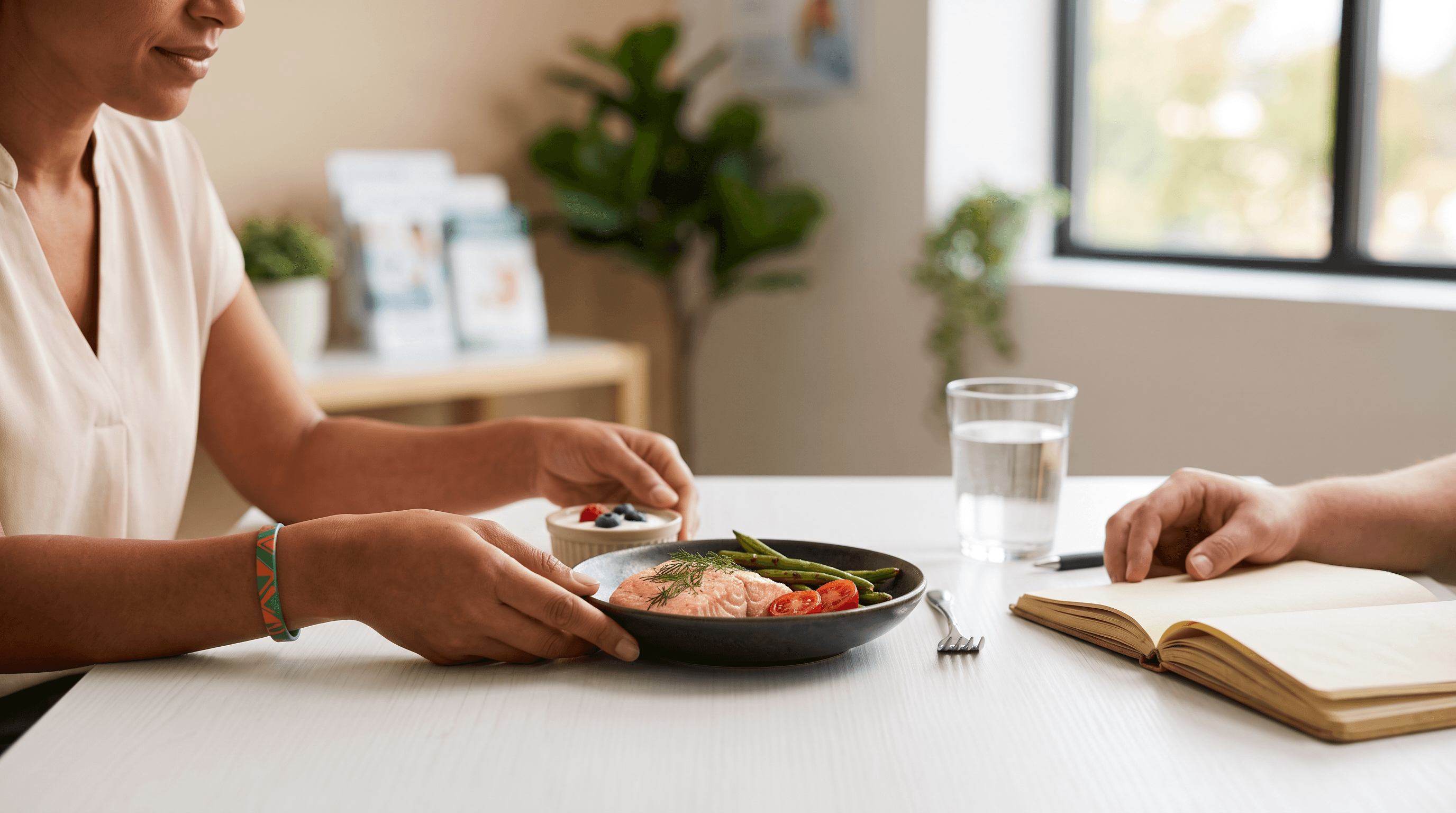
Sustainable eating after bariatric surgery means building habits that work with your new anatomy and hormonal changes, not following rigid diet rules you'll eventually abandon. Dr. Weiner shares what he's learned from thousands of patients about nutrition in the critical first year after surgery.
Sustainable eating after bariatric surgery is not about perfection or following a rigid meal plan for the rest of your life. It means building a practical, enjoyable relationship with food that works alongside your new anatomy and the hormonal changes surgery creates. After performing over 4,000 bariatric procedures over the past two decades, I can tell you that the patients who do best in their first year are not the ones who white-knuckle their way through a restrictive diet. They are the ones who learn how their body works now and build eating habits they can actually maintain.
Why the First Year After Surgery Is So Important
The first 12 months after bariatric surgery represent a window of opportunity. Your body is going through significant hormonal shifts, especially if you had a gastric bypass or sleeve gastrectomy. These procedures work primarily by changing your gut hormones in ways that lower your body’s internal weight setpoint. That hormonal tailwind makes it easier to lose weight and build new habits during the first year than it will be at any other point.
But here is the catch: if you spend that year eating poorly or relying entirely on the restriction of your smaller stomach to do all the work, you are missing the chance to establish patterns that will sustain your results for decades. The surgery gives you a powerful head start. What you do with that head start determines your long-term outcome.
What I Mean by “Sustainable Eating”
I want to be specific about this term because it gets thrown around a lot without much substance behind it. Sustainable eating after bariatric surgery means:
- Eating in a way you can realistically continue for years, not just weeks
- Prioritizing whole, minimally processed foods most of the time while still allowing flexibility
- Listening to the signals your body is now giving you, including earlier fullness and reduced hunger
- Not relying on willpower alone, because willpower is not a reliable long-term strategy
That last point matters a great deal. As we discussed on the Pound of Cure Weight Loss Podcast with neuroscientist Dr. Steve Rondeau (Episode 82), weight struggles are neurological, not moral failures. Your brain has patterns that influence your eating behavior, and those patterns do not disappear after surgery. Sustainable eating accounts for this reality instead of pretending you can simply decide to eat perfectly forever.
The Phases of Eating in Your First Year
Your first year of bariatric nutrition is not one long stretch of identical eating. It unfolds in distinct phases, and understanding each one helps you set realistic expectations.
Weeks 1 Through 4: Liquids and Soft Foods
Right after surgery, your stomach needs time to heal. You will progress from clear liquids to full liquids to pureed foods over the first few weeks. This phase is not about weight loss strategy. It is about surgical recovery. Follow your surgical team’s specific instructions during this period without trying to rush ahead.
During this phase, your primary nutritional goal is adequate hydration and protein intake. Most patients find they are not very hungry at all, which is normal. The hormonal changes from surgery are working in your favor.
Months 2 Through 4: Learning Your New Stomach
This is where things get interesting. You are transitioning to solid foods, and you are learning what your new stomach can and cannot tolerate. Every patient is different here. Some foods that were fine before surgery may not sit well now. Other foods you never cared for might become staples.
Key lessons from this phase:
- Eat slowly. This is not optional advice. Eating too fast with a smaller stomach leads to discomfort, nausea, and sometimes vomiting. Put your fork down between bites. A meal should take 20 to 30 minutes.
- Protein first. At every meal, eat your protein source before anything else. You need 60 to 80 grams of protein daily (sometimes more depending on your procedure and body size), and with a smaller stomach capacity, you cannot afford to fill up on low-protein foods first.
- Stop when you feel full. Your new stomach gives you much clearer fullness signals than your old stomach did. Respect them. Eating past fullness is painful after surgery, and it can also stretch your pouch or sleeve over time.
Months 5 Through 8: Building Your Routine
By this point, most patients have settled into a pattern. You know which foods work for you, how much you can eat at a sitting, and what your daily rhythm looks like. This is the phase where you are truly building the habits that will carry you forward.
What I see in patients who do well during this phase:
- They eat three small meals and one to two planned snacks per day
- They keep processed foods and added sugars to a minimum, not zero, but minimal
- They have stopped drinking calories (no juice, regular soda, or sugar-laden coffee drinks)
- They are drinking 64 or more ounces of water daily, sipping between meals rather than during meals
- They are taking their vitamins and supplements consistently
What I see in patients who start to struggle:
- They begin “grazing” throughout the day, which allows them to take in far more calories than three structured meals would
- They reintroduce highly processed snack foods (crackers, chips, cookies) thinking “just a little” is fine
- They stop tracking their food intake, even loosely
- They skip follow-up appointments with their surgical team or nutritionist
Months 9 Through 12: Facing the Real Test
Around the nine-month mark, something shifts for many patients. The rapid weight loss slows down. The honeymoon phase fades. Your appetite starts to return, at least partially. This is completely normal and expected.
This is also where I see patients panic and make mistakes. They may try extreme restriction to force more weight loss, which is not sustainable and can lead to nutritional deficiencies. Or they may feel defeated because the scale is not moving as fast and start letting old habits creep back in.
The truth is that the rate of weight loss is supposed to slow down. Your body is approaching a new equilibrium. If you have been building solid eating habits in months two through eight, this transition feels manageable. If you have been relying on the restriction of surgery alone without changing your food quality, this is where things get hard.
What Patients Actually Eat: A Realistic Day
Patients always ask me what a typical day of eating should look like around six to twelve months post-op. Here is a realistic example, not an idealized meal plan from a textbook:
Breakfast: Two scrambled eggs with a small amount of cheese and a few bites of avocado. Maybe a quarter cup of berries if there is room.
Mid-morning snack (if needed): A string cheese stick or a small handful of almonds.
Lunch: Three to four ounces of grilled chicken on a small bed of greens with olive oil dressing. Maybe a few cucumber slices.
Afternoon snack: Plain Greek yogurt with a sprinkle of ground flaxseed.
Dinner: Three to four ounces of salmon, a quarter cup of roasted vegetables, and a small portion of sweet potato.
Total calories in a day like this: roughly 800 to 1,200 depending on portions. Total protein: 70 to 90 grams. This is realistic, satisfying, and sustainable.
Notice what is not on this list: bread, pasta, rice, sugary snacks, fried foods. That does not mean you can never have those things again. It means they should not be regular features of your daily eating. When you have a small stomach, every bite matters more. You simply do not have the real estate to waste on foods that do not nourish you.
The Protein Question
I get asked about protein more than almost anything else. Here is what I tell patients:
Protein is your number one nutritional priority after bariatric surgery. It preserves muscle mass during rapid weight loss, keeps you feeling full longer, and supports healing. Most bariatric patients need 60 to 80 grams per day as a baseline. Some patients, especially those who are very active or had gastric bypass, may need more.
Good protein sources after surgery include:
- Eggs
- Greek yogurt
- Cottage cheese
- Chicken, turkey, and fish
- Lean beef and pork
- Protein shakes (useful early on, but whole food sources are preferable long-term)
A common mistake I see is patients becoming over-reliant on protein shakes beyond the first few months. Shakes are a tool for the early post-op period when you cannot eat enough solid food. By month three or four, most of your protein should come from real food. Shakes are a supplement, not a substitute for meals.
What About Carbs?
I do not tell patients to eliminate carbohydrates entirely. That is not realistic for most people and not necessary for good outcomes. But I do tell them to be very selective about which carbohydrates they eat.
The carbs that cause problems after bariatric surgery are the processed, refined ones: white bread, pasta, crackers, chips, cookies, candy, sweetened drinks. These foods are calorie-dense, nutrient-poor, and easy to overeat even with a smaller stomach because they break down quickly.
The carbs that are fine in reasonable amounts: non-starchy vegetables, small portions of fruit, legumes, and modest amounts of whole grains. These foods come packaged with fiber, vitamins, and minerals. They digest more slowly and do not trigger the blood sugar spikes that drive cravings.
At our practice, the Pound of Cure nutrition program focuses on helping patients understand these distinctions and build practical eating patterns around them. It is not about counting every gram of carbohydrate. It is about choosing the right kinds consistently.
Lessons From Moira: A Real Patient’s Experience
On Episode 81 of the Pound of Cure Weight Loss Podcast, we spoke with Moira, a patient who had gastric bypass after trying GLP-1 medications like Wegovy and Zepbound. She lost about 30 pounds on medication, then another 50 pounds after surgery. But what struck me most about her story was not the numbers on the scale. It was how she described feeling.
Moira said she went from a 2X to medium and large clothing. She said she felt like she was living her best self and was more active than she had been in years. She also made an important observation: she wished she had done this 15 years ago instead of waiting.
What Moira’s experience illustrates is that sustainable eating after surgery is not just about weight. It is about function. It is about being able to move, participate in activities, and feel good in your body. When patients focus only on the scale, they miss the bigger picture. When they focus on nourishing themselves properly, the scale tends to follow.
Moira also acknowledged that her weight was not at some theoretical “ideal” number, but she felt good and was active. That kind of honest self-assessment is exactly what sustainable eating looks like. It is about finding a place where your nutrition supports your life, not the other way around.
The Role of Support in Sustaining Good Habits
I have been doing this for more than 20 years, and one pattern is unmistakable: patients who stay connected to their surgical team and some form of support system do better than those who disappear after surgery.
This is not a willpower issue. It is a practical reality. Obesity is a chronic disease, and like any chronic disease, it benefits from ongoing management. We know from neuroscience research that brain patterns driving eating behavior do not simply reset after surgery. They need ongoing attention.
Our practice offers over 25 weekly online support groups through our nutrition program because we have seen firsthand how much consistent support matters. Whether it is a formal group, a friend who had surgery, or regular check-ins with a dietitian, staying connected keeps you accountable and gives you a place to troubleshoot problems before they become crises.
Common First-Year Mistakes That Undermine Sustainability
I want to be direct about the patterns I see that derail patients:
1. Treating surgery as a finish line instead of a starting point. Surgery changes your anatomy and hormones. It does not change your habits, your emotional relationship with food, or your environment. Those require active, ongoing work.
2. Comparing yourself to other patients. Weight loss rates vary enormously based on starting weight, age, sex, procedure type, medication use, and dozens of other factors. Someone else’s timeline is irrelevant to yours.
3. Eliminating entire food groups for months on end. Extreme restriction creates a rebound effect. You do not need to be perfect. You need to be consistent.
4. Ignoring vitamin and mineral supplements. After gastric bypass especially, you have reduced absorption of key nutrients including iron, calcium, B12, and vitamin D. Skipping supplements leads to deficiencies that can cause serious health problems.
5. Drinking alcohol. Alcohol hits harder and faster after bariatric surgery because of your smaller stomach and altered metabolism. It is also liquid calories with zero nutritional value. Many patients develop problems with alcohol after surgery that they never had before. Be very cautious here.
How GLP-1 Medications Can Support Your Nutrition Goals
Some patients use GLP-1 medications like Wegovy or Zepbound in combination with surgery or after surgery to help maintain weight loss. Moira’s story is a good example of how these tools can work together. She used GLP-1 medications first, then had surgery, and the combination produced results that neither approach achieved alone.
If appetite starts returning later in the first year and you are struggling to maintain your eating habits, talk to your surgical team about whether a GLP-1 medication might help. These medications work by lowering your body’s weight setpoint, which is the same mechanism that makes surgery effective. Using them together, when appropriate, can provide additional hormonal support for sustainable eating.
What to Focus on Going Into Year Two
As you approach the one-year mark, here is what I want you to take with you:
- You have built a foundation. Protect it. Do not assume that because you have lost weight, you can go back to old eating patterns.
- Continue prioritizing protein, vegetables, and whole foods. This does not change.
- Stay hydrated. Dehydration is one of the most common ongoing issues after bariatric surgery.
- Keep taking your vitamins. This is a lifelong commitment, especially after gastric bypass.
- Stay connected to your care team. Annual labs, regular check-ins, and support groups are not optional extras. They are part of the treatment.
- Be honest with yourself. If old habits are creeping back, address them early. It is much easier to course-correct at five pounds of regain than at fifty.
Sustainable eating after bariatric surgery is not glamorous. It is not trendy. It is the daily, repetitive practice of choosing foods that support your health and honoring the signals your body gives you. Patients who accept this reality and commit to it are the ones I see thriving five, ten, and fifteen years after their procedure.
If you are in your first year after surgery and want structured nutritional support, reach out to our team. We have built our entire practice around helping patients succeed not just in the operating room but in the months and years that follow.