
Does Bariatric Surgery Still Make Sense in the GLP-1 Era? Lessons from ASMBS 2026
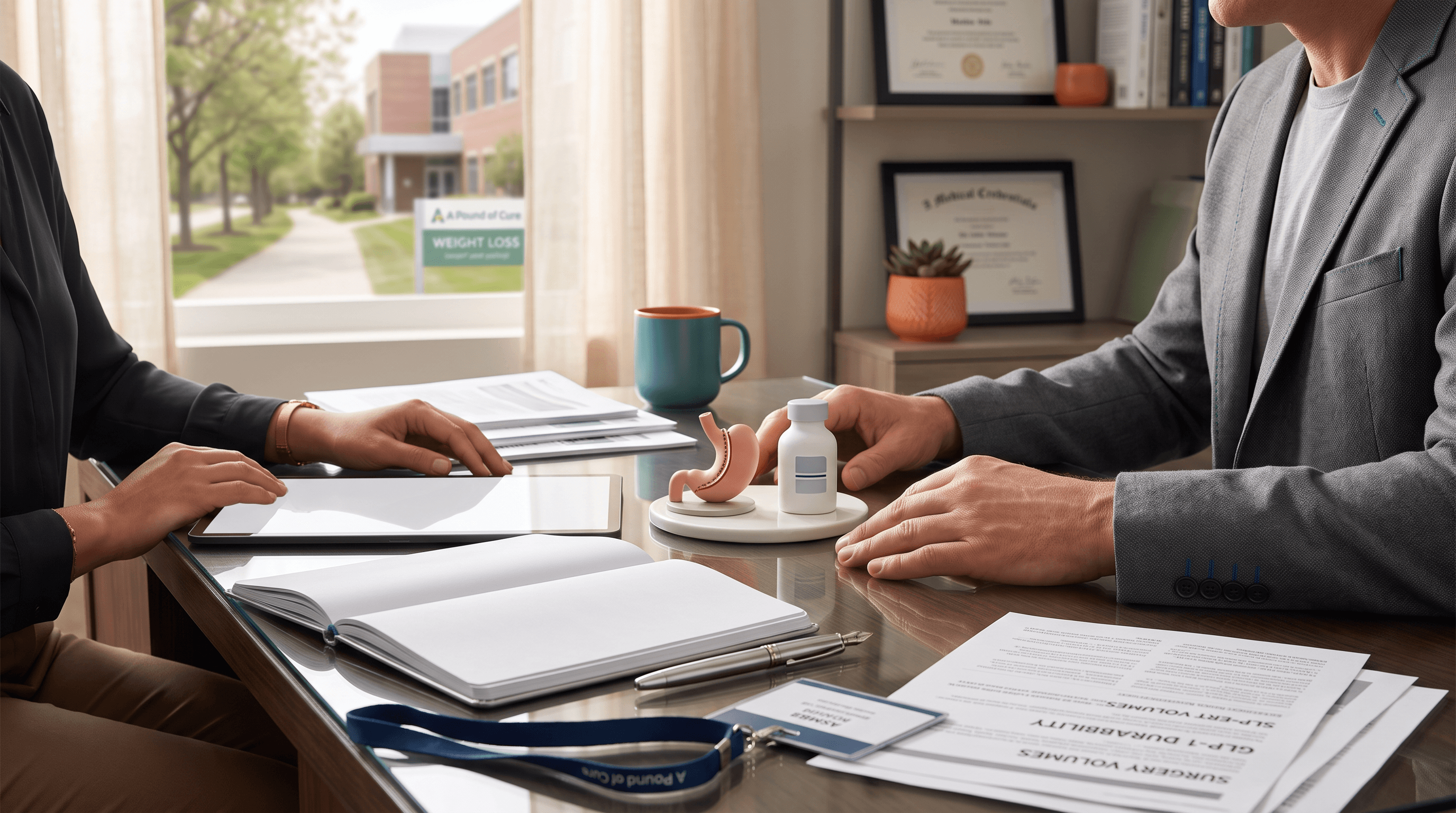
GLP-1 medications have changed the weight loss field dramatically, but bariatric surgery remains the most durable and effective treatment for severe obesity. Dr. Weiner breaks down what ASMBS 2026 revealed about the real relationship between surgery and medications.
Bariatric surgery absolutely still makes sense, even with GLP-1 medications like Ozempic, Wegovy, and Zepbound widely available. I attended the 2026 ASMBS annual meeting with our registered dietitian Zoe, and the conference made one thing very clear: medications are a valuable tool, but they haven't replaced surgery. For patients with severe obesity, surgery remains the most durable and effective treatment we have. The real question isn't whether to choose one or the other. It's understanding when each option fits best and how they can work together.
I discussed this topic in detail on our podcast episode, Bariatric Surgery After GLP-1s: What We Learned at ASMBS 2026, and I want to share those insights more broadly here.
What Was Different About ASMBS 2026?
If you've never heard of ASMBS, it stands for the American Society for Metabolic and Bariatric Surgery. It's the largest annual gathering of bariatric surgeons, obesity medicine physicians, dietitians, and researchers in the country. I've been attending these meetings for over two decades, and the 2026 meeting had a very different feel from prior years.
The elephant in the room was obvious: GLP-1 medications have reduced surgical volumes across bariatric practices nationwide. Surgeons who were doing hundreds of cases a year are now doing fewer. The conversations in the hallways and during presentations reflected a profession grappling with a real shift in how patients approach weight loss.
But here's what was also clear: a significant and growing number of patients are coming to surgery after trying GLP-1 medications. These patients tried medications first, lost some weight (or didn't), and realized they needed something more permanent. That pattern is becoming one of the defining stories of this era in bariatric medicine.
Why GLP-1 Medications Don't Work for Everyone
I prescribe GLP-1 medications in my practice every day. They are real medications that produce real weight loss. Semaglutide and tirzepatide have given millions of people a tool that actually works, and I'm glad they exist.
But here's what I see in clinical practice that the headlines don't always capture:
-
Not everyone responds equally. Some patients lose 15-20% of their body weight on GLP-1 medications. Others lose 5% or less. Individual response varies enormously, and we can't fully predict who will be a strong responder before starting.
-
Side effects limit some patients. Nausea, vomiting, gastroparesis, and other GI side effects cause a meaningful percentage of patients to stop taking the medication or stay on low doses that don't produce enough weight loss. We've been working with microdosing strategies to help with this, but it's still a real barrier.
-
The weight comes back when you stop. This is the biggest issue. Clinical data consistently shows that patients regain a substantial amount of lost weight within a year of discontinuing GLP-1 medications. That means these are lifelong medications for most people, with lifelong costs and lifelong side effect exposure.
-
Cost and access remain problems. Even with the new Medicare GLP-1 bridge program and insurance coverage improvements, many patients still face significant out-of-pocket costs. If your insurance doesn't cover the medication, or if coverage lapses, you're looking at hundreds of dollars per month indefinitely.
None of these problems mean GLP-1 medications are bad. They mean medications have limitations, just like any other treatment.
What Makes Bariatric Surgery More Durable?
The core advantage of bariatric surgery is durability. When I perform a gastric bypass or sleeve gastrectomy, I'm making permanent changes to the anatomy that produce lasting hormonal shifts. These hormonal changes are what actually drive weight loss, and they persist for years and decades after surgery.
This concept of the "setpoint" is central to how I think about obesity treatment. Your body has an internal weight setpoint, a range that your brain and hormones defend through hunger signals, metabolism adjustments, and behavioral drives. When that setpoint is elevated, your body actively fights your efforts to lose weight. That's not a willpower problem. That's physiology.
Both GLP-1 medications and bariatric surgery work by lowering your setpoint. The difference is mechanism and duration:
- GLP-1 medications lower your setpoint while you're taking them. Stop the medication, and your setpoint drifts back up.
- Bariatric surgery creates structural and hormonal changes that keep your setpoint lower permanently. A gastric bypass reroutes your digestive tract and changes gut hormone signaling in ways that reduce hunger and enhance fullness for the long term. A sleeve gastrectomy removes the most hormonally active portion of the stomach, producing similar lasting effects.
This is why, even 10 and 15 years after surgery, most bariatric patients maintain significantly more weight loss than patients who used medications alone. Surgery doesn't require a monthly prescription, insurance approval renewal, or ongoing out-of-pocket costs to keep working.
The New Patient Profile: Surgery After GLP-1 Failure
One of the most interesting developments discussed at ASMBS 2026 is the emergence of a new patient profile. These are patients who started their weight loss treatment with GLP-1 medications, had a partial response, and are now seeking surgery.
I'm seeing this in my own practice. One of our patients, Moira, shared her story on the podcast. She spent two years on Wegovy and then Zepbound. She lost about 30 pounds, which was meaningful but not enough to get her to the point where she could have the knee replacement she desperately needed. She then had a gastric bypass and lost an additional 50 pounds. She went from a 2X to medium and large clothing and got her knee replaced successfully. In her own words, she wishes she had done surgery 15 years ago.
Moira's story is increasingly common. GLP-1 medications gave her a start, but surgery gave her the durable result she needed to transform her health. That combination, medication followed by surgery, is a legitimate and often very effective treatment pathway.
Is It Surgery Versus Medications, or Surgery Plus Medications?
The framing of "surgery versus GLP-1" is misleading. In modern obesity medicine, these are complementary tools, not competitors.
Here's how I think about it in my practice:
- For patients with a BMI of 30-35 with metabolic disease, GLP-1 medications alone may be sufficient, especially if they respond well and can maintain access to the medication long term.
- For patients with a BMI of 35-40+, surgery typically produces better and more durable results, particularly for resolving conditions like type 2 diabetes, sleep apnea, and hypertension.
- For patients who have tried GLP-1 medications and plateaued, or who regained weight after stopping, surgery is the logical next step.
- For some patients after surgery, adding a low-dose GLP-1 medication can help with weight regain or help them reach their goal if surgery alone didn't get them all the way there.
The idea that one tool should replace the other reflects a misunderstanding of obesity as a disease. Obesity is a chronic, complex condition driven by neurohormonal mechanisms. As our understanding of the neuroscience behind weight regulation deepens, it becomes clearer that some patients need multiple interventions working together.
The Durability Question: What the Data Actually Shows
Durability is the single most important factor in evaluating any weight loss treatment. Losing weight isn't the hard part. Keeping it off is.
Here's what we know from decades of data:
Bariatric surgery durability: Long-term studies following patients 10, 15, and even 20 years after gastric bypass show that most patients maintain 50-60% of their excess weight loss. Sleeve gastrectomy has slightly less long-term data but shows similar patterns over 7-10 years. These are permanent results that don't require ongoing treatment to maintain.
GLP-1 medication durability: The STEP trials and other clinical data show that patients regain approximately two-thirds of lost weight within one year of stopping semaglutide. Tirzepatide data shows similar patterns. This means the medication must be continued indefinitely to maintain results.
This durability gap is the central reason surgery continues to make sense. A one-time procedure that produces lasting results is fundamentally different from a medication that must be taken forever. Both are valid treatments, but they serve different clinical situations.
What About Safety?
I've performed over 4,000 bariatric procedures over more than 20 years, with a serious complication rate in the lowest 10% nationally. Modern bariatric surgery is remarkably safe. The mortality risk for a sleeve gastrectomy or gastric bypass is comparable to having your gallbladder removed.
GLP-1 medications are also generally safe, but long-term safety data is still being collected. We're only a few years into widespread use of these medications for weight loss, and questions remain about thyroid cancer risk, pancreatitis, gastroparesis, and other potential long-term effects. I'm not saying these risks are likely to be significant, but we simply don't have 20-year safety data the way we do for bariatric surgery.
The point isn't that one is safe and the other isn't. Both have favorable safety profiles for the vast majority of patients. The point is that surgery's safety track record is well-established over decades, while GLP-1 medications are still relatively new.
What I Tell My Patients
When patients ask me whether they should try medications or have surgery, my answer depends entirely on their specific situation. There's no universal right answer.
But here's what I do tell them:
If you have severe obesity with a BMI over 35 and significant health problems, surgery gives you the best chance of resolving those health problems and keeping the weight off long term. GLP-1 medications may help you lose weight, but the durability question is real, and the cost of lifelong medication adds up.
If you've already tried GLP-1 medications and they didn't produce enough weight loss, or if you regained weight after stopping, surgery is the next logical step. You haven't failed. You've simply used one tool that wasn't sufficient for your physiology, and now it's time for a more powerful one.
If you're considering surgery but aren't sure, starting with a GLP-1 medication is reasonable. It can give you a sense of what pharmacological weight loss feels like and may even help you lose enough weight preoperatively to make surgery safer.
Our nutrition program supports patients regardless of which treatment path they choose. The foundational work of changing your eating patterns and understanding your relationship with food matters whether you're on medication, post-surgery, or both.
The Bottom Line from ASMBS 2026
The message from ASMBS 2026 wasn't that surgery is dying. It was that the field is evolving. GLP-1 medications have expanded the number of people seeking treatment for obesity, and that's genuinely good. More people are recognizing obesity as a medical condition that deserves treatment rather than shame.
But surgery's role hasn't diminished. If anything, the growing evidence about medication durability is reinforcing why surgery exists. For patients who need the most durable, most powerful weight loss intervention available, bariatric surgery remains the gold standard. And for patients who have tried medications and need more, surgery is there as the next step.
The best practices in obesity medicine use every tool available, tailored to the individual patient. That means GLP-1 medications, bariatric surgery, nutritional counseling, and ongoing support, all working together. That's exactly what we do at Pound of Cure, and it's exactly what the evidence supports.
If you're weighing your options between GLP-1 medications and bariatric surgery, or if you've tried medications and feel stuck, the most important thing you can do is talk to someone who understands both. With over 4,000 surgeries and years of experience prescribing GLP-1 medications, I can help you figure out which approach, or which combination of approaches, gives you the best chance at lasting success.
Frequently Asked Questions
Appointments
Book an Appointment
Schedule a surgical evaluation with Matthew Weiner, MD, to review your history, goals, and treatment options.
Surgical patients are accepted from across the United States. Surgery and in-person care are provided in Tucson, Arizona. Prefer to schedule by phone? Call (520) 298-3300.